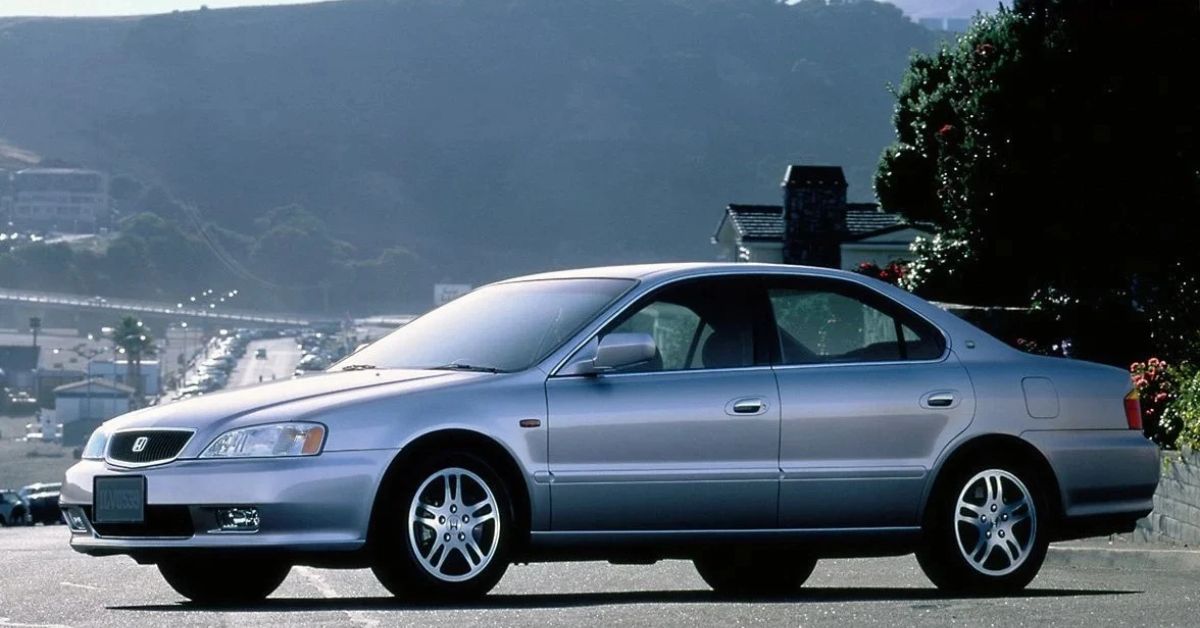
The Honda Saber is a mid-size sedan produced by Honda for the Japanese market. It was sold from 1995 to 2003 across two generations. The car shared its basic design and engineering with the Honda Inspire. Depending on the model year, it offered different V6 engines, automatic transmissions, and front-wheel-drive or other market-specific configurations.
The Honda Saber is an interesting choice for drivers who want an older Japanese sedan with a smooth V6 engine and a comfortable cabin. Its understated design gives it a different character from many modern cars. However, its age makes condition and maintenance history important. Engine performance, fuel consumption, and repair costs can vary between versions.
This review covers the Honda Saber’s generations, engine specifications, performance, fuel economy, exterior dimensions, interior features, and safety equipment. It also explains the available models, used-market pricing, reliability concerns, and maintenance needs. These details will help readers understand what makes the Honda Saber distinctive and what to check before buying one.
Honda Saber Generations
The Honda Saber was produced from 1995 to 2003 for the Japanese market. It had two generations. The first generation ran from 1995 to 1998. It shared its platform and many mechanical parts with the Honda Inspire. Honda offered different V6 engine options, depending on the model and trim.
The second-generation Honda Saber arrived in 1998 and continued until 2003. It received updated styling and revised engineering. Honda changed the engine lineup during this period. Many versions used a 2.5-liter or 3.2-liter V6 engine. The 3.2-liter version offered stronger performance, while the 2.5-liter model provided a different balance of power and running costs.
Both generations focused on smooth performance and comfortable driving. Equipment and specifications varied by year and trim. Buyers should check the chassis code, engine size, and production year before purchasing a used Saber. These details help identify the correct version and make it easier to find compatible replacement parts.
Engine Specifications
The Honda Saber came with several V6 engine options across its two generations. The first generation, produced from 1995 to 1998, offered 2.0-liter, 2.5-liter, and 3.2-liter engines. These belonged to the G20A, G25A, and C32A engine families. Power output depended on the version, with the 3.2-liter engine offering stronger performance.
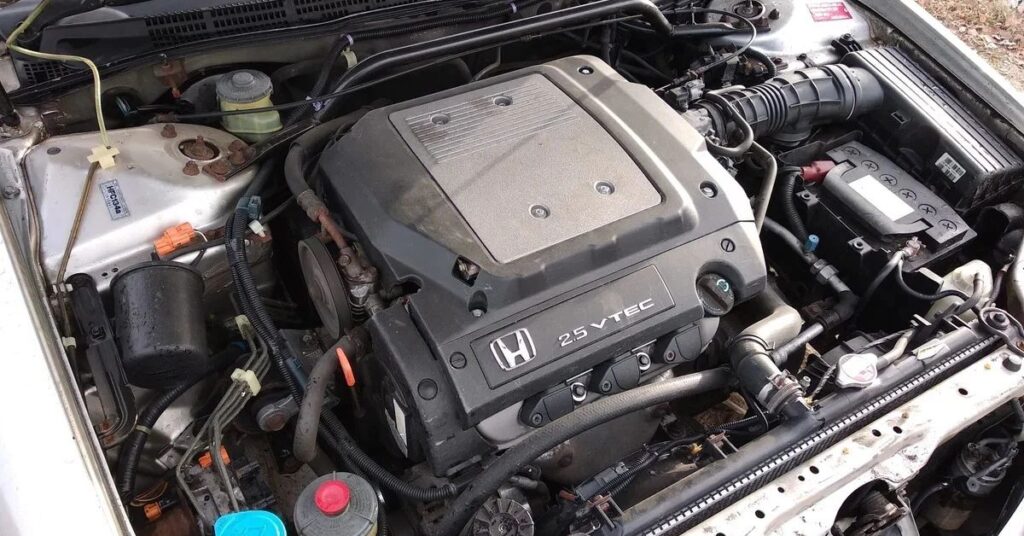
The second-generation Honda Saber arrived in 1998 with updated engines. Its 2.5-liter J25A V6 produced around 200 horsepower. The 3.2-liter J32A V6 produced around 225 horsepower in standard versions. The later 3.2-liter Type S model offered approximately 260 horsepower. These engines used Honda’s VTEC technology to improve power delivery across different engine speeds.
Most Honda Saber models used automatic transmissions and front-wheel drive. Later versions offered a five-speed automatic transmission with Honda’s S-Matic manual-selection function. Specifications varied by model year and trim. Before buying a used Saber, check its engine code and transmission type. This helps confirm its original specifications and identify compatible replacement parts.
Performance and Handling
The Honda Saber delivers smooth performance through its V6 engine options. The 2.5-liter models offer a useful balance of power and everyday driving comfort. The 3.2-liter versions provide stronger acceleration. This extra power helps the car feel more responsive when joining highways or overtaking slower traffic. Actual performance depends on the engine, transmission, and vehicle condition.
The Honda Saber uses a front-wheel-drive layout in its main production versions. This setup provides predictable handling in normal driving conditions. Its suspension focuses on comfort rather than sharp sports-car responses. The car feels best on longer journeys and smooth roads. However, worn suspension parts can cause excessive body movement, uneven tire wear, or poor stability.
The second-generation Saber also gained a stiffer body structure and revised suspension tuning. Honda used double-wishbone front suspension and a five-link double-wishbone rear setup to improve control and ride comfort. The later five-speed automatic transmission offered S-Matic mode, allowing drivers to select gears more directly. Together, these features gave the Saber a more engaging driving feel while keeping it suitable for long-distance travel.
Transmission Options
The Honda Saber used automatic transmissions across its main production lineup. The exact transmission depended on the generation, engine, and model year. First-generation models paired their engines with automatic gearboxes designed for smooth everyday driving. These transmissions suited the Saber’s comfortable sedan character.
The second-generation Honda Saber introduced a five-speed automatic transmission on selected versions. Some models included Honda’s S-Matic system. This feature allowed drivers to select gears manually when they wanted more control. It was useful on winding roads and during overtaking. The available transmission also varied by trim and engine.
When inspecting a used Honda Saber, pay attention to gear changes during both cold and warm driving. Delayed engagement, slipping, harsh shifts, or unusual noises may indicate transmission wear. Check the transmission fluid condition and maintenance history as well. A proper inspection is especially important because the Saber is an older vehicle, and gearbox repairs can add to ownership costs.
Fuel Economy
The Honda Saber uses V6 petrol engines, so fuel consumption depends on the engine size and driving conditions. The 2.0-liter and 2.5-liter versions may use less fuel than the larger 3.2-liter models. However, the difference also depends on the transmission, vehicle condition, and driving style. City driving usually consumes more fuel than steady highway travel.
The second-generation Saber with the 2.5-liter J25A engine offers a different balance of power and fuel use from the 3.2-liter J32A version. The larger engine delivers stronger acceleration but generally needs more petrol. Frequent traffic stops, hard acceleration, and long periods of idling can increase fuel consumption. Because these cars are now older, worn engine parts and poor maintenance may also affect efficiency.
When buying a used Honda Saber, check its actual fuel consumption during a road test. Inspect the spark plugs, air filter, oxygen sensors, and tire pressure if the car uses more fuel than expected. Keep in mind that official fuel economy figures may differ from real-world results. The exact figure depends on the model year, engine, and condition of the vehicle.
Exterior Design and Dimensions
The Honda Saber has a clean, traditional Japanese sedan design. Its long hood, wide body, and smooth roofline give it a mature appearance. The first generation has a more rounded shape, while the second generation features updated front styling and sharper details. Depending on the trim, the car may have different grille designs, alloy wheels, and exterior equipment.
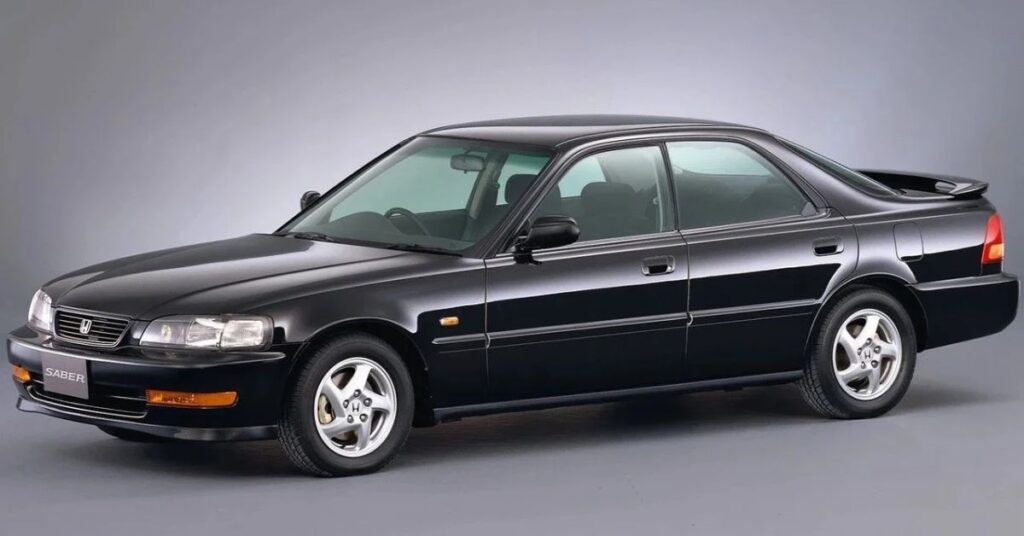
The Honda Saber is a mid-size sedan with a spacious cabin and a relatively long wheelbase. The second-generation model measures approximately 4,840 mm in length and 1,785 mm in width. Its wheelbase is about 2,745 mm. These dimensions provide a stable stance and help create useful space for passengers. Exact measurements can vary between versions.
The Saber’s exterior design focuses more on comfort and understated styling than sporty looks. Its wide body helps give the car a solid road presence. When buying a used model, inspect the doors, wheel arches, underside, and body panels for rust or accident repairs. Also check that the headlights, bumpers, and trim pieces match the specific model year.
Safety Features
The Honda Saber was equipped with safety features that were suitable for its time. Depending on the model year and trim, it could include driver and front passenger airbags, anti-lock braking (ABS), and seat belts with pretensioners. These features helped protect occupants during sudden stops or collisions. However, the equipment was not identical across every version.
Some Honda Saber models also offered traction-related systems and additional braking support, depending on their specifications. The car’s stable sedan layout and suspension helped maintain control during normal driving. However, it does not offer many modern safety technologies, such as automatic emergency braking, lane-keeping assistance, or adaptive cruise control.
When buying a used Honda Saber, check that the airbag system and ABS work properly. Look for warning lights on the dashboard and inspect the seat belts for damage. Since these cars are older, previous accidents or poor repairs may affect their safety. Confirm the installed features using the exact model year and trim rather than assuming every Saber has the same equipment.
Reliability and Common Problems
The Honda Saber uses Honda V6 engines that can provide long service when maintained properly. However, the newest examples are now more than 20 years old. Their condition depends heavily on service history, driving habits, and previous repairs. The J25A and J32A engines need regular oil changes and a working cooling system. Neglected maintenance can lead to expensive engine repairs.
Automatic transmission condition is another important point to check. Some older cars may develop delayed gear engagement, slipping, or harsh shifts. Cooling system leaks, worn suspension bushings, tired engine mounts, and deteriorated rubber hoses can also appear with age. These are potential age-related issues, not faults found in every Honda Saber. A thorough inspection can help identify problems before purchase.
Spare parts can also be a challenge because the Saber was mainly sold in Japan. Some mechanical components may be shared with the Honda Inspire or related Honda models, but compatibility is not guaranteed. Check the engine code, chassis details, and transmission before ordering parts. Before buying, arrange a cold start, road test, diagnostic scan, and inspection by a mechanic familiar with older Japanese cars.
Interior and Comfort
The Honda Saber has a spacious cabin designed for comfortable daily driving. Its wide body provides useful room for the driver and passengers. The front seats offer a relaxed seating position. Depending on the trim, the interior may feature cloth or leather upholstery, wood-style trim, and power-adjustable seats. These details vary by generation and model year.
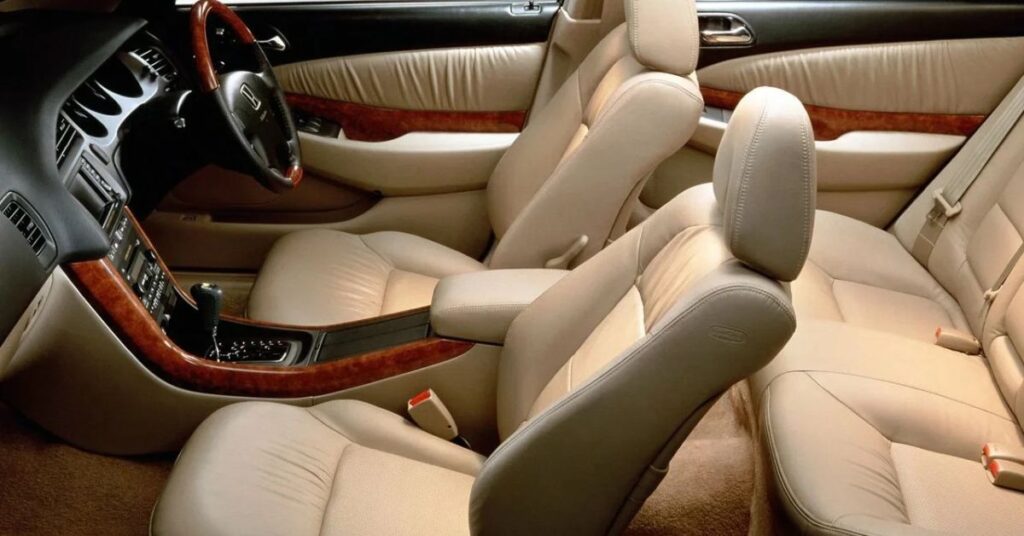
The dashboard layout reflects the design style of Japanese sedans from the late 1990s and early 2000s. Controls are arranged for easy access while driving. Higher-grade models may include automatic climate control, a factory audio system, and a navigation unit. Some versions also offer steering wheel controls or additional seat adjustments. Buyers should check the actual equipment because not every Saber has the same features.
Rear-seat comfort is another useful part of the Honda Saber. Its sedan body and long wheelbase provide reasonable legroom for adult passengers. The suspension also helps reduce the impact of bumps on ordinary roads. However, seat cushioning and cabin condition depend on the individual car. When inspecting a used Saber, check the air conditioning, seat adjusters, window motors, door locks, and dashboard electronics to make sure they work properly.
Honda Saber Trims and Models
The Honda Saber was sold in several trims between 1995 and 2003. The first-generation lineup included the 20G, 25G, 25S, 25XG, and 32V. These models differed in engine size, equipment, and price. The 20G used a 2.0-liter engine, while the 25-series models used a 2.5-liter engine. The 32V featured a larger 3.2-liter V6.
The second generation introduced the 25V, 25V Navi, 32V, and later the 2.5-liter and 3.2-liter Type S versions. Equipment changed with the model year. Some versions offered navigation, leather seats, larger alloy wheels, and upgraded safety equipment. The table below summarizes the main trims. Exact specifications can vary by production year.
| Generation / Years | Trim | Engine | Key Details |
| First, 1995–1998 | 20G | 2.0L G20A inline-5 | Entry-level engine option |
| First, 1995–1998 | 25G | 2.5L G25A inline-5 | Mid-range engine and equipment |
| First, 1995–1998 | 25S | 2.5L G25A inline-5 | Sport-oriented trim |
| First, 1995–1998 | 25XG | 2.5L G25A inline-5 | Higher equipment level |
| First, 1995–1998 | 32V | 3.2L C32A V6 | Stronger performance |
| Second, 1998–2001 | 25V | 2.5L J25A V6 | Around 200 hp in listed versions |
| Second, 1998–2001 | 25V Navi | 2.5L J25A V6 | Navigation-equipped version |
| Second, 1998–2001 | 32V | 3.2L J32A V6 | Around 225 hp in listed versions |
| Second, 2001–2003 | 2.5 | 2.5L J25A V6 | Updated later-generation model |
| Second, 2001–2003 | 3.2 Type S | 3.2L J32A V6 | Higher-output version, around 260 hp |
Note: Honda used different engine families across the generations. The first-generation 2.0-liter and 2.5-liter engines were inline-five units, not V6 engines. Always verify the chassis code and engine code when checking a specific car.
Honda Saber vs Honda Inspire
The Honda Saber and Honda Inspire are closely related Japanese sedans. They share much of their engineering and have similar body designs. The Saber was mainly sold through Honda’s Verno dealership network, while the Inspire was sold through Honda’s Clio network. Both models offered comfortable cabins and smooth performance. Their engines and equipment varied by generation and trim, so the model year matters when comparing them.
Key differences include:
- Market and branding: The Saber and Inspire were sold under different Honda nameplates in Japan.
- Engine options: Available engines changed between generations. The first-generation Saber used inline-five engines in its 2.0-liter and 2.5-liter versions, while its 3.2-liter version used a V6.
- Equipment: Features such as navigation, seat trim, and alloy wheels depended on the specific grade.
- Used-car ownership: Condition, service history, and parts compatibility are more important than the badge alone.
One important difference is the engine lineup. The 1995–1998 models used 2.0-liter and 2.5-liter inline-five engines, with a 3.2-liter V6 available in the 32V trim. The 1998–2003 generation switched to 2.5-liter and 3.2-liter V6 engines. In practical terms, buyers should compare the exact generation, engine, features, and condition rather than assume one badge is automatically better.
Maintenance and Spare Parts
The Honda Saber needs regular maintenance to keep its engine and transmission in good condition. Change the engine oil and filter at suitable intervals. Check the coolant, radiator, drive belts, and rubber hoses for wear. The V6 models also need proper ignition-system maintenance. On older cars, leaking seals and worn engine mounts deserve attention. A detailed service history can help prevent costly repairs.
Spare parts availability can vary because the Honda Saber was mainly sold in Japan. Common service items may be easier to source than model-specific body panels, electronic components, or trim pieces. Some parts may be shared with the Honda Inspire, but compatibility depends on the generation and engine. Always confirm the part number before ordering replacements.
Before buying a used Honda Saber, inspect the automatic transmission, suspension bushings, brakes, and cooling system. Check for rust underneath the vehicle and around the wheel arches. Ask a mechanic to inspect the engine code and scan any available electronic systems. Keeping the original specifications and using suitable replacement parts can make long-term ownership easier and help control maintenance costs.
Conclusion
The Honda Saber is a distinctive Japanese sedan with smooth engine performance, a comfortable cabin, and a practical design. Its two generations offered different engines, trims, and features. The 2.5-liter and 3.2-liter V6 models provide different levels of performance. However, fuel consumption, parts availability, and age-related repairs are important factors to consider.
Buying a used Honda Saber can be worthwhile if you find one in good condition. Check the engine, automatic transmission, suspension, and service history before making a decision. Also, confirm the exact model year and engine specifications. With proper maintenance and careful inspection, the Honda Saber can remain a comfortable option for drivers who appreciate older Japanese sedans.
FAQs
1. What years was the Honda Saber produced?
The Honda Saber was produced from 1995 to 2003. It had two generations for the Japanese market.
2. Which engines were available in the Honda Saber?
Engine options included 2.0-liter and 2.5-liter inline-five engines in the first generation, followed by 2.5-liter and 3.2-liter V6 engines in later models.
3. Is the Honda Saber fuel-efficient?
Fuel economy depends on the engine, driving conditions, and vehicle condition. The larger 3.2-liter engine generally uses more fuel than the smaller options.
4. Is the Honda Saber reliable?
A well-maintained Honda Saber can provide dependable service. However, its age makes transmission wear, cooling system problems, and suspension repairs important concerns.
5. Is the Honda Saber similar to the Honda Inspire?
Yes. Both sedans share much of their engineering and design. Their trims, equipment, and specifications vary by generation and model year.
No Responses