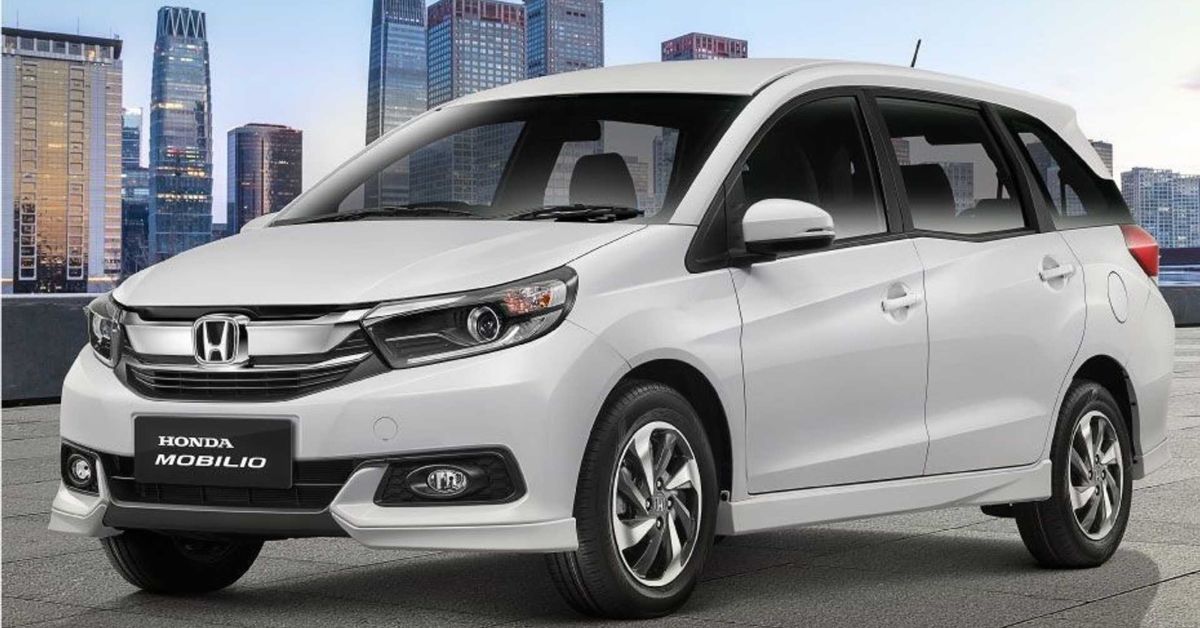
The Honda Mobilio is a compact MPV designed for families who need practical seating and everyday comfort. Honda introduced the Mobilio in different markets, including Indonesia and India. The second-generation model launched in 2014 offered a 1.5-liter petrol engine in several markets. Some versions also came with a 1.5-liter diesel engine. Its three-row layout makes it useful for family trips and daily travel.
Looking for a family car that offers more passenger space without the size of a large SUV? The Honda Mobilio is worth considering. Its compact body makes it easier to handle on busy roads, while its flexible cabin supports daily errands and longer journeys. However, engine options, features, and fuel economy vary by model year and country.
In this Honda Mobilio review, we will explore its engine specifications, performance, fuel economy, exterior dimensions, interior space, and safety features. We will also look at its available trims, technology, price, and maintenance needs. This guide will help you understand what the Mobilio offers and what to check before buying a new or used model.
Honda Mobilio Generations
The Honda Mobilio name has been used for different vehicles over the years. The first-generation Mobilio launched in Japan in 2001. It was a compact MPV with a boxy body and flexible seating for family use. Honda built it on the Global Small Platform, which it shared with models such as the first-generation Honda Fit. Japanese production ended in 2008.
The second-generation Honda Mobilio arrived in Indonesia in 2014. This model had a more modern design and a three-row cabin for up to seven occupants. It used a 1.5-liter i-VTEC petrol engine paired with either a five-speed manual or a CVT, depending on the version. Honda also introduced the Mobilio in India, where it was offered with 1.5-liter petrol and diesel engines. These options made the model suitable for different driving needs.
Honda updated the second-generation Mobilio with changes to its styling and equipment during its production run. The exact features varied by country and trim level. In Indonesia, it competed with family MPVs such as the Toyota Avanza and Suzuki Ertiga. When choosing a used Honda Mobilio, check its model year, engine type, transmission, and service history. These details can differ significantly between markets.
Engine Specs and Performance
The Honda Mobilio offers different engine options depending on its generation and market. The first-generation model, launched in Japan in 2001, used a 1.5-liter i-DSI petrol engine. It produced around 90 PS and 131 Nm of torque. Honda paired it with a continuously variable transmission (CVT). This setup focused on smooth acceleration and practical everyday driving.
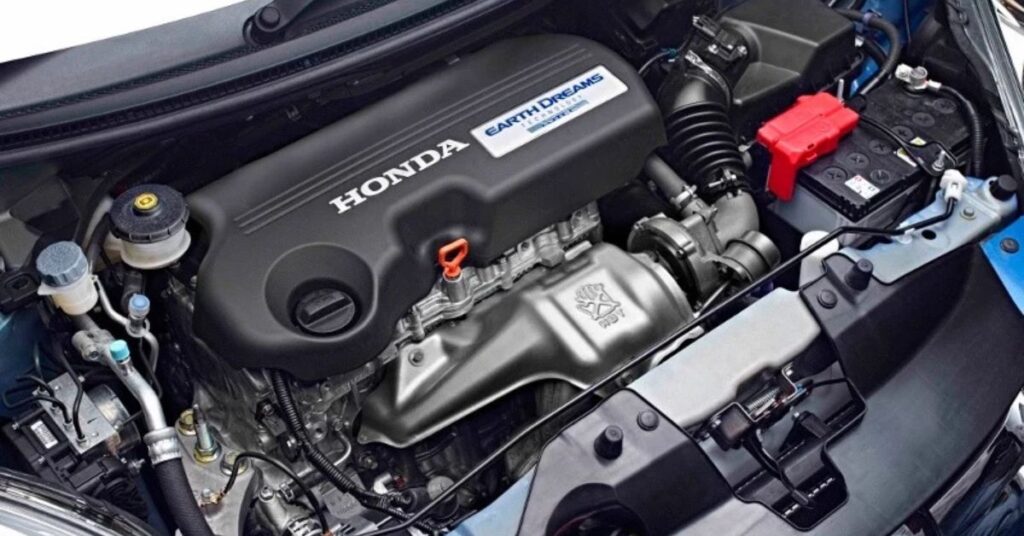
The second-generation Honda Mobilio, introduced in Indonesia in 2014, used a 1.5-liter i-VTEC petrol engine. It produced approximately 118 PS and 145 Nm of torque. In India, Honda also offered a 1.5-liter i-DTEC diesel engine. The diesel version delivered 100 PS and 200 Nm of torque. Petrol models came with manual or CVT options in some markets, while the Indian diesel version used a five-speed manual transmission.
On the road, the Mobilio is designed for family travel and daily commuting rather than high-speed performance. The petrol engine provides responsive power for city driving and regular highway trips. The diesel version offers stronger low-speed pulling power, which can help when carrying passengers and luggage. Actual performance depends on the engine, transmission, vehicle condition, and load. When buying a used Honda Mobilio, check the engine’s service history and test the transmission for smooth operation.
Fuel Economy and Mileage
The Honda Mobilio offers different fuel economy figures depending on its engine and model year. The second-generation petrol model sold in Indonesia uses a 1.5-liter i-VTEC engine. Its fuel consumption depends on traffic, driving habits, and passenger load. Frequent stops in busy city traffic usually increase fuel use. Steady driving can help improve mileage on longer trips.
The Indian version also came with a 1.5-liter i-DTEC diesel engine. This engine generally uses less fuel than the petrol version under comparable driving conditions. It can suit drivers who cover long distances regularly. However, actual mileage varies with road conditions, maintenance, air-conditioning use, and the condition of the engine and transmission.
The Indian petrol version had an official fuel-efficiency figure of around 17.3 km/l, while the diesel version was rated at approximately 24.5 km/l under the testing standards used at the time. These figures are useful for comparing the two engines, but they are not guaranteed real-world results. Before buying a used Mobilio, check its average fuel consumption, tyre pressure, air filter, and service records. A well-maintained engine and smooth driving habits can help reduce fuel costs.
Honda Mobilio Models
The Honda Mobilio came in several trims, and the available options differed by country. In Indonesia, the second-generation model came in S, E, Prestige, and RS trims. In India, Honda offered E, S, V, V(O), and RS variants, with petrol and diesel options depending on the trim. The S was an entry-level choice, while higher trims added more comfort and convenience features.
- Honda Mobilio S: Basic equipment and a practical family cabin.
- Honda Mobilio E: Added features over the entry-level version, depending on the market.
- Honda Mobilio V: Offered upgrades such as alloy wheels, fog lamps, and additional cabin features in India.
- Honda Mobilio Prestige: An early Indonesian version with extra styling details and a touchscreen audio system.
- Honda Mobilio RS: A sportier version with a body kit, distinctive styling, and upgraded equipment.
When comparing Honda Mobilio models, check the engine, transmission, safety equipment, and included features. For example, the Indian RS was offered with a diesel engine, while Indonesia’s RS came with a 1.5-liter petrol engine and manual or CVT transmission options. These differences matter when buying a used Mobilio, especially when comparing imported vehicles.
Honda Mobilio Trims and Variants
The Honda Mobilio came in different trims to suit various budgets and needs. The available variants depended on the country and model year. In Indonesia, buyers could choose versions such as S, E, E Prestige, and RS. In India, Honda offered E, S, V, and RS variants, with petrol and diesel engine options. Higher trims added more comfort, styling, and entertainment features. However, equipment was not identical across all markets.
The table below highlights the main differences between common Honda Mobilio variants. Features may vary by year, so check the original specifications when buying a used model.
| Trim or Variant | Engine Options | Main Features |
| Honda Mobilio E (India) | 1.5L petrol or diesel | Entry-level equipment, three-row seating, basic convenience features |
| Honda Mobilio S (India) | 1.5L petrol or diesel | Additional comfort and convenience features over the E |
| Honda Mobilio V (India) | 1.5L petrol or diesel | More equipment, with features such as a touchscreen audio system on selected versions |
| Honda Mobilio RS (India) | 1.5L petrol or diesel | Sportier exterior styling, body kit, and upgraded cabin equipment |
| Honda Mobilio S (Indonesia) | 1.5L i-VTEC petrol | Basic family-focused features and manual transmission |
| Honda Mobilio E (Indonesia) | 1.5L i-VTEC petrol | More convenience features; transmission options varied by year |
| Honda Mobilio E Prestige (Indonesia) | 1.5L i-VTEC petrol | Additional styling and interior equipment |
| Honda Mobilio RS (Indonesia) | 1.5L i-VTEC petrol | Sporty body styling, upgraded trim details, and more equipment |
When choosing a Honda Mobilio, compare the exact model year and market version rather than relying on the trim name alone. Check the transmission, airbags, braking system, infotainment features, and service history. These details can affect comfort, safety, maintenance costs, and used-car value.
Exterior Design and Dimensions
The second-generation Honda Mobilio has a long, compact body designed to carry up to seven people. Its front end features swept-back headlights, a wide grille, and a sculpted bumper. The sloping windshield gives it a more modern look than the boxier first-generation model. Higher trims, such as the RS in Indonesia, add sportier styling details and different exterior accents.
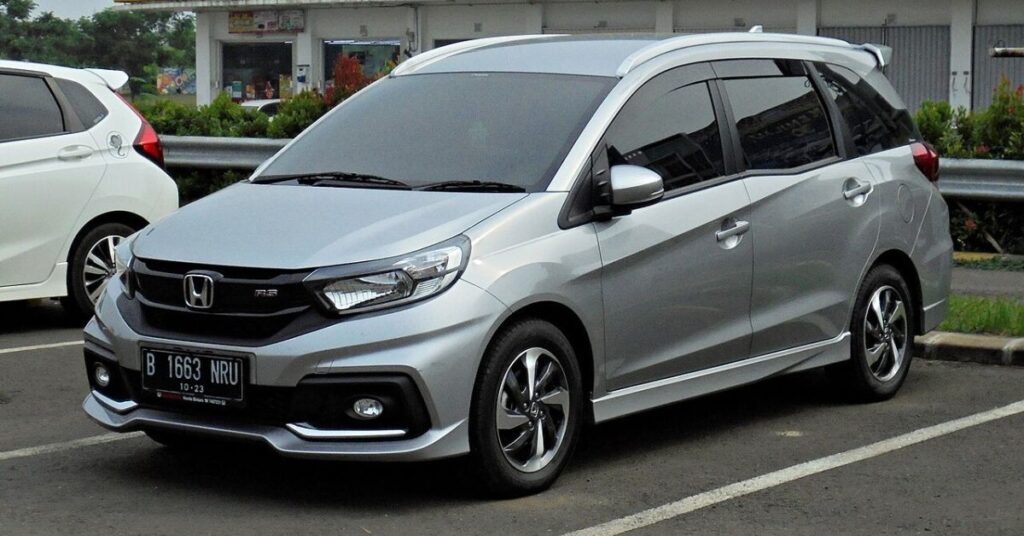
The Indonesian second-generation Honda Mobilio measures approximately 4,386 mm in length, 1,683 mm in width, and 1,603 mm in height. Its wheelbase measures 2,650 mm. These dimensions help provide space for three rows of seats while keeping the vehicle manageable on narrow urban roads. Ground clearance is around 189 mm on commonly listed Indonesian versions, although specifications can vary by model year and market.
The Mobilio’s side profile features large windows and sliding-door-style proportions, but it uses conventional hinged doors. Its rear design includes a liftgate that opens upward for access to the luggage area. Some versions come with alloy wheels, fog lamps, body-coloured mirrors, and roof-mounted accessories. When inspecting a used Honda Mobilio, check the bumpers, door panels, underbody, and tailgate for damage or rust. These checks can reveal signs of poor repairs or difficult driving conditions.
Interior and Comfort
The Honda Mobilio has a practical cabin designed for family travel. The second-generation model offers three rows of seats and space for up to seven occupants. Its dashboard has a simple layout with clearly arranged controls. Most versions use hard-wearing plastic materials, which are easy to clean and suitable for daily use. Higher trims may include a touchscreen audio system, steering-mounted controls, and additional convenience features.
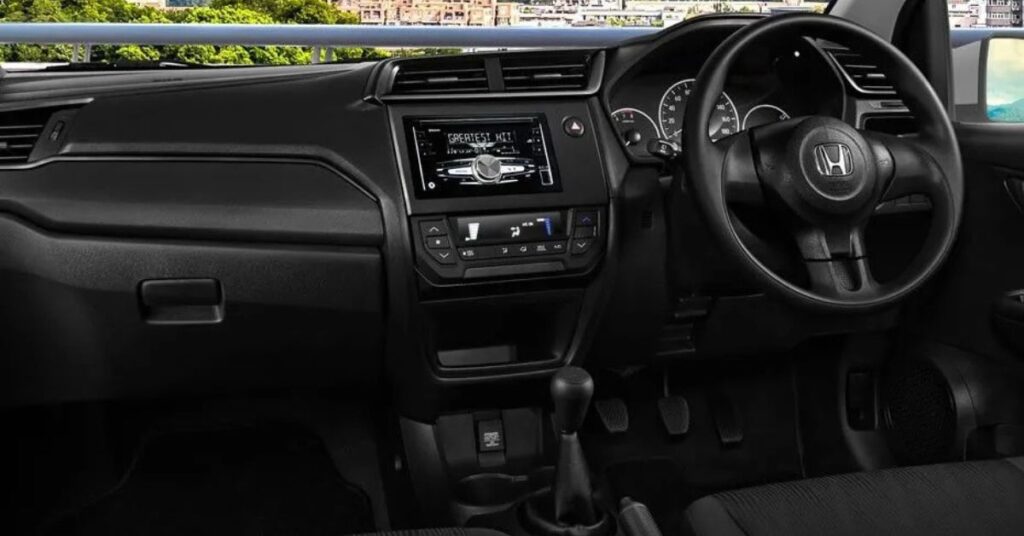
The front seats provide a straightforward driving position with good visibility. The second row offers space for adults and children, while the third row is more suitable for children or shorter journeys for adults. The second-row seats can fold to improve access to the rear seats. However, comfort in the third row depends on passenger height and available legroom. Seven occupants also leave less room for luggage behind the rear seats.
Air conditioning is an important feature in the Mobilio, especially in hot climates. Some versions offer rear air-conditioning vents to help keep passengers comfortable. Storage spaces around the cabin provide room for small personal items, bottles, and everyday essentials. Before buying a used Mobilio, test the air conditioning, seat adjustment, folding mechanisms, window controls, and door locks. These checks can help you find worn or faulty interior parts.
Seating and Cargo Space
The second-generation Honda Mobilio offers three rows of seats for up to seven occupants. Its cabin layout suits families who need extra passenger space in a compact vehicle. The front row provides room for the driver and one passenger. The second row accommodates three people, while the third row adds space for two more. The second row can be folded or moved forward to improve access to the rear seats. However, adults may find the third row less comfortable on long journeys.
Cargo space depends on how many seats are in use. With all three rows occupied, the luggage area is limited. It can hold a few small bags, groceries, or everyday items. Folding the third-row seats creates more room for suitcases and larger shopping loads. The second row can also be folded to carry bulkier items when fewer passengers are travelling. This flexibility makes the Mobilio useful for family trips and routine errands.
The Honda Mobilio’s wide rear opening helps users load and unload luggage more easily. Its relatively low loading area can also make heavier bags easier to lift inside. Before buying a used model, check that the seat-folding mechanisms work properly and that the seat belts are in good condition. Inspect the cargo floor for damage, moisture, or rust. If you regularly travel with seven people and luggage, test the available space in person to make sure it meets your needs.
Transmission and Handling
The Honda Mobilio came with different transmission options depending on the market and model year. The second-generation Indonesian petrol model offered a five-speed manual transmission and a continuously variable transmission (CVT). In India, petrol versions were available with a five-speed manual gearbox, while diesel versions used a six-speed manual. The CVT provides smooth acceleration in traffic, while the manual gearbox gives drivers more direct control over gear changes.
The Honda Mobilio is designed for everyday driving rather than sporty performance. Its compact dimensions help drivers navigate narrow streets and crowded parking areas. The steering is light at low speeds, which makes city driving easier. The suspension handles ordinary road bumps and uneven surfaces reasonably well. However, the vehicle may lean when taking sharp corners, especially with a full load of passengers.
Transmission condition is important when buying a used Honda Mobilio. During a test drive, check that the manual gearbox changes gears smoothly and that the clutch does not slip. For CVT models, watch for unusual noises, jerking, or delayed acceleration. Also, check the steering response, braking performance, and suspension for knocks on rough roads. Regular servicing and the correct transmission fluid can help maintain smooth operation over time.
Safety Features
The Honda Mobilio includes several safety features, but the equipment depends on the model year and market. Many second-generation versions offer an anti-lock braking system (ABS) with electronic brake-force distribution (EBD). These systems help the driver maintain control during hard braking. Dual front airbags are available on many variants, while some entry-level versions may have fewer safety features. Buyers should check the exact equipment fitted to the vehicle.
The Mobilio also has a three-point seat belt system for occupants, although belt features can vary by seating position and market. The rear parking sensors or camera available on selected versions can help drivers reverse in tight spaces. Its large windows provide good outward visibility. However, the Mobilio does not offer the full range of modern driver-assistance systems found in many newer vehicles. Features such as automatic emergency braking and lane-keeping assistance should not be assumed.
When buying a used Honda Mobilio, inspect the airbags, seat belts, brakes, tyres, and warning lights. Make sure the ABS light turns off after the engine starts. Check whether the vehicle has been involved in a major accident or had structural repairs. Safety equipment can differ between imported and locally sold versions, so confirm the original specifications using the vehicle’s model year and variant. A professional inspection can help identify hidden damage and faulty safety systems.
Technology and Infotainment
The Honda Mobilio offers practical technology for everyday driving. Its infotainment features depend on the model year and trim level. Entry-level versions generally have a basic audio system with radio and USB or auxiliary connectivity on selected models. Higher trims in markets such as Indonesia and India may include a touchscreen display, Bluetooth connectivity, and steering-mounted audio controls. These features help drivers manage music and calls more conveniently.
Some Honda Mobilio versions also offer power windows, keyless entry, and electrically adjustable mirrors. The RS and other higher trims may have additional convenience features compared with basic variants. However, a touchscreen system, smartphone integration, or navigation is not standard across every model. Buyers should check the actual equipment fitted to the vehicle instead of relying only on its trim name. Features can also differ between factory-installed systems and aftermarket upgrades.
The Mobilio’s technology is straightforward to use. Its controls focus on basic functions rather than advanced digital displays. If you are buying a used model, test the audio system, speakers, USB ports, Bluetooth connection, and steering-mounted controls. Check whether any aftermarket touchscreen has been installed correctly. A well-maintained electrical system can help prevent problems with infotainment, power windows, and other cabin features.
Honda Mobilio Price Guide
The price of a Honda Mobilio depends on its model year, trim level, engine, and condition. The car was sold in markets such as Indonesia and India, so prices differ by country. The original showroom price also varies between petrol and diesel versions and between manual and CVT models. Since the Mobilio is discontinued in these markets, buyers will mainly find used examples.
When comparing used Honda Mobilio prices, consider the mileage, service history, accident record, and overall condition. Higher trims, such as the RS, may cost more because of their additional features and sportier styling. Diesel versions in India may also attract different prices from petrol models. Import duties, registration costs, and local demand can further affect the final price.
In Pakistan, imported Honda Mobilio models can cost considerably more than they do in their original markets because of import costs and limited availability. For example, a used Mobilio listing has been advertised at around PKR 9.5 million, but this should not be treated as a fixed market price. Always compare current local listings and confirm the vehicle’s import status, documents, and condition before making a decision.
Maintenance and Spare Parts
The Honda Mobilio needs regular maintenance to keep its engine, transmission, and suspension in good condition. Petrol models require timely engine oil and filter changes, air filter cleaning, and spark plug checks. Diesel versions also need proper fuel filter maintenance and periodic checks of the injection system. Owners should follow the service schedule for their specific model year and engine. Regular servicing can help prevent expensive repairs.
Spare parts availability depends on the country and the version of the Mobilio. In markets such as India and Indonesia, some mechanical parts are easier to find because Honda sold the vehicle locally. In Pakistan, imported Mobilio models may require parts from specialist dealers or importers. Common service items, such as filters, brake pads, and suspension components, may be easier to source than model-specific body panels or electronic parts. Prices can also vary between original Honda parts and aftermarket alternatives.
Before buying a used Honda Mobilio, check its service records and inspect important components. Pay attention to engine leaks, worn suspension bushes, brake condition, air-conditioning performance, and transmission behaviour. For CVT models, confirm that the correct transmission fluid has been used. Diesel versions need careful checks of the fuel system and engine condition. A pre-purchase inspection by a mechanic familiar with Honda vehicles can help you estimate upcoming maintenance costs and avoid unexpected repairs.
Conclusion
The Honda Mobilio is a practical family MPV with three-row seating, flexible cargo space, and useful everyday features. Its 1.5-liter petrol engine offers suitable performance for daily travel, while the diesel option available in India provides an alternative for drivers who want better fuel economy. Different trims offer varying levels of comfort, technology, and safety equipment. The best choice depends on your needs, budget, and local market.
Before buying a used Honda Mobilio, check its service history, engine condition, transmission, and available spare parts. Compare different model years and trims to find the right balance of price and features. A well-maintained Mobilio can be a useful family vehicle, but its condition matters more than its appearance alone. Always arrange a thorough inspection before making your final decision.
FAQs
1. Is the Honda Mobilio a good family car?
Yes, the Honda Mobilio is a practical family car with three rows of seats and space for up to seven occupants.
2. What engine does the Honda Mobilio have?
The second-generation Mobilio offers a 1.5-liter petrol engine in Indonesia and petrol or diesel options in India.
3. What is the fuel economy of the Honda Mobilio?
Fuel economy depends on the engine and market. The Indian diesel version generally offers better mileage than the petrol version.
4. How many people can the Honda Mobilio seat?
The Honda Mobilio can seat up to seven people, including the driver, with three rows of seats.
5. Is the Honda Mobilio expensive to maintain?
Maintenance costs depend on the vehicle’s condition and local parts availability. Imported models may cost more to repair if specific parts are difficult to find.
No Responses