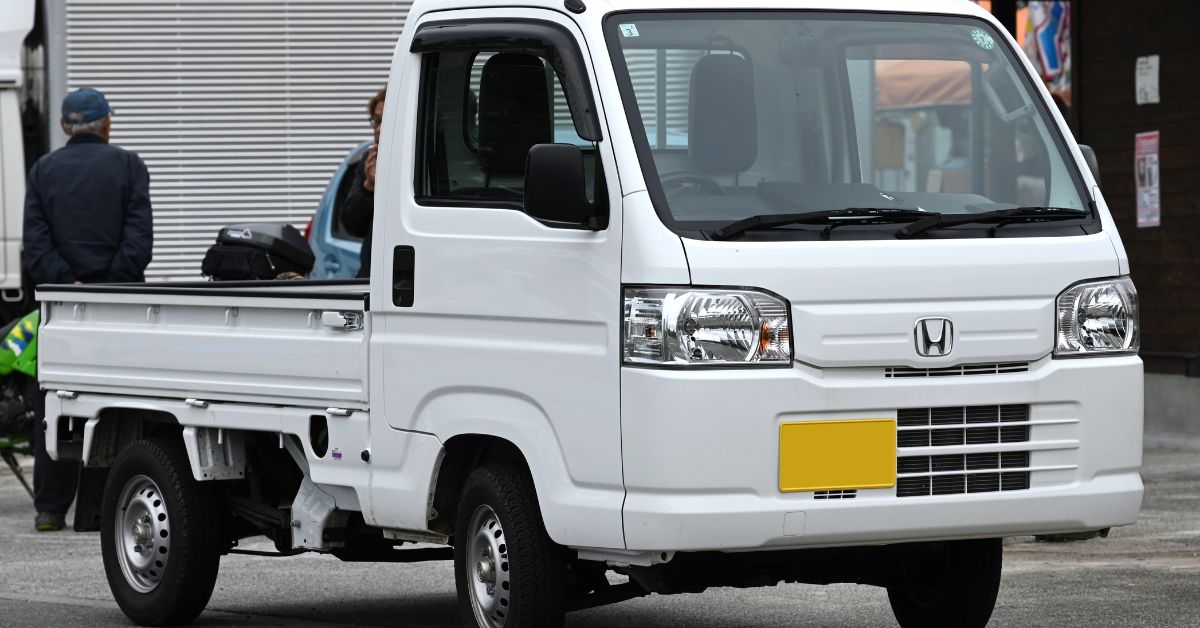
The Honda Acty is a small kei truck and van made by Honda. It was built for practical daily work and easy city driving. Its compact size makes it useful on narrow roads and in tight parking spaces.
Its small size doesn’t mean it cannot handle real work. The Acty became popular for its simple design and useful cargo space. It can serve farmers, small businesses, and drivers who need an easy-to-handle work vehicle.
This review looks at the Honda Acty’s performance, utility, engine options, and practical features. It also covers its design, cargo capacity, driving experience, and overall value. These details help explain why the Acty remains an interesting compact utility vehicle.
Honda Acty Generations
The Honda Acty first arrived in 1977 as a kei-class commercial vehicle. The first generation used a 545cc two-cylinder engine and a mid-engine layout. Honda offered it as a practical truck and van for small businesses and daily work.
The second generation arrived in 1988 with a larger 656cc three-cylinder engine. Honda also improved the cabin and chassis design. The third generation followed in 1999, keeping the 656cc engine while adding updated styling and improved practicality.
The fourth generation launched in 2009 and became the final Acty generation. It used a 660cc three-cylinder engine and was available with 2WD or 4WD. Production ended in 2021, closing the Acty’s long run as one of Honda’s well-known kei work vehicles.
Honda Acty Engine
The Honda Acty used different engines across its generations. Early models came with a 545cc two-cylinder engine. Later versions moved to a 656cc three-cylinder engine. The final generation used a 660cc three-cylinder engine to meet modern kei-car standards.
The fourth-generation Acty used Honda’s E07Z 656cc three-cylinder engine. It was naturally aspirated and tuned for practical work rather than high-speed driving. Depending on the version, power was around 45 PS, while some variants used different tuning for their specific purpose.
The Acty’s engine layout also helped its utility. Honda placed the engine in a mid-engine position, which helped create a useful cargo area. Buyers could choose 2WD or 4WD versions. The 4WD models offered better traction on farms, rough paths, and slippery roads.
Performance and Handling
The Honda Acty focuses on useful performance rather than speed. Its compact engine works well for city streets and short work trips. The small body also makes the truck easy to place in narrow spaces and busy areas.
The mid-engine layout gives the Acty a balanced design for a small work vehicle. Steering feels light at low speeds. The short body helps it turn in tight areas. Manual and automatic transmissions were offered, depending on the generation and model.
The 4WD versions add useful traction on rough roads and slippery surfaces. This makes them practical for farms, rural roads, and work sites. The Acty is not a performance truck, but its compact size, light weight, and simple mechanical layout suit everyday utility work.
Fuel Economy
The Honda Acty was designed to keep running costs low. Its small engines used less fuel than larger commercial vehicles. The compact body also reduced the amount of energy needed for everyday driving.
Fuel use varied by generation, engine, transmission, and drivetrain. 2WD models generally offered better economy than 4WD versions because they had less drivetrain weight and mechanical resistance. Manual versions could also return different results from automatic models.
The Acty’s real-world economy depends heavily on its workload. Carrying heavy cargo, driving at high speeds, or using 4WD can increase fuel consumption. For short city trips and light-duty work, its small engine and lightweight design make fuel efficiency a practical strength.
Exterior Design
The Honda Acty has a simple and compact exterior. Its design follows Japan’s kei-vehicle size rules. The small body makes it easy to drive through narrow streets and tight work areas. The truck version uses a short front section and a practical rear cargo bed.
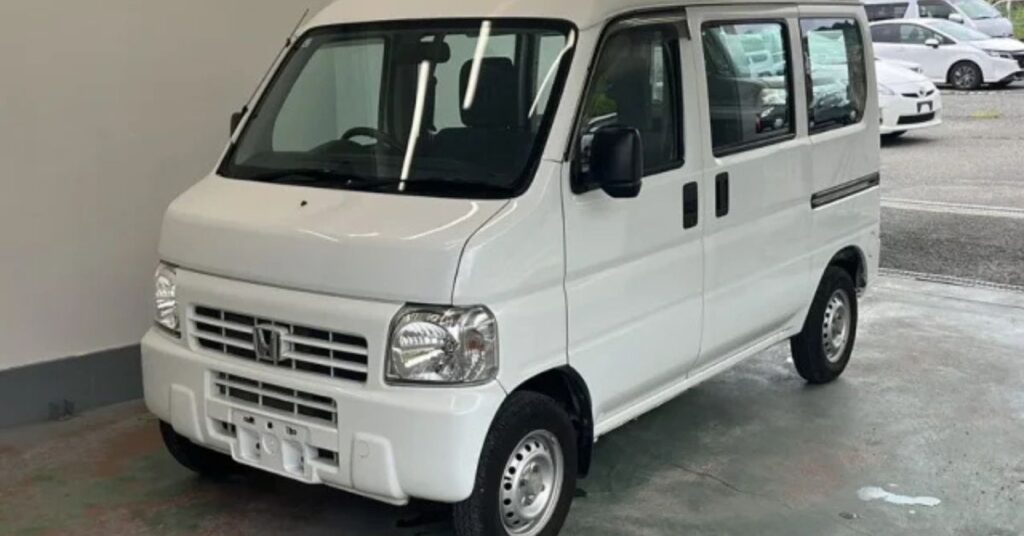
The Acty truck has a cab-over style body that keeps the vehicle compact while providing useful bed space. Its boxy shape also gives the driver good visibility around the vehicle. Later models received updated headlights, bumpers, and body details while keeping the practical design.
The Acty was built for work rather than flashy styling. Its compact dimensions make parking easier. The truck body also suits farms, shops, delivery work, and other light-duty jobs. 4WD versions add extra usefulness for rural roads and uneven surfaces.
Interior and Comfort
The Honda Acty has a simple cabin built around practical work. The dashboard keeps the main controls easy to reach. Its compact size also gives the driver a clear view of the road and vehicle corners.
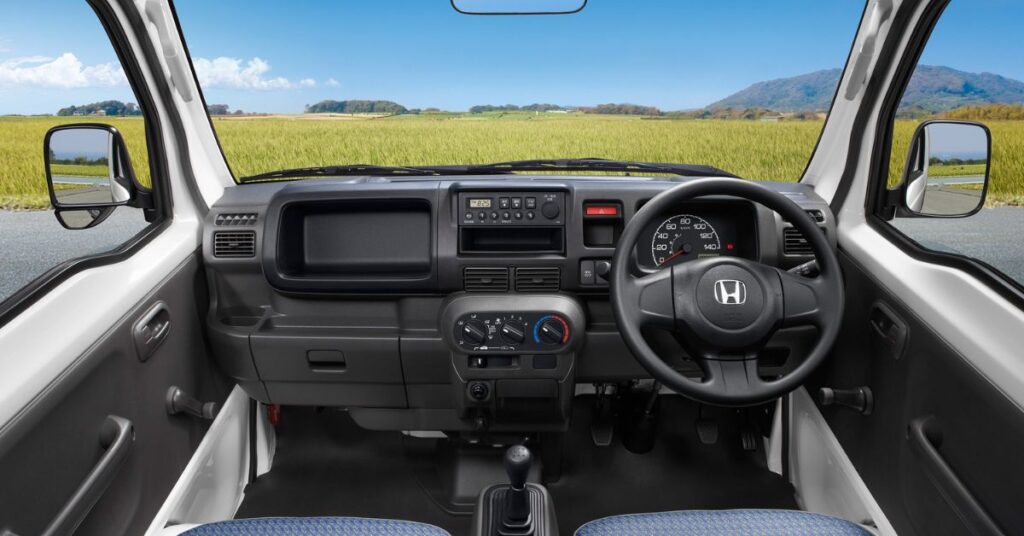
Comfort depends on the generation and body style. Later Acty models received a more modern dashboard and improved seating. The cabin remains compact, so legroom and storage space are more limited than in larger vehicles.
The Acty focuses on function rather than luxury. Its upright driving position suits short work trips and deliveries. Features can vary by model, with some versions offering air conditioning, power steering, and other useful equipment.
Cargo Space and Utility
The Honda Acty was built mainly for practical work. The truck version has a rear cargo bed for carrying tools, farm supplies, boxes, and small equipment. Its compact body makes loading and unloading easier in narrow work areas.
The Acty truck uses a rear-wheel-drive or four-wheel-drive layout, depending on the model. The mid-engine design helps Honda keep the cabin and cargo area compact. Some versions also offered features such as a low floor and folding side panels to make daily loading more convenient.
The Acty is especially useful for short-distance deliveries and light-duty jobs. Farmers, small businesses, and tradespeople can use its small footprint to reach places where larger trucks struggle. Its kei-class dimensions also make it easier to park and maneuver in crowded streets.
Honda Acty Models
The Honda Acty came in several body styles during its long production run. The main choices were the Acty Truck and Acty Van. Honda also offered different drivetrain and transmission combinations across generations, including 2WD and 4WD versions.
- Acty Truck: Compact pickup designed for light commercial work.
- Acty Van: Small cargo van with an enclosed rear area.
- 2WD models: Designed mainly for normal road use.
- 4WD models: Better suited to rural roads and slippery surfaces.
- Street: A passenger-oriented Acty Van variant with extra comfort features.
The model range changed over time. Later Acty trucks used Honda’s 660cc E07Z three-cylinder engine. Buyers could also choose between manual and automatic transmissions on selected versions. These variations made the Acty useful for deliveries, farming, trades, and everyday commercial work.
Acty vs. Kei Truck Rivals
The Honda Acty competes with well-known kei trucks such as the Suzuki Carry and Daihatsu Hijet Truck. The Acty stands out for its compact mid-engine layout and long production history. The Carry uses a 657–658cc three-cylinder engine in later generations, while the modern Hijet Truck uses a 658cc three-cylinder engine.
| Feature | Honda Acty | Suzuki Carry | Daihatsu Hijet Truck |
| Vehicle type | Kei truck/van | Kei truck | Kei truck |
| Engine size | 545cc to 660cc, depending on generation | 550cc to 660cc, depending on generation | 550cc to 660cc, depending on generation |
| Common later engine | 656cc E07Z | 657–658cc 3-cylinder | 658cc KF 3-cylinder |
| Engine layout | Mid-engine | Front-engine | Front-engine |
| Drivetrain | 2WD / 4WD | 2WD / 4WD | 2WD / 4WD |
| Transmission choices | Manual/automatic, depending on model | Manual/automatic, depending on model | Manual/automatic, depending on model |
| Main strength | Compact size and balanced layout | Strong work-focused design | Practical cargo and work features |
| Best suited for | Small farms, deliveries, city work | Farming and commercial work | Farming, trades, and deliveries |
| Production history | 1977–2021 | Long-running kei truck line | Long-running kei truck line |
The Acty remains an interesting choice for buyers who value its mid-engine design and compact dimensions. The Carry offers a strong work-focused package, while the Hijet provides a modern 658cc platform with practical cargo features. For example, the current Hijet Truck measures 3,395 mm long and 1,475 mm wide, while Suzuki lists a 1,975 mm cargo-bed floor length for the current Carry.
Safety Features
The Honda Acty was built mainly as a compact work vehicle. Safety equipment changed with each generation. Early models had basic features such as seat belts and a sturdy cabin structure. Newer versions received more safety improvements as kei-vehicle standards developed.
Later Acty models could include driver and passenger airbags, ABS, and seat-belt systems depending on the year and specification. Some versions also used larger brakes and improved body structures. Equipment was not identical across all Acty trucks and vans.
Because the Acty is a small kei vehicle, careful driving remains important. Its compact body makes it easy to maneuver, but it does not provide the same crash protection as a larger modern vehicle. When buying a used Acty, check the exact model year and specifications before assuming which safety equipment it has.
Honda Acty Price
The Honda Acty does not have one fixed price today. It was discontinued in 2021, so buyers usually find it in the used market. Prices vary by generation, model year, mileage, condition, and drivetrain.
Older Acty trucks can be relatively affordable, while clean 4WD models and late-generation examples can cost more. The Acty Attack is also sought after because it was designed for tougher work and came with features suited to rougher surfaces.
| Honda Acty version | Typical used-market position |
| Early-generation Acty | Lower-priced |
| 2WD Acty Truck | Budget-friendly |
| 4WD Acty Truck | Higher demand |
| Acty Van | Depends heavily on condition |
| Acty Attack | Often more desirable |
| Late-generation Acty | Usually higher-priced |
When checking a used Honda Acty, look beyond the asking price. Check the 4WD system, engine condition, rust, mileage, transmission, and chassis. Imported examples can also cost more after shipping, taxes, registration, and other fees.
Used Honda Acty Market
The used Honda Acty market includes trucks and vans from several generations. Older models are often chosen for their simple mechanical design. Later HA6 and HA7 Acty trucks are popular among buyers who want a compact work vehicle with a 656cc engine.
Condition has a major effect on value. A clean 4WD Acty can attract more interest than a worn 2WD model. Mileage, rust, engine condition, transmission type, and maintenance history also affect the price. Special versions such as the Acty Attack can command higher prices.
Imported Actys are also available in markets outside Japan. Buyers should check the chassis number and exact model year before purchasing. It is also important to inspect the underbody for rust and confirm that the 4WD system works correctly. These checks can prevent expensive repairs after purchase.
Conclusion
The Honda Acty is a small vehicle with a clear purpose. Its compact size, simple engines, and useful cargo area make it practical for work. The available 4WD versions add extra traction for farms and rough roads.
The Acty also has a long history in the kei truck market. Different generations brought engine and design updates while keeping the focus on utility. For used buyers, checking rust, mileage, drivetrain, and overall condition is important before choosing an Acty.
FAQs
1. What is the Honda Acty?
The Honda Acty is a kei-class truck and van built mainly for compact commercial and utility work.
2. What engine does the Honda Acty use?
Engine sizes varied by generation, from the early 545cc two-cylinder to later 656cc and 660cc three-cylinder engines.
3. Is the Honda Acty available with 4WD?
Yes. Honda offered 4WD versions of the Acty Truck and Van for better traction on rough or slippery roads.
4. When did Honda stop making the Acty?
Honda ended Acty production in 2021, after more than four decades of production.
5. Is the Honda Acty good for work?
Yes. Its compact size, cargo bed, low running costs, and available 4WD make it useful for farming, deliveries, and small businesses.
One Response
[…] Modern Rancher models use a 420cc liquid-cooled engine with programmed fuel injection. Buyers can choose different drivetrains and transmissions, including manual and automatic options. Honda has kept the Rancher focused on simple controls, useful carrying capacity, and dependable utility performance. […]