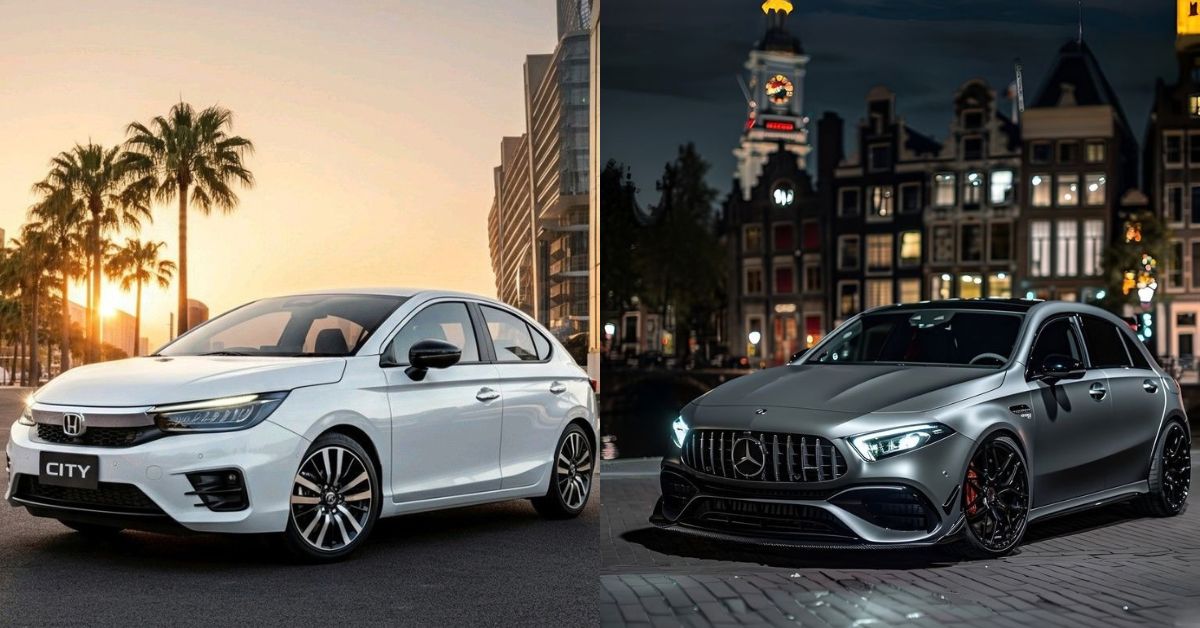
Honda vs Mercedes is a comparison between two car brands with very different approaches. Honda is known for practical cars, efficient engines, and everyday usability. Mercedes-Benz focuses more on luxury, premium design, advanced technology, and refined performance.
The interesting part is that these brands compete in some of the same vehicle categories but target different needs. A Honda Civic and a Mercedes-Benz C-Class, for example, can both serve as daily cars, yet their engines, interiors, equipment, and ownership costs can be very different.
This comparison looks at Honda and Mercedes across models, engines, performance, fuel economy, interiors, technology, safety, dimensions, trims, prices, reliability, and maintenance. It helps explain the specific differences between the two brands without treating every Honda or Mercedes model as the same.
Honda vs Mercedes Engines
Honda offers a wide range of engines across its cars. Depending on the model, buyers can find naturally aspirated engines, turbocharged engines, hybrids, and fully electric powertrains. For example, the Honda Civic uses a 2.0-liter naturally aspirated engine or a 1.5-liter turbocharged engine in selected markets. Honda also uses its e: HEV hybrid system in models such as the Accord and CR-V.
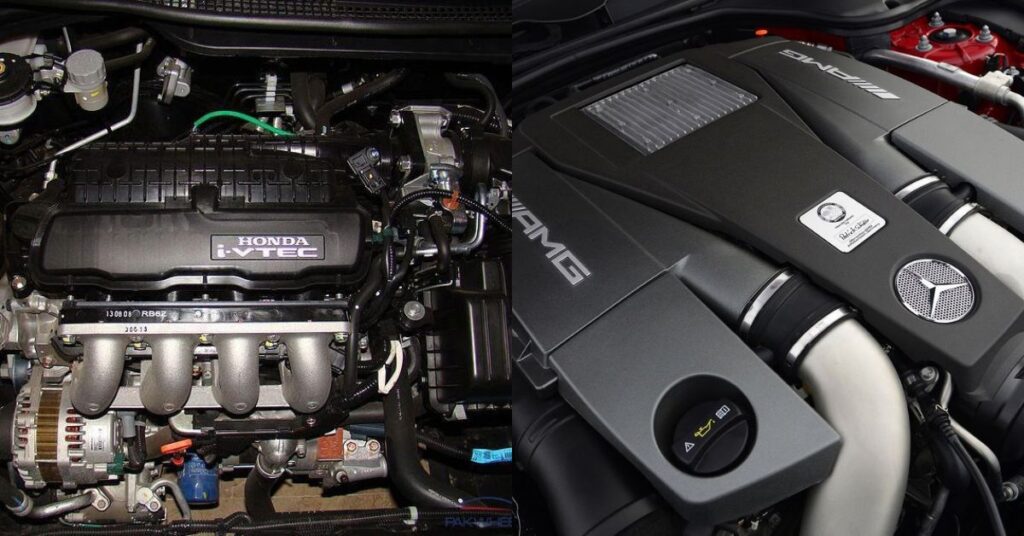
Mercedes-Benz uses a broader range of premium powertrains. Its lineup includes turbocharged four-cylinder and six-cylinder engines, plug-in hybrids, and electric systems. The Mercedes-Benz C-Class, for example, uses a 2.0-liter turbocharged four-cylinder engine in several versions. AMG models add higher-output engines and performance-focused tuning.
The main difference is the engineering focus. Honda engines generally emphasize efficiency, practical performance, and everyday usability. Mercedes engines often combine strong power with advanced features such as mild-hybrid assistance and sophisticated transmission systems. The exact engine specifications vary by model, market, and model year, so a direct comparison should always use equivalent Honda and Mercedes vehicles.
Performance and Handling
Honda tunes most of its cars for predictable and easy driving. Models such as the Civic offer responsive steering and controlled body movement. Turbocharged versions add stronger mid-range acceleration. Honda performance models, such as the Civic Type R, use a more focused suspension and chassis setup for sharper handling.
Mercedes-Benz places more emphasis on refinement and high-speed stability. Models such as the C-Class combine precise steering with a suspension designed for a smooth ride. Higher-performance AMG versions receive stronger brakes, sportier suspension tuning, and more powerful engines. Some Mercedes models also offer all-wheel drive through the 4MATIC system.
The driving feel depends heavily on the model and trim. A Civic and a C-Class are not direct matches in every area. Honda generally combines agility with practical daily driving, while Mercedes often adds a more refined and performance-oriented character. Tire size, suspension design, drivetrain, and engine output can also change the handling of each version.
Honda vs Mercedes Fuel Economy
Honda generally puts strong emphasis on fuel efficiency. Many Honda models use smaller engines and continuously variable transmissions (CVTs) to reduce fuel use. The Civic, for example, offers efficient four-cylinder powertrains, while hybrid models such as the Accord and CR-V use Honda’s two-motor hybrid system to improve efficiency in city and highway driving.
Mercedes-Benz also offers efficient powertrains, but fuel economy varies greatly across its lineup. Many newer models use turbocharged engines with 48-volt mild-hybrid assistance. Plug-in hybrid versions can reduce fuel consumption further when regularly charged. Fully electric Mercedes models use battery power instead of gasoline, so their efficiency is measured differently.
The direct result depends on the models being compared. A compact Honda may use less fuel than a larger Mercedes SUV because of its lower weight and smaller engine. However, a Mercedes hybrid or electric model can change that comparison. Engine size, vehicle weight, drivetrain, transmission, driving conditions, and wheel size all affect real-world fuel consumption.
Honda vs Mercedes Models
Honda and Mercedes-Benz cover different parts of the car market. Honda’s current U.S. lineup includes models such as the Civic, Accord, CR-V, HR-V, Passport, Pilot, Odyssey, Ridgeline, and Prologue. Mercedes-Benz offers models across sedans, SUVs, performance cars, and electric vehicles, including the C-Class, E-Class, GLC, GLE, EQB, and EQE.
The table below shows examples of current models and their roles. Exact availability, trims, and prices can vary by market and model year. For reference, the 2026 Honda Civic Sedan starts at $24,695 in the U.S., while the 2026 Mercedes-Benz GLC 300 SUV starts at $52,400.
| Category | Honda Model | Mercedes-Benz Model | Key Details |
| Compact sedan | Civic | C-Class | Daily driving and compact luxury |
| Midsize sedan | Accord | E-Class | More space and higher equipment levels |
| Compact SUV | HR-V | GLA | Small SUV format |
| Compact/midsize SUV | CR-V | GLC | Family-focused SUV segment |
| Larger SUV | Pilot | GLE | Three-row vs larger premium SUV |
| Electric SUV | Prologue | EQB / EQE SUV | Battery-electric options |
| Minivan | Odyssey | — | Honda offers a dedicated family minivan |
| Pickup | Ridgeline | — | Honda offers a unibody pickup |
| Performance car | Civic Type R | AMG models | Sport-focused performance versions |
| Hybrid sedan | Accord Hybrid | E-Class hybrid versions | Electrified powertrains |
| Hybrid SUV | CR-V Hybrid | GLC 350e | Hybrid or plug-in hybrid options |
Exterior Design
Honda uses a clean and practical design approach across much of its lineup. The Civic has a low, wide body with a simple grille and slim lighting elements. SUVs such as the CR-V and Pilot use a taller profile and stronger body lines. Honda also changes exterior details between trims, including wheels, lighting, grilles, and available body finishes.
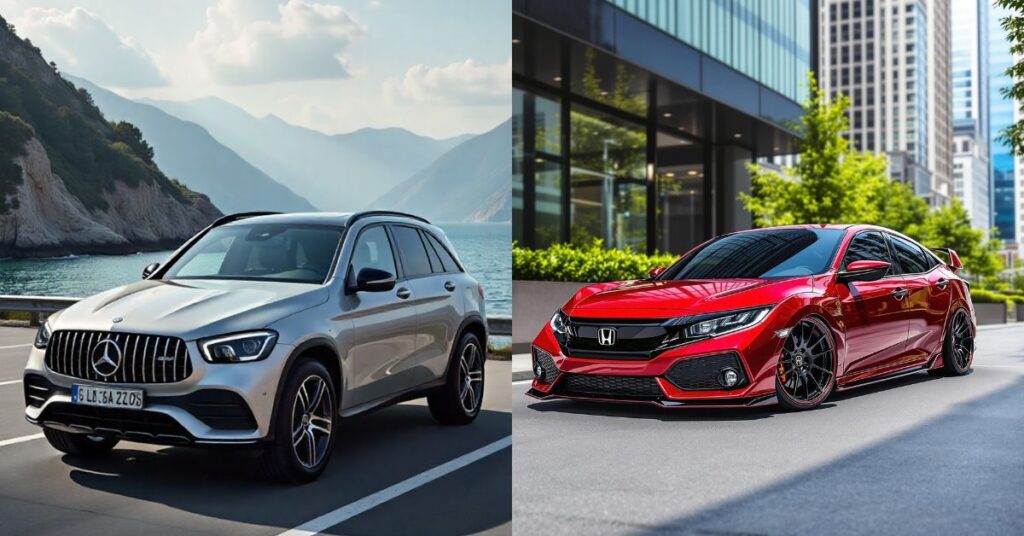
Mercedes-Benz gives its vehicles a more premium and formal appearance. The C-Class uses a long hood, a shaped grille, and smooth body surfaces. Larger models such as the E-Class and GLE have a wider stance and more distinctive lighting designs. AMG versions add sportier bumpers, larger wheels, and other performance-focused details.
The biggest difference is the design direction. Honda focuses on practical proportions and everyday usability. Mercedes combines those needs with a stronger luxury identity. Size also varies greatly between models, so a Civic should not be compared directly with an E-Class or a CR-V with a GLE. The most useful comparison is between vehicles in the same class.
Honda vs Mercedes Interior
Honda interiors focus on simple controls, useful storage, and everyday comfort. The Civic uses a clean dashboard layout with a full-width honeycomb-style air vent design. Higher trims can add leather-trimmed seating, heated front seats, and a larger touchscreen. Honda SUVs such as the CR-V and Pilot provide more cabin and cargo space for family use.
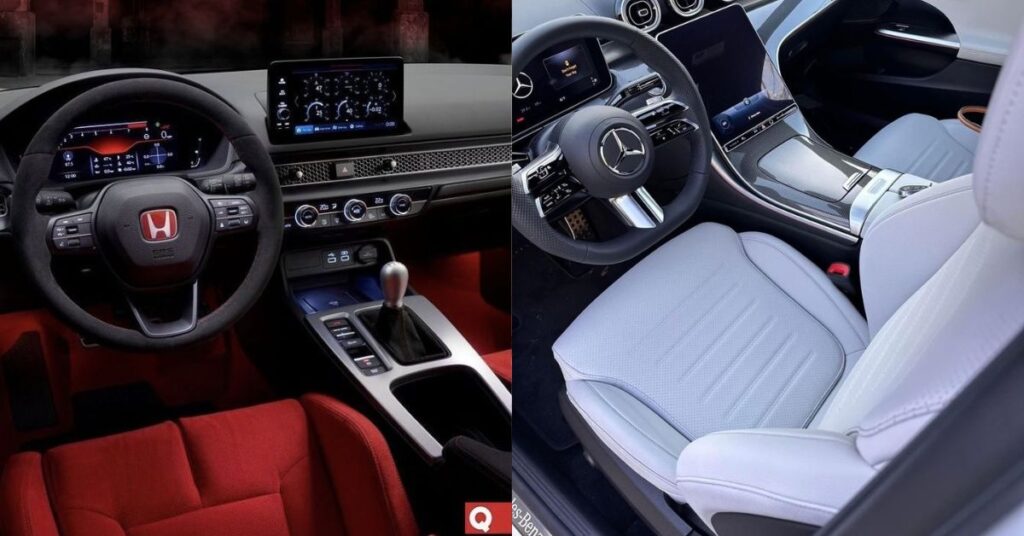
Mercedes-Benz takes a more premium approach. The C-Class features a large central display and a digital driver display, with available leather or premium upholstery and ambient lighting. Higher Mercedes models add more advanced materials, larger screens, and additional comfort features. The cabin design also changes significantly between standard and AMG versions.
The difference is clear in the cabin philosophy. Honda gives more attention to practical layout and daily usability. Mercedes places greater focus on luxury materials, presentation, and technology. Actual features depend on the model and trim, so a Civic should be compared with a C-Class or an Accord with an E-Class for a fair interior comparison.
Technology and Infotainment
Honda offers practical technology across its lineup. The Civic can include a 7-inch or 9-inch touchscreen, depending on trim and model year. Available features include Apple CarPlay, Android Auto, wireless smartphone charging, and a digital driver display. Higher trims add more connected features and premium audio systems.
Mercedes-Benz uses a more screen-focused cabin design. The C-Class can feature the MBUX multimedia system with an 11.9-inch central touchscreen and a 12.3-inch digital instrument display. Voice control, navigation, smartphone integration, and connected services are also available. Higher trims can add augmented-reality navigation and upgraded sound systems.
Both brands offer modern infotainment, but their layouts are different. Honda generally keeps its systems straightforward and easy to use. Mercedes puts more technology into the dashboard and MBUX system. Features vary by model, trim, and market, so equipment should be checked for the exact vehicle being compared.
Safety Features
Honda equips many of its cars with the Honda Sensing safety suite. Depending on the model, it can include collision mitigation braking, adaptive cruise control, lane-keeping assistance, and road departure mitigation. Newer Honda models can also offer traffic sign recognition and a driver attention monitor. Equipment varies by vehicle and trim.
Mercedes-Benz uses its own range of driver-assistance systems. Available features can include active brake assist, active lane keeping assist, blind spot assist, and adaptive cruise control through Active Distance Assist DISTRONIC. Higher trims and option packages can add more advanced assistance systems. Some functions depend on the selected package.
Both brands also use airbags, stability control, traction control, and other passive safety systems. However, safety equipment is not identical across every model. A Honda Civic and a Mercedes-Benz E-Class have different sizes, structures, and available assistance systems. For a fair comparison, safety features should be checked by specific model year and trim.
Space and Dimensions
Honda offers vehicles in many different sizes. The Civic is a compact car, while the Accord provides a larger cabin and longer body. Honda SUVs range from the smaller HR-V to the three-row Pilot. The Pilot measures about 199.9 inches long and offers three rows of seating, making it suited to larger families.
Mercedes-Benz also has a wide size range. The C-Class is smaller than the E-Class, while SUVs such as the GLC and GLE provide progressively more cabin and cargo space. The GLE is about 194.3 inches long in its current U.S. form. Its available three-row layout gives Mercedes buyers an option for carrying more passengers.
Dimensions depend strongly on the vehicle class. Honda often emphasizes usable passenger and cargo space in mainstream models. Mercedes combines passenger room with longer luxury-car proportions and premium cabin packaging. For an accurate comparison, matching models such as Civic vs C-Class, Accord vs E-Class, or CR-V vs GLC should be compared by exact model year and body style.
Honda vs Mercedes Trims
Honda usually offers clear trim levels that add features step by step. The Civic, for example, has versions such as LX, Sport, Sport Hybrid, and Touring in the current U.S. lineup. Higher trims can add larger screens, upgraded audio, heated seats, and additional convenience features. Hybrid availability depends on the body style and model year.
Mercedes-Benz uses a different trim and equipment structure. Models such as the C-Class are offered in versions including C 300 and performance-focused Mercedes-AMG variants. Buyers can also select separate equipment packages and options. These can add features such as upgraded driver assistance, premium audio, larger wheels, and enhanced interior equipment.
The two systems give buyers different ways to configure a car. Honda tends to group many features into defined trims. Mercedes provides more opportunity to combine a model with optional packages and individual equipment. Exact trims and available options vary by market, model year, and vehicle, so the original factory specification should be checked before comparing prices.
Prices and Value
Honda generally sits in the mainstream car market. In the U.S., the 2026 Civic starts at about $24,695, while the 2026 CR-V starts at about $30,500. Higher trims and hybrid versions cost more. Honda pricing can also change by body style, equipment, and destination charges.
Mercedes-Benz operates in a higher-priced segment. The 2026 C-Class starts at a much higher price than the Civic, while larger Mercedes SUVs cost more as equipment and engine options increase. Optional packages can also raise the final price. AMG models add another significant step because of their performance hardware and powertrains.
Value depends on what the buyer needs from the car. Honda can offer a lower entry price and simpler trim structure. Mercedes provides access to more premium materials, luxury features, and additional powertrain options at a higher cost. Insurance, fuel, maintenance, depreciation, and optional equipment should also be included when comparing total ownership costs.
Reliability and Maintenance
Honda has a long history of using relatively simple and widely supported powertrains. Routine service can include engine oil, filters, brake components, tires, and transmission-related maintenance. Hybrid models add specific hybrid-system components, but Honda provides scheduled maintenance requirements for each model. Service intervals and costs vary by vehicle and driving conditions.
Mercedes-Benz vehicles use more complex technology and powertrains. Some models combine turbocharged engines with 48-volt mild-hybrid systems or plug-in hybrid technology. These systems can require specialized diagnostic equipment and trained technicians. Maintenance can also include more electronic and comfort systems than a basic mainstream car.
Ownership costs depend on the exact model and its age. A newer Mercedes may have warranty coverage for major components, while an older model can require more expensive repairs when complex systems need attention. Honda ownership can also become costly when major components require replacement. Checking the service history and following the manufacturer’s maintenance schedule are important for either brand.
Driving Experience
Honda focuses on an easy and predictable driving feel. Models such as the Civic offer light steering and controlled body movement. The Accord provides a more relaxed ride with stronger highway stability. Honda’s hybrid models can also deliver smooth acceleration because the electric motors provide immediate torque.
Mercedes-Benz generally places more emphasis on refinement. The C-Class combines responsive steering with a quieter cabin and a more substantial road feel. Larger models such as the E-Class are designed for relaxed long-distance driving. AMG versions add firmer suspension settings, stronger brakes, and higher engine output.
The driving experience changes with each model and trim. Wheel size, tires, suspension tuning, engine output, and drivetrain can all affect the way a car feels. Honda often combines comfort with straightforward handling. Mercedes adds a stronger focus on luxury, isolation, and performance-oriented options.
Conclusion
Honda vs Mercedes shows clear differences in design, performance, technology, and ownership. Honda offers practical models with efficient powertrains and useful features. Mercedes-Benz focuses more on luxury, premium materials, advanced technology, and performance options.
The right choice depends on the specific model and your needs. Compare engine output, fuel economy, cabin space, safety equipment, price, maintenance, and available features. Looking at matching models and trims gives a more accurate picture than comparing the brands as a whole.
FAQs
1. What is the main difference between Honda and Mercedes?
Honda focuses on practical cars, efficiency, and everyday usability. Mercedes-Benz emphasizes luxury, technology, refinement, and performance.
2. Is Honda cheaper than Mercedes?
Generally, Honda models have lower starting prices. Mercedes vehicles usually cost more because of their luxury positioning and available equipment.
3. Which offers better fuel economy, Honda or Mercedes?
Fuel economy depends on the exact models and powertrains. Honda has many efficient gasoline and hybrid options, while Mercedes also offers hybrid and electric models.
4. Do Honda and Mercedes offer hybrid cars?
Yes. Honda offers hybrid systems in models such as the Accord and CR-V. Mercedes offers mild-hybrid and plug-in hybrid powertrains in several models.
5. Are Honda and Mercedes good for daily driving?
Both brands offer models suited to daily use. The best match depends on your preferred size, features, driving style, budget, and maintenance needs.
One Response
[…] fuel costs may prefer a smaller or hybrid SUV, while the Passport suits buyers who need stronger V6 performance and standard […]