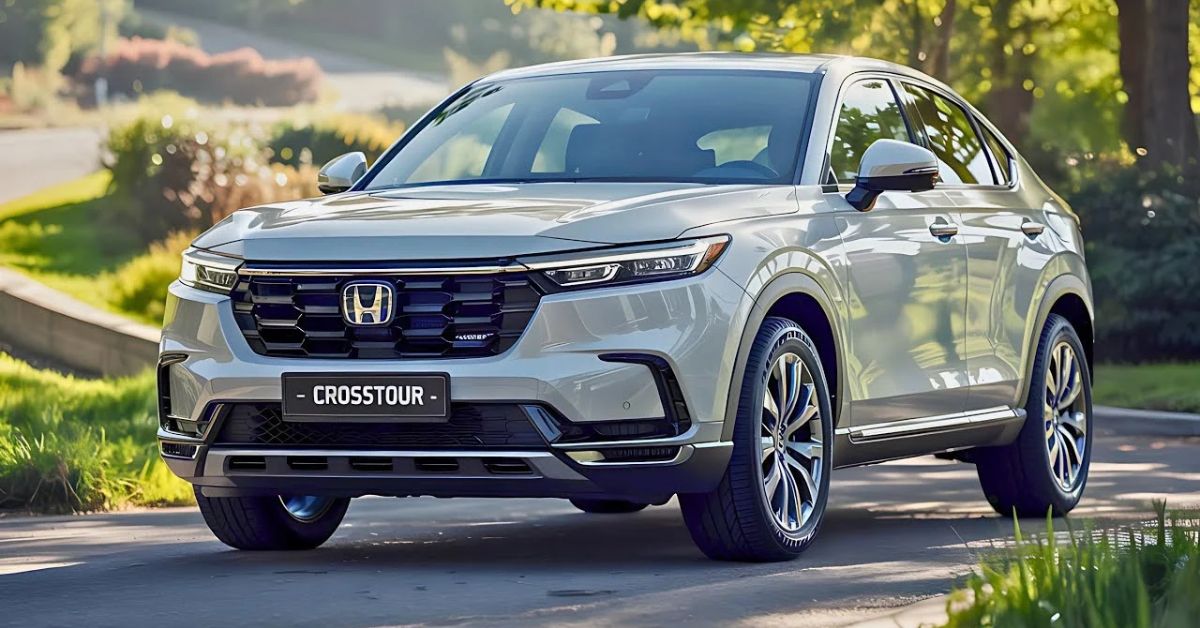
The Honda Crosstour is a five-door crossover based on the Honda Accord platform. It combines a hatchback shape with the ride height and utility of a crossover. Honda offered it with four-cylinder and V6 engines, depending on the model year and market.
The Crosstour stands out because it was not designed like a typical SUV. Its sloping rear roof gives it a distinctive look while still providing useful cargo space. The available V6 and all-wheel-drive system also made it more capable than its unusual design might suggest.
This review takes a close look at the Honda Crosstour. It covers its engines, performance, fuel economy, interior space, cargo area, technology, safety features, trims, reliability, and used-car value. The goal is to show what makes the Crosstour useful and where it falls short.
Honda Crosstour Body Style
The Honda Crosstour uses a five-door liftback body style. It blends features of a sedan, hatchback, and crossover. Its long hood and sloping roof give it a more car-like shape than a traditional SUV. The design was based on the eighth-generation Honda Accord.
The rear roofline is one of the Crosstour’s most recognizable details. It slopes smoothly toward the tailgate. This gives the vehicle a sporty profile while keeping a useful rear cargo area. The higher ride height also provides a different driving position from the Accord sedan.
Honda designed the Crosstour for buyers who wanted more utility without moving to a large SUV. The rear seats fold to expand the cargo area. Some versions also offered all-wheel drive with the V6 engine. This combination made the Crosstour practical for daily driving, long trips, and changing road conditions.
Honda Crosstour Generations
The Honda Crosstour was produced as a single generation from 2009 to 2015. It was first introduced for the 2010 model year. Honda initially called it the Accord Crosstour because of its close connection to the Accord. The name was changed to Honda Crosstour for the 2012 model year.
The early Crosstour used a 3.5-liter V6 as its main engine. A 2.4-liter four-cylinder was added for the 2012 model year. The V6 remained the stronger choice and could be paired with Honda’s Real Time four-wheel-drive system. The four-cylinder version used front-wheel drive.
Honda updated the Crosstour for 2013. The refresh brought revised front and rear styling and interior changes. The V6 also gained direct injection, while a six-speed automatic replaced the earlier five-speed unit. Production ended after the 2015 model year, making the Crosstour a short-lived but distinctive Honda model.
Honda Crosstour Engine Specs
The Honda Crosstour was offered with different engines during its production run. Early models used a 3.5-liter V6 with 271 horsepower and 254 lb-ft of torque. A 2.4-liter four-cylinder was added for 2012. It produced 192 horsepower and 162 lb-ft of torque.
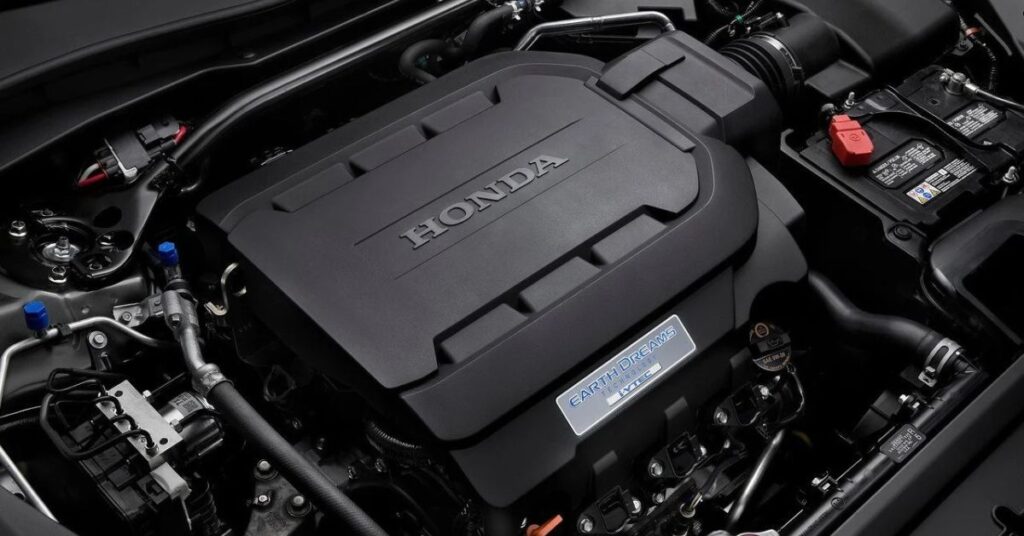
The 2.4-liter engine came with front-wheel drive and a five-speed automatic transmission. The V6 also used a five-speed automatic in earlier models. Starting in 2013, the V6 received direct injection and a six-speed automatic transmission. This update improved both response and efficiency.
The V6 was the better choice for drivers who wanted stronger acceleration. It was also available with Honda’s Real Time four-wheel-drive system. The four-cylinder model focused more on everyday driving and lower fuel consumption. This gave buyers a choice between simpler efficiency and stronger performance.
Honda Crosstour Performance
The Honda Crosstour offers relaxed and confident performance. The 2.4-liter four-cylinder is suitable for daily driving and steady highway use. It produces 192 horsepower and 162 lb-ft of torque. The 3.5-liter V6 feels much stronger, with up to 278 horsepower and 252 lb-ft of torque in later models.
The V6 works well with the Crosstour’s six-speed automatic transmission from 2013 onward. Earlier V6 models used a five-speed automatic. The six-speed unit gives smoother shifts and helps the engine use its power more effectively. V6 models with Real Time four-wheel drive also provide better traction on wet or slippery roads.
The Crosstour is tuned more for comfort than aggressive driving. Its suspension handles normal roads with a composed feel. The higher seating position gives the driver a clear view of the road. The V6 is the better option for highway passing and carrying passengers or cargo, while the four-cylinder suits drivers who prefer a calmer and simpler setup.
Fuel Economy and Transmission
The Honda Crosstour used different transmissions during its production run. Early V6 models came with a five-speed automatic. The 2.4-liter four-cylinder, introduced for 2012, also used a five-speed automatic. From 2013, the V6 received a six-speed automatic transmission.
Fuel economy varies by engine, drivetrain, and model year. The four-cylinder version is generally the more efficient choice because it has less displacement and lower power output. The V6 uses more fuel, especially when equipped with all-wheel drive. EPA ratings also changed after the 2013 powertrain update.
The six-speed automatic helped the later V6 models balance performance and fuel use on longer drives. Front-wheel-drive versions are typically more efficient than four-wheel-drive models. For buyers considering a used Crosstour, checking the exact model year and drivetrain is important because the fuel-economy figures are not the same across the range.
Exterior Design and Dimensions
The Honda Crosstour has a distinctive liftback design. It combines the long hood of a sedan with a raised body and sloping rear roof. The front end shares design elements with the Accord, while the large rear hatch gives the Crosstour a more practical shape. Its wide stance also gives it a solid road presence.
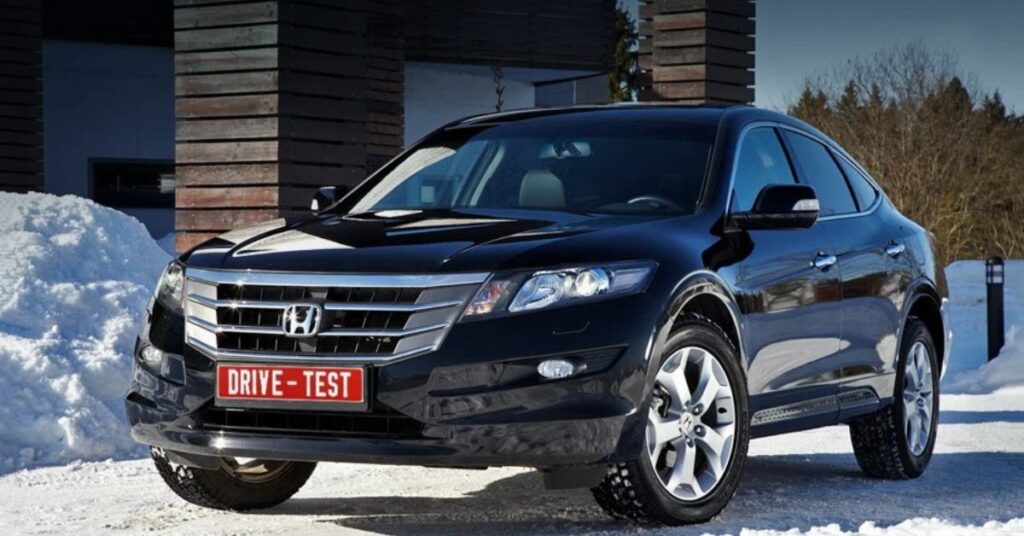
The Crosstour measures about 196.1 inches long and 74.7 inches wide. Its wheelbase is 110.1 inches. Depending on the model year and drivetrain, the overall height is around 65 inches. These dimensions make the Crosstour larger than many compact crossovers but lower than most traditional SUVs.
The raised body provides useful ground clearance for everyday roads and uneven surfaces. The long wheelbase also helps create a stable ride at highway speeds. The sloping roof reduces some of the vertical space at the rear, but the liftback opening makes loading larger items easier than in a conventional sedan.
Safety and Driver Assistance
The Honda Crosstour was built with a strong safety structure and several standard protective features. Depending on the model year, equipment included anti-lock brakes, stability control, traction control, and multiple airbags. Later models also included Honda’s Advanced Compatibility Engineering body structure.
The Crosstour did not have the wide range of modern driver-assistance systems found in newer Honda models. Features such as automatic emergency braking, adaptive cruise control, and lane-keeping assistance were not part of its main factory safety package. Some higher trims offered a rearview camera and other useful visibility features.
Safety equipment changed across model years and trims. Buyers looking at a used Crosstour should check the exact vehicle rather than assuming every feature is standard. A properly maintained braking system, good tires, working airbags, and functional electronic stability control remain important for an older Crosstour.
Honda Crosstour Interior
The Honda Crosstour interior is based on the Accord, so it has a familiar and car-like layout. The dashboard uses clear controls and a practical center console. Higher trims added leather upholstery, heated front seats, and other comfort features. The cabin also provides a relatively high seating position compared with a regular sedan.
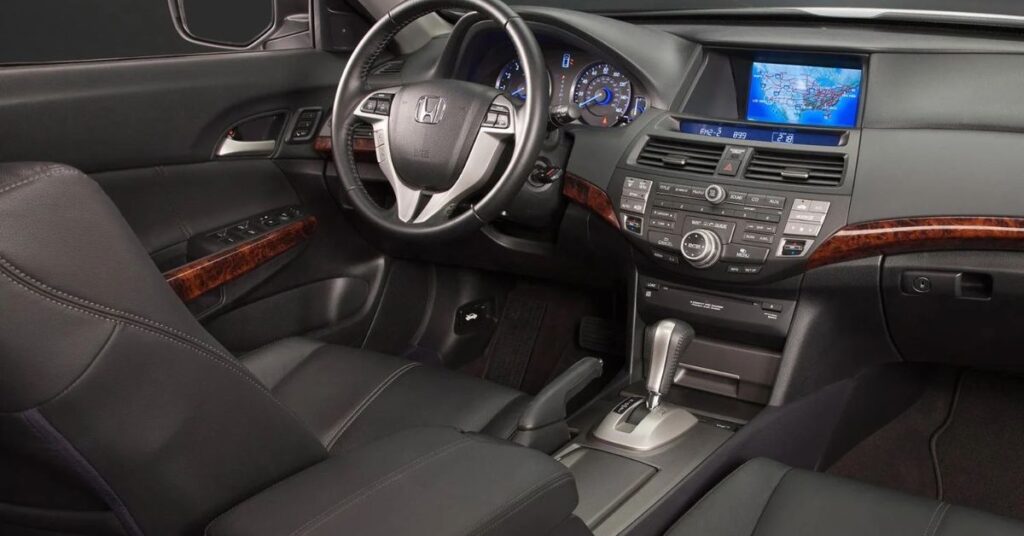
The Crosstour has seating for five people. The front seats provide good support for longer drives. Rear-seat space is useful, although the sloping roof limits some headroom compared with a boxier SUV. The wide rear doors also make it easier to access the back seats.
The liftback design adds flexibility to the cabin. The rear seats can fold to create more cargo space when needed. Later models offered features such as a touchscreen display, navigation, Bluetooth, and available premium audio equipment. Exact interior features depend on the model year and trim.
Technology and Infotainment
The Honda Crosstour offered technology that was advanced for its time. Basic models had a multi-information display, steering-wheel controls, Bluetooth, and an available rearview camera. Higher trims added features such as a power moonroof, leather seating, and a premium audio system.
Later Crosstour models received more advanced infotainment equipment. The available navigation system used a built-in display and voice recognition. Some versions also offered a 360-watt audio system with seven speakers and a subwoofer. USB and auxiliary connections were available for connecting portable devices.
The technology is useful, but it feels dated compared with modern Honda vehicles. Smartphone integration systems such as Apple CarPlay and Android Auto were not factory features. For a used Crosstour, buyers should check the condition of the display, navigation system, audio controls, Bluetooth connection, and backup camera before purchasing.
Reliability and Common Problems
The Honda Crosstour can be a durable used vehicle when it has been serviced properly. The 2.4-liter four-cylinder is relatively simple and uses a naturally aspirated design. The 3.5-liter V6 can also last for many miles with regular oil changes and proper maintenance. Service history matters more than mileage alone when checking an older Crosstour.
Some V6 models use Honda’s Variable Cylinder Management system. On poorly maintained vehicles, owners may experience oil consumption or related engine concerns. Automatic transmission performance should also be checked, especially on older vehicles. Delayed shifts, harsh engagement, or slipping can indicate a need for further inspection.
Age-related wear is another factor because the Crosstour ended production after 2015. Suspension components, brakes, wheel bearings, electrical parts, and air-conditioning components can require attention on higher-mileage examples. Before buying a used Crosstour, inspect the engine, transmission, underbody, suspension, and service records carefully.
Trims and Model Options
The Honda Crosstour was offered in a small range of trims. The exact names and equipment changed by model year. Early versions focused on the V6, while Honda added the four-cylinder option for 2012. Later models received the EX, EX-L, and EX-L with Navi naming structure, depending on engine and drivetrain.
| Model Year | Trim / Version | Engine | Power | Transmission | Drivetrain | Key Features |
| 2010–2011 | EX | 3.5L V6 | 271 hp | 5-speed automatic | FWD | Power features, alloy wheels, V6 engine |
| 2010–2011 | EX-L | 3.5L V6 | 271 hp | 5-speed automatic | FWD / AWD | Leather, heated seats, premium features |
| 2010–2011 | EX-L with Navi | 3.5L V6 | 271 hp | 5-speed automatic | FWD / AWD | Leather, navigation, upgraded audio |
| 2012 | EX | 2.4L I4 | 192 hp | 5-speed automatic | FWD | Four-cylinder engine, power equipment |
| 2012 | EX-L | 3.5L V6 | 271 hp | 5-speed automatic | FWD / AWD | Leather, heated seats, upgraded equipment |
| 2012 | EX-L with Navi | 3.5L V6 | 271 hp | 5-speed automatic | FWD / AWD | Navigation, leather, premium equipment |
| 2013–2015 | EX | 2.4L I4 | 192 hp | 5-speed automatic | FWD | Four-cylinder, power features |
| 2013–2015 | EX-L | 3.5L V6 | 278 hp | 6-speed automatic | FWD / AWD | Leather, heated seats, upgraded interior |
| 2013–2015 | EX-L with Navi | 3.5L V6 | 278 hp | 6-speed automatic | FWD / AWD | Navigation, leather, premium audio and features |
The EX-L V6 is an interesting choice for used buyers because it combines the stronger engine with additional comfort equipment. The later V6 models are also worth considering because the 2013 update brought direct injection and a six-speed automatic transmission. Exact equipment can vary by year and market, so the vehicle’s VIN and original specification should be checked before purchase.
Price and Used Value
The Honda Crosstour is now mainly a used-car purchase because production ended after the 2015 model year. Its used price depends on the model year, mileage, engine, drivetrain, trim, and condition. V6 models with all-wheel drive and higher trims usually attract more interest than basic versions.
Older Crosstour models can offer good value for buyers who want Honda comfort with extra cargo space. The 2013–2015 V6 models are especially interesting because they received the updated 3.5-liter engine and six-speed automatic transmission. Clean examples with complete service records can command more than high-mileage cars with neglected maintenance.
Condition is more important than the badge alone in this age group. Check the transmission, suspension, brakes, tires, air conditioning, and engine for expensive repairs. A well-maintained Crosstour can be a practical used vehicle, while a cheap example with poor service history may cost much more after purchase.
Honda Crosstour Ownership Costs
The Honda Crosstour can have reasonable ownership costs when it is properly maintained. Routine expenses include engine oil, filters, brake pads, tires, and other normal wear items. The four-cylinder model can be cheaper to run because it uses less fuel and has a smaller engine than the V6.
The V6 models can cost more to operate. They use more fuel and may have higher maintenance expenses. All-wheel-drive versions also have additional drivetrain components that need inspection and servicing. Regular fluid changes are important, especially on older vehicles with higher mileage.
Age is now an important part of Crosstour ownership. Even a reliable example can need suspension parts, batteries, belts, hoses, or air-conditioning repairs because of its age. Checking service records before buying can help reduce unexpected costs. A well-maintained Crosstour is usually a better investment than a cheaper example with neglected maintenance.
Conclusion
The Honda Crosstour remains an unusual Honda with a useful mix of comfort and practicality. Its Accord-based platform gives it car-like driving manners, while the liftback design adds useful cargo space. The 2.4-liter four-cylinder suits daily driving, while the V6 offers stronger performance and optional all-wheel drive.
For used buyers, condition and service history matter most. The later 2013–2015 V6 models are attractive because of their direct-injected engine and six-speed automatic transmission. With proper maintenance, the Crosstour can still be a comfortable and practical choice for buyers who want something different from a typical SUV.
FAQs
1. What is the Honda Crosstour?
The Honda Crosstour is a five-door crossover with a liftback design. It combines Accord-based driving comfort with extra cargo utility.
2. What engines were available in the Honda Crosstour?
It offered a 2.4-liter four-cylinder and a 3.5-liter V6. The V6 provided stronger performance and was available with all-wheel drive.
3. Is the Honda Crosstour reliable?
A well-maintained Crosstour can be reliable. Service history is important, especially for the transmission, V6 engine, suspension, and other age-related components.
4. Which Honda Crosstour model year is best?
The 2013–2015 V6 models are appealing because they received a direct-injected 3.5-liter V6 and a six-speed automatic transmission.
5. Why did Honda discontinue the Crosstour?
Honda ended Crosstour production after the 2015 model year. Its unusual liftback crossover design had limited appeal compared with more conventional SUVs.
One Response
[…] automatic transmission. The 2.0-liter engine produces about 272 hp, giving the Avancier stronger performance than Honda’s smaller […]