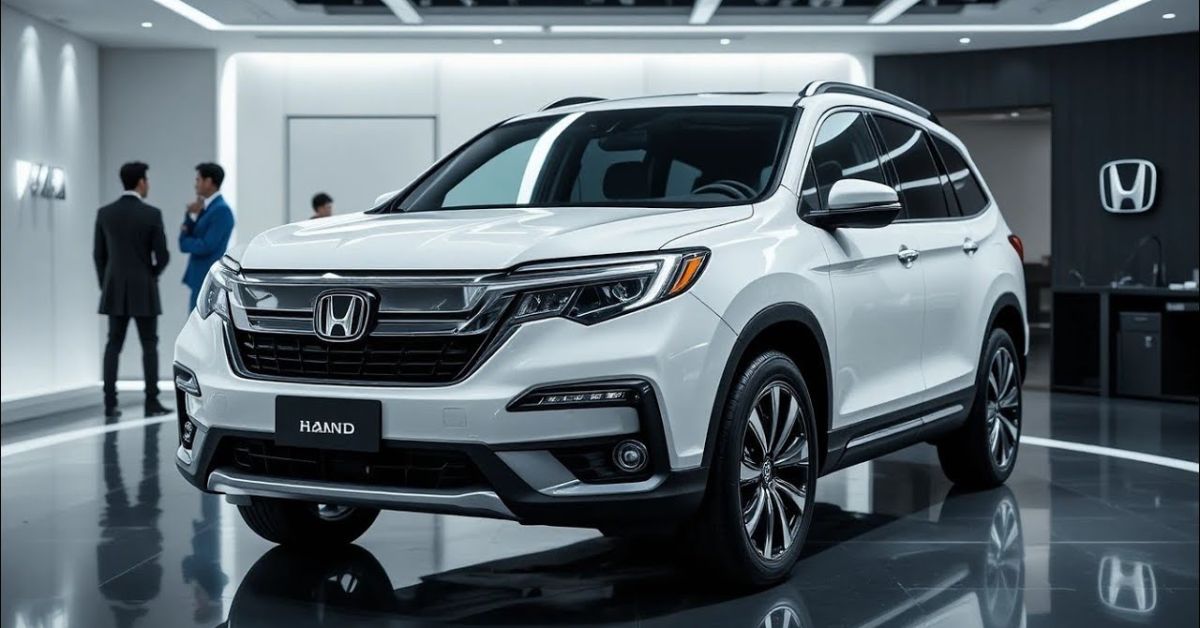
The Honda Pilot is a three-row midsize SUV built for family travel and daily driving. It offers seating for up to eight people, depending on the configuration. The current Pilot uses a 3.5-liter V6 engine with a 10-speed automatic transmission.
The Pilot stands out when you need both space and usable power. Its roomy cabin makes long trips easier for passengers. Available all-wheel drive also adds confidence on slippery roads and light trails.
This review looks at the Honda Pilot in detail. It covers engine performance, handling, fuel economy, interior comfort, cargo space, technology, safety, trims, and pricing. It also explains the key differences between Pilot models and what buyers should know before choosing one.
Honda Pilot History
Honda introduced the Pilot for the 2003 model year as its first SUV designed around three-row family seating. The first generation used a unibody platform and a 3.5-liter V6. It offered front-wheel drive or available four-wheel drive. Honda built this generation through 2008.
The second-generation Pilot arrived for 2009 with a larger body and a more spacious cabin. It continued with a 3.5-liter V6 and added features such as available navigation and a rear entertainment system. Honda also introduced the Pilot TrailSport name much later, giving the SUV a more rugged direction.
The third generation launched for 2016 and brought a major change in design and efficiency. It used a 3.5-liter V6 with either a six-speed or nine-speed automatic, depending on the model year and trim. The fourth-generation Pilot arrived for 2023 with a new 3.5-liter V6, a 10-speed automatic transmission, and a wider range of family and off-road-focused features.
Honda Pilot Generations
The first-generation Honda Pilot covered the 2003–2008 model years. It used a 3.5-liter V6 engine and was offered with front-wheel drive or four-wheel drive. It had three rows and could seat up to eight people. Its boxy shape gave it a practical family-SUV layout.
The second generation arrived for 2009 and continued through 2015. Honda made the body larger and improved the cabin space. A 3.5-liter V6 remained the main engine. The generation also introduced features such as available Bluetooth, navigation, and a rear-seat entertainment system on higher trims.
The third generation ran from 2016 to 2022. It moved to a more streamlined design and gained a nine-speed automatic transmission on many versions. The fourth generation began with the 2023 model year. It uses a 3.5-liter V6 with a 10-speed automatic and offers available i-VTM4 all-wheel drive. The TrailSport trim also added stronger off-road equipment and a more rugged design.
Engine and Specs
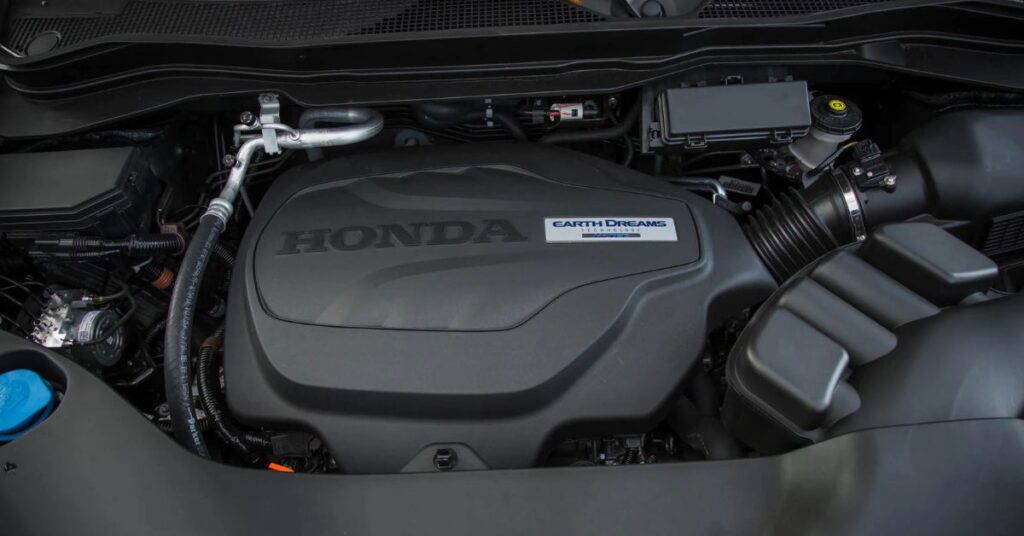
The current Honda Pilot uses a 3.5-liter naturally aspirated V6 engine. It produces 285 horsepower and 262 lb-ft of torque. A 10-speed automatic transmission sends power to the front wheels on standard models. Honda also offers its i-VTM4 all-wheel-drive system on selected trims.
The Pilot has a 3,500-pound towing capacity when properly equipped. The available TrailSport trim is designed for rougher surfaces and uses all-terrain tires, increased ground clearance, and a steel skid plate. These features make it more suitable for light off-road driving than standard Pilot versions.
The fourth-generation Pilot measures about 199.9 inches long and has a 113.8-inch wheelbase. It offers three rows of seating with space for up to eight passengers on several trims. Exact equipment and specifications can vary by model year and trim, so buyers should check the specifications for the specific Pilot they are considering.
Performance and Handling
The Honda Pilot uses a 3.5-liter V6 that makes 285 horsepower and 262 lb-ft of torque. It gives the SUV strong power for daily driving and highway trips. The 10-speed automatic transmission helps keep the engine in a useful power range during acceleration.
The Pilot is tuned more for comfort than sporty driving. Its steering feels predictable and easy to manage in city traffic. The suspension also helps control body movement while keeping the ride comfortable on longer journeys. Front-wheel drive is standard, while available i-VTM4 all-wheel drive improves traction on wet or uneven roads.
The TrailSport adds hardware for light off-road use. It has all-terrain tires, increased ground clearance, and an off-road-tuned suspension. Its Trail Torque Control system can help manage traction on loose surfaces. The Pilot can tow up to 5,000 pounds when properly equipped with the available all-wheel-drive system.
Fuel Economy
The Honda Pilot uses a naturally aspirated 3.5-liter V6, so it focuses more on usable power than maximum fuel savings. For the 2026 model year, front-wheel-drive Pilot models are rated at about 19 mpg city and 27 mpg highway by the EPA. Combined fuel economy is around 22 mpg.
All-wheel-drive versions use more fuel. Their EPA ratings are generally around 18 mpg city and 23–24 mpg highway, depending on the trim. The TrailSport can return lower highway economy because of its all-terrain tires and off-road hardware.
Real-world fuel use can change with driving style, traffic, weather, passengers, and cargo. Highway driving usually gives better results than frequent short trips in the city. The Pilot also has a relatively large fuel tank, which helps provide a useful driving range between refueling stops.
Exterior Features
The fourth-generation Honda Pilot has a wider and more upright exterior than the previous model. It measures about 199.9 inches long with a 113.8-inch wheelbase. The design includes a broad grille, slim LED headlights, and standard LED taillights. Its shape gives the SUV a strong road presence without looking overly aggressive.
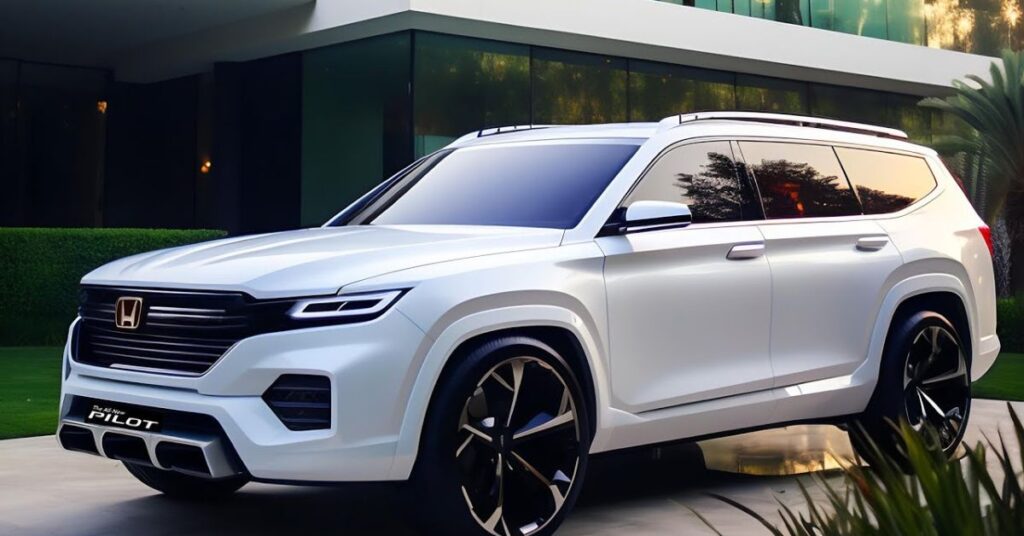
Higher trims add more exterior equipment. The TrailSport has all-terrain tires, a higher ride height, and a steel skid plate for added protection on rough surfaces. Black exterior trim and roof rails also give it a more rugged appearance. Other Pilot versions focus more on clean styling and family-friendly use.
The Pilot also offers practical exterior features for everyday driving. Available features include a hands-free power tailgate, roof rails, heated side mirrors, and a panoramic moonroof on selected trims. The available all-wheel-drive system works with the Pilot’s drive modes to provide better traction on snow, mud, and other low-grip surfaces.
Honda Pilot Interior
The Honda Pilot interior is designed around three-row family use. It can seat up to eight people, depending on the trim and second-row setup. The dashboard uses a clean layout with easy-to-reach controls. Higher trims add leather-trimmed seating, heated front seats, and other comfort upgrades.
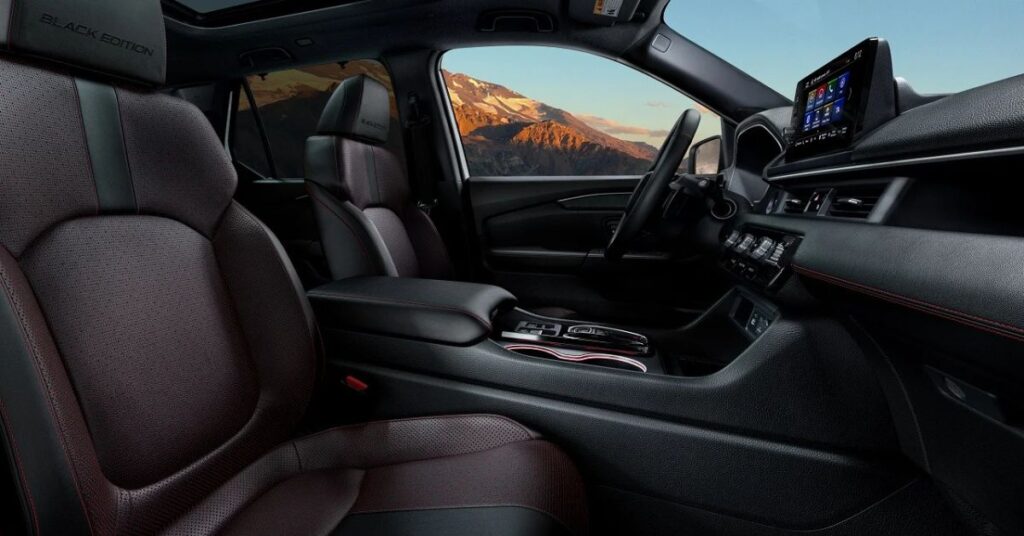
The second row offers useful flexibility for families. Some versions have a removable center section between the second-row seats. This makes it easier to access the third row. The third row is more practical than in many smaller three-row SUVs, especially for children and shorter adults.
The Pilot also provides useful technology inside the cabin. A standard touchscreen handles infotainment functions, while higher trims offer a larger display and additional features. Wireless Apple CarPlay and Android Auto are available, along with wireless smartphone charging on selected versions. The cabin also offers multiple storage areas for everyday items.
Cargo Space
The Honda Pilot offers useful cargo room for a three-row SUV. Behind the third row, it provides about 18.6 cubic feet of space. This area can handle grocery bags, small luggage, or everyday family items. The low cargo floor also makes loading easier.
Folding the third row increases the space to about 48.5 cubic feet. This gives the Pilot much more room for larger bags and outdoor equipment. The second row can also fold down when you need maximum cargo capacity. With both rear rows folded, total cargo volume reaches about 87.0 cubic feet.
The Pilot also has practical storage features throughout the cabin. The wide rear opening makes bulky items easier to load. A power tailgate is available on several trims, while higher versions can offer a hands-free tailgate. These features make the Pilot useful for family trips, shopping, and longer journeys.
Technology and Infotainment
The Honda Pilot uses a touchscreen infotainment system with a simple dashboard layout. Depending on the model year and trim, the system uses a 7- or 9-inch display, while newer models offer a larger 9-inch screen as standard. Wireless Apple CarPlay and Android Auto make it easy to connect compatible smartphones.
Higher trims add more useful technology. Available features include wireless smartphone charging, a 12-speaker Bose premium audio system, navigation, and a 10.2-inch digital driver display. Some models also offer a head-up display that projects key driving information in the driver’s view.
The Pilot also includes technology for family travel. Available features can include Wi-Fi connectivity, multiple USB ports, and a rear-seat entertainment system. The system can help passengers stay connected on longer trips. Exact equipment varies by trim and model year, so buyers should check the specifications of the specific Pilot they plan to purchase.
Safety Features
The Honda Pilot comes with Honda Sensing safety technology. It includes features such as Collision Mitigation Braking System, Road Departure Mitigation, Adaptive Cruise Control, and Lane Keeping Assist. These systems use cameras and sensors to help the driver monitor traffic and road conditions.
The Pilot also offers other useful driver-assistance features. Traffic Sign Recognition can identify certain road signs. Blind Spot Information helps monitor areas beside the vehicle. Available Cross Traffic Monitor can warn the driver about vehicles approaching from the side when reversing.
The Pilot also uses a strong body structure and multiple airbags for occupant protection. Higher trims can add features such as a surround-view camera and parking sensors. Safety equipment can vary by model year and trim, so buyers should check the exact equipment on the Pilot they are considering.
Trims and Models
The 2026 Honda Pilot is offered in seven trims: Sport, EX-L, TrailSport, Touring, Touring Blackout, Elite, and Black Edition. All use the 3.5-liter V6 with 285 horsepower and a 10-speed automatic transmission. The main differences come from comfort, technology, styling, and off-road equipment.
The TrailSport is the rugged-focused model. It includes all-terrain tires, an off-road-tuned suspension, steel skid plates, TrailWatch, and standard all-wheel drive. Touring models add premium features such as a panoramic moonroof and Bose audio. Elite and Black Edition add higher-end cabin features, while Black Edition uses gloss-black exterior trim and wheels.
| Trim | Starting MSRP | Key Features | AWD |
| Sport | $42,395 | 20-inch wheels, Google built-in, power tailgate | Available |
| EX-L | $44,695 | Leather seats, stowable 2nd-row center seat, parking sensors | Available |
| TrailSport | $50,595 | All-terrain tires, skid plates, TrailWatch, off-road suspension | Standard |
| Touring | $51,295 | Panoramic moonroof, Bose audio, hands-free tailgate | Standard |
| Touring Blackout | $52,495 | Black 20-inch wheels, black badges, Bose audio | Standard |
| Elite | $53,695 | Head-up display, ventilated front seats, heated 2nd-row seats | Standard |
| Black Edition | $55,195 | Gloss-black wheels, Black Edition trim, premium leather interior | Standard |
Prices are 2026 U.S. starting MSRPs before destination, taxes, registration, and options.
Honda Pilot Price
The 2026 Honda Pilot starts at $42,395 in the U.S. for the Sport trim. The EX-L starts at $44,695, while the TrailSport starts at $50,595. These prices are starting MSRPs before destination charges, taxes, registration, and accessories.
Higher trims cost more because they include extra comfort and technology features. The Touring starts at $51,295, while the Touring Blackout starts at $52,495. The Elite starts at $53,695, and the Black Edition reaches $55,195.
Honda also lists a $1,595 destination charge for the 2026 Pilot. Final pricing can vary with options, accessories, taxes, registration, and dealer charges. Buyers should check the local market because U.S. MSRP does not represent pricing in every country.
Towing and Off-Road Ability
The Honda Pilot can tow up to 5,000 pounds when properly equipped with all-wheel drive and the required towing equipment. The 3.5-liter V6 produces 285 horsepower and 262 lb-ft of torque. This gives the Pilot enough power for boats, small trailers, and recreational equipment.
The TrailSport is the Pilot’s off-road-focused trim. It has standard all-wheel drive, all-terrain tires, increased ground clearance, and an off-road-tuned suspension. It also uses steel skid plates to help protect important components when driving over rough surfaces.
The Pilot is still a family SUV rather than a dedicated off-road vehicle. Its available drive modes help manage traction on different surfaces. TrailSport adds features such as TrailWatch, which uses cameras to improve visibility around the vehicle. These features make it more capable on dirt roads, gravel, mud, and uneven trails.
Conclusion
The Honda Pilot is a practical three-row SUV with strong everyday performance. Its 3.5-liter V6 delivers 285 horsepower, while the 10-speed automatic keeps the drive smooth. It also offers useful cabin space, flexible cargo room, modern technology, and a wide range of trims.
The Pilot can handle family trips, highway driving, and light off-road use. The TrailSport adds extra equipment for rougher roads. With different trim levels and available all-wheel drive, buyers can choose a Pilot that matches their needs, budget, and driving style.
FAQs
1. How many people can the Honda Pilot seat?
The Honda Pilot can seat up to eight people, depending on the second-row configuration.
2. What engine does the Honda Pilot use?
The current Pilot uses a 3.5-liter V6 engine that produces 285 horsepower and 262 lb-ft of torque.
3. How much can the Honda Pilot tow?
A properly equipped Pilot with all-wheel drive can tow up to 5,000 pounds.
4. Is the Honda Pilot good for off-road driving?
The TrailSport is designed for light off-road use with all-terrain tires, increased ground clearance, and skid plates.
5. How much does the 2026 Honda Pilot cost?
The 2026 Pilot starts at $42,395 in the U.S. before destination charges, taxes, and other fees.
One Response
[…] main difference is the engineering focus. Honda engines generally emphasize efficiency, practical performance, and everyday usability. Mercedes engines often combine strong power with advanced features such as […]