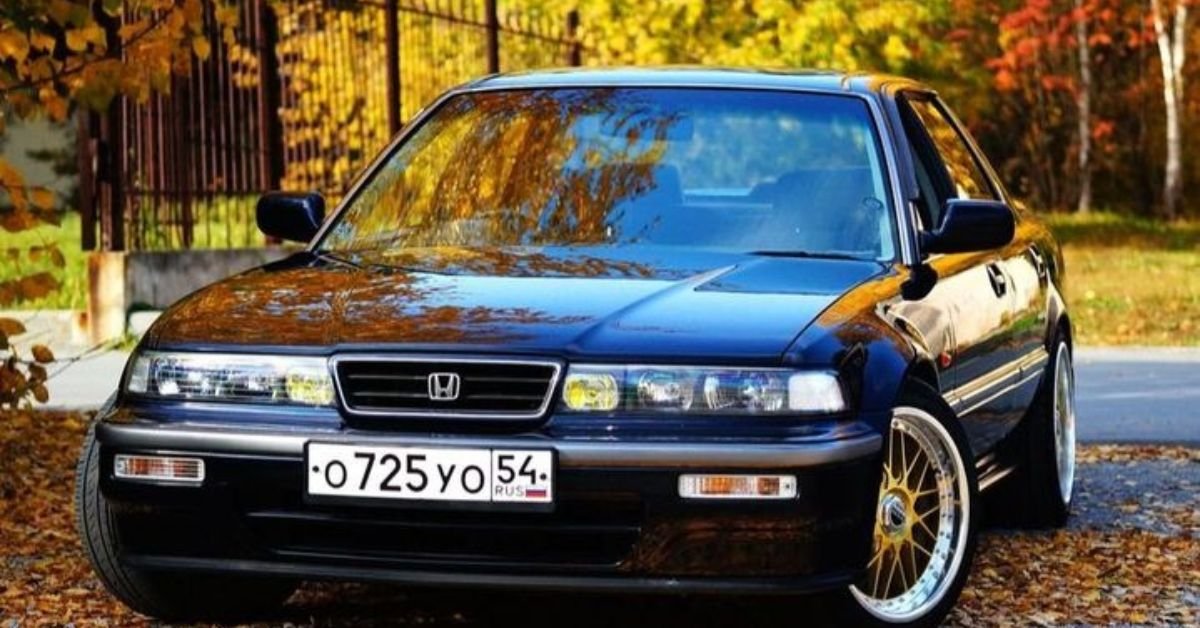
The Honda Vigor is a mid-size sedan produced by Honda between 1981 and 1995. It was known for its smooth engine performance, comfortable cabin, and practical design. Honda offered different engine and body styles across its generations. The later models also featured a more premium feel.
The Honda Vigor is an interesting choice for people who enjoy older Japanese sedans. It combined Honda’s engineering with good road manners and useful features. Its five-cylinder engine in later generations also made it different from many other sedans of its time.
This review covers the Honda Vigor’s generations, engine options, horsepower, transmission, and fuel economy. It also explores its exterior design, interior comfort, safety equipment, and common problems. You will also learn about maintenance needs, spare parts, and used market prices.
Honda Vigor Generations
The Honda Vigor went through three main generations during its production run from 1981 to 1995. The first generation arrived in 1981 as a more upscale version of the Honda Accord. It shared much of its basic engineering with the Accord. However, Honda gave it different styling and equipment to create a more premium option.
The second generation arrived in 1985 and continued until 1989. It received updated body styling and improved cabin features. Honda offered four-cylinder engines in this generation. It also used a front-wheel-drive layout. In Japan, the Vigor became a more distinct model within Honda’s sedan lineup.
The third generation was introduced in 1989 and remained in production until 1995. It featured a 2.0-liter five-cylinder engine mounted longitudinally. This engine layout was unusual for a front-wheel-drive sedan. The model also offered a more refined interior and improved driving comfort. After 1995, Honda replaced the Vigor in Japan with the Inspire and Saber models.
Engine Options and Specifications
The Honda Vigor offered different petrol engines across its three generations. The first generation used a 1.8-liter four-cylinder engine. Early versions used the EK1 engine, while later models offered fuel-injected options. Power output varied by production year and specification. The main focus was smooth performance and everyday driving.
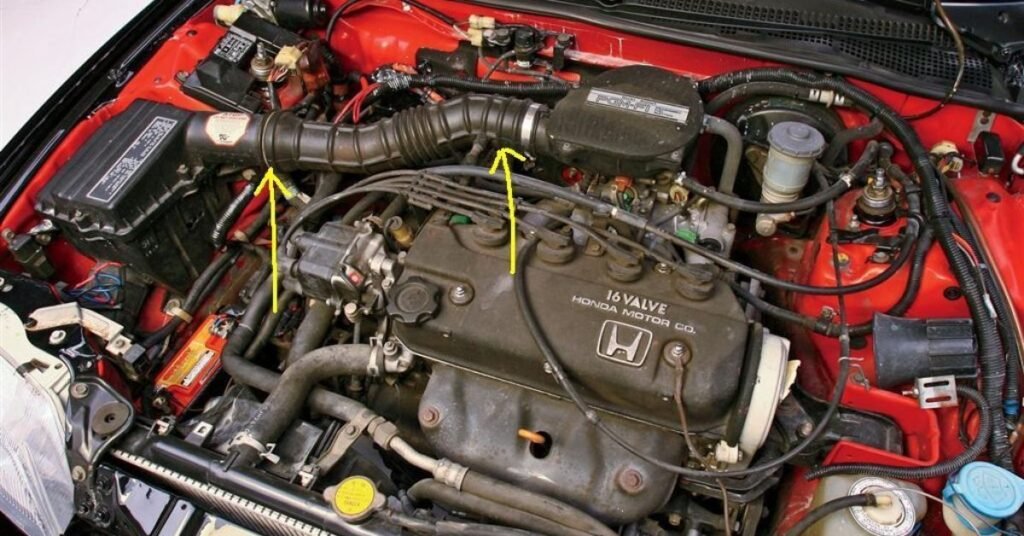
The second generation introduced more engine choices. These included the 1.8-liter A18A, 1.8-liter B18A, and 2.0-liter B20A engines. Some versions used carburetors, while others featured Honda’s PGM-FI fuel injection system. Honda offered the 2.0-liter B20A in selected higher-performance models. These engines were paired with manual or automatic transmissions, depending on the version.
The third generation used Honda’s unusual five-cylinder engine layout. Its 2.0-liter G20A engine produced around 165 PS in Japanese-market specifications. The 2.5-liter G25A offered approximately 190 PS and 242 Nm of torque in selected versions. Both engines used a single overhead camshaft and PGM-FI fuel injection. The 2.5-liter version provided stronger acceleration and more pulling power. Specifications varied between Japanese Honda Vigor and North American Acura Vigor models.
Horsepower and Performance
The Honda Vigor offered different performance levels across its generations. Earlier models used four-cylinder engines with modest power output. They were designed for comfortable daily driving. The third generation brought a major change with Honda’s five-cylinder G-series engines. This gave the Vigor a more distinctive performance character.
The 2.0-liter G20A engine produced around 165 PS in Japanese-market models. It delivered approximately 186 Nm of torque at 4,000 rpm. The larger 2.5-liter G25A engine produced around 190 PS and 237 Nm of torque. These figures made the 2.5-liter version the stronger option. Both engines used fuel injection and a single overhead camshaft design.
The Vigor used a front-wheel-drive layout with a longitudinally mounted engine in its final generation. This unusual arrangement helped distinguish it from many other front-wheel-drive sedans. Buyers could find five-speed manual and four-speed automatic versions, depending on the model. The 2.5-liter engine offered stronger acceleration, while the 2.0-liter version provided a balanced driving experience. Actual performance depends on the car’s condition and transmission.
Transmission and Drivetrain
The Honda Vigor came with manual and automatic transmission options. Earlier generations offered five-speed manual gearboxes and automatic options, depending on the engine and market. These transmissions were designed for smooth gear changes and comfortable driving. The available gearbox varied by model year and trim level.
The third-generation Honda Vigor used a five-speed manual or four-speed automatic transmission. Both options were paired with the G-series five-cylinder engines. The manual gearbox gave drivers more control over gear changes. The automatic version offered easier driving in traffic and on longer journeys.
The final-generation Vigor used a front-wheel-drive system. Its engine was mounted longitudinally, which was unusual for a front-wheel-drive Honda sedan. This layout helped create a distinctive mechanical design. Regular transmission fluid changes and proper servicing are important for long-term reliability, especially in older automatic models.
Fuel Economy and Efficiency
The Honda Vigor uses petrol engines, and its fuel consumption depends on the generation and engine size. Earlier four-cylinder models generally have simpler engine setups. The later models use 2.0-liter and 2.5-liter five-cylinder engines. These larger engines provide stronger performance but require more fuel.
The 1992 Japanese-market Honda Vigor with the 2.0-liter G20A engine recorded around 10.6 km/L in the official 10–15 test cycle. Some manual versions recorded up to 11.4 km/L. The 2.5-liter G25A version recorded approximately 10.2 km/L in the same test. These are factory test figures, not guaranteed everyday results.
Real-world fuel economy can change with driving conditions and vehicle maintenance. Heavy traffic, frequent acceleration, low tyre pressure, and worn engine parts can increase fuel consumption. The automatic version may also use more fuel than the manual version in some driving conditions. Buyers should check the engine condition, fuel injectors, air filter, and oxygen sensor before purchasing an older Vigor.
Trims and Model Variants
The Honda Vigor was available in several trim levels across its generations. Japanese-market models used different grade names, depending on the production year. The third generation included Type N, Type E, Type W, and Type X grades. Later versions introduced additional options, including the 2.0G and 2.5-series models. In North America, the car was sold as the Acura Vigor with LS and GS trims.
The following table highlights the main variants and their differences. Equipment and engine availability changed by year and market.
| Generation / Market | Trim or Variant | Engine | Main Details |
| First generation (Japan) | MG, ME, ME-R | 1.8L | Saloon grades |
| First generation (Japan) | MX-T, ME-T | 1.8L | Hatchback grades |
| Second generation (Japan) | CA1, CA2 | 1.8L | A18A or B18A engine options |
| Second generation (Japan) | CA3 | 2.0L | B20A engine |
| Third generation (Japan) | Type N, Type E | 2.0L G20A | Earlier grade options |
| Third generation (Japan) | Type W, Type X | 2.0L G20A | Higher equipment grades |
| Third generation (Japan) | 2.0G | 2.0L G20A | Later 2.0-liter variant |
| Third generation (Japan) | 2.5XS, 2.5X, 2.5S, 2.5W | 2.5L G25A | Larger-engine variants |
| North America | Acura Vigor LS | 2.5L five-cylinder | Standard luxury features |
| North America | Acura Vigor GS | 2.5L five-cylinder | Additional luxury equipment |
Exterior Design and Dimensions
The Honda Vigor received several exterior updates across its three generations. The first generation had a simple design with rectangular headlights and a clean body shape. It was available as a four-door sedan and a three-door hatchback. The second generation introduced a more modern front grille, updated headlights, and smoother body lines. Its overall appearance remained similar to the Honda Accord of that period.
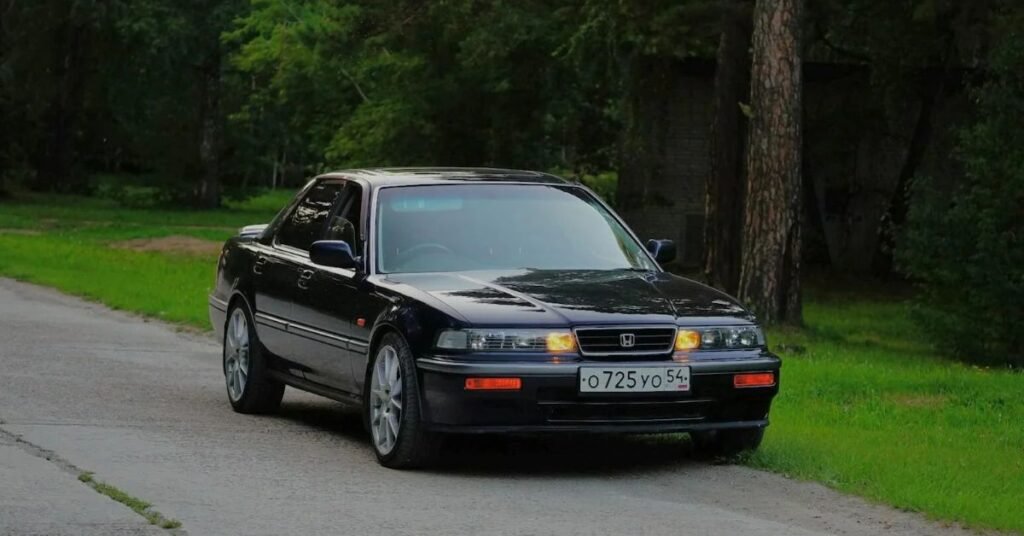
The third-generation Honda Vigor looked more premium and distinctive. It featured a long bonnet, slim headlights, and a wide front grille. Its four-door hardtop body had a low roofline and a clean rear design. The Japanese-market version also had a different body size from the North American Acura Vigor. Some versions received alloy wheels and body-colored exterior details.
The dimensions changed with each generation. The first-generation sedan measured approximately 4,410 mm in length, 1,650 mm in width, and 1,355 mm in height. The second generation measured around 4,535 mm long and 1,695 mm wide. The later Japanese-market model measured approximately 4,690 mm long, while the North American Acura Vigor reached 4,835 mm. Its wheelbase was 2,805 mm, providing a longer cabin layout.
Interior Features and Comfort
The Honda Vigor offered a comfortable cabin with a driver-focused dashboard. Its seats were designed to provide good support during daily driving. The third-generation Japanese models featured soft-touch surfaces and wood trim. Some higher variants also offered leather upholstery and sport-style seats. These details gave the cabin a more premium appearance.
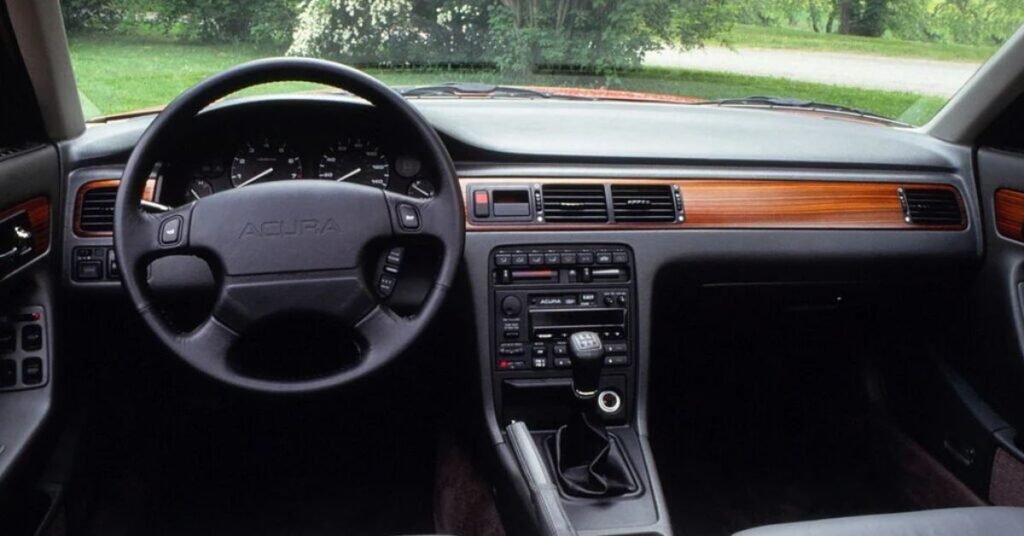
The North American Acura Vigor LS came with fabric seats, air conditioning, power windows, and power door locks. The GS trim added leather seats, a four-way power driver’s seat, and a power moonroof. Both trims included a leather-wrapped steering wheel and wood-trimmed dashboard. These features made the car comfortable for longer journeys.
The Vigor also included an AM/FM stereo and cassette player with an eight-speaker sound system. Higher trims offered an upgraded audio system and optional CD changer. The cabin had useful storage areas, a center armrest, and a folding rear armrest. Rear legroom was more limited than front legroom, so taller passengers might find the back seats less spacious.
Safety Features and Equipment
The Honda Vigor included several safety features for its time. The third-generation Japanese models offered three-point seat belts, door protection beams, and four-wheel disc brakes. They also featured front ventilated brake discs. These systems helped improve braking and occupant protection. Equipment varied by trim and model year.
The North American Acura Vigor came with a three-channel Anti-lock Braking System (ABS) and a driver’s side airbag as standard equipment. ABS helped prevent wheel lock during hard braking. It allowed drivers to maintain better steering control on slippery roads. The car also used front and rear impact-absorbing zones to reduce collision forces.
Safety equipment improved during the final production years. The 1993 GS model added a passenger-side airbag, while the 1994 LS and GS models received passenger airbags as standard. Buyers should check the airbag system, seat belts, brake condition, and ABS warning light before purchasing a used Vigor. These parts can wear or develop faults in an older car.
Honda Vigor Reliability
The Honda Vigor has a durable mechanical design, especially in its later generations. Its 2.0-liter G20A and 2.5-liter G25A five-cylinder engines can provide long service with proper maintenance. However, the condition of each vehicle matters because these cars are now several decades old. Regular oil changes and cooling system care are important for engine health.
Some common age-related problems include distributor failure, oil leaks, and timing belt wear. The timing belt needs special attention because failure can cause serious internal engine damage. Automatic transmission condition also matters. Delayed gear changes, slipping, or harsh shifting can indicate expensive repairs.
Spare parts can be difficult to find because the Honda Vigor was produced in limited numbers compared with the Accord and Civic. Some regular service parts are easier to source than model-specific engine and body components. Buyers should check the engine, gearbox, suspension, electrical system, and service history before purchasing one. A professional inspection can help identify hidden problems and avoid unexpected repair costs.
Honda Vigor vs Honda Accord
The Honda Vigor and Honda Accord share a common history. The early Vigor models were based on the Accord but offered more premium equipment. Honda introduced the Vigor in Japan in 1981 through its Verno dealership network. The Accord was sold through the Clio network. The biggest difference came in 1989, when the Vigor received a distinctive design and a longitudinal five-cylinder engine.
Here are the main differences between these two Honda sedans:
- Engine: The early Vigor used four-cylinder engines. Its later models featured 2.0-liter and 2.5-liter five-cylinder engines.
- Design: The Vigor had a more premium appearance in its later generation. The Accord focused on a wider range of body styles and buyers.
- Comfort: Higher Vigor trims offered premium cabin materials and additional equipment.
- Performance: The later Vigor offered a distinctive five-cylinder engine layout. The Accord used more conventional four-cylinder engine options in comparable Japanese models.
- Practicality: The Accord had a broader lineup and wider market availability. The Vigor was a more specialized sedan.
Overall: The Vigor suits buyers interested in a distinctive older Honda sedan. The Accord is a better-known choice with a broader model history and easier parts availability.
Common Problems and Repairs
The Honda Vigor can develop several age-related mechanical problems. Its G20A and G25A five-cylinder engines may experience distributor failure, oil leaks, and cooling system issues. A failing distributor can cause hard starting, engine stalling, or rough running. Worn valve cover gaskets and engine seals can also allow oil to leak. Replacing damaged seals and faulty ignition parts can help restore proper operation.
The timing belt is another important part to inspect. Both engines use a timing belt, and a broken belt can cause serious internal engine damage. The water pump and belt tensioner also need attention during major servicing. Automatic transmission problems may include slipping, delayed engagement, and harsh gear changes. These issues require proper diagnosis before replacing parts.
Cooling system leaks, worn hoses, and damaged radiator parts can also affect older Vigor models. Regular inspections can help prevent overheating and expensive repairs. Owners should check the engine oil, coolant, transmission fluid, and ignition system. Finding a mechanic familiar with Honda’s five-cylinder engine is helpful. Model-specific spare parts may also take time to source because the Vigor is now a rare car.
Maintenance and Spare Parts
The Honda Vigor needs regular maintenance to keep its engine and transmission in good condition. Owners should change the engine oil, oil filter, air filter, and spark plugs when required. The 2.0-liter G20A and 2.5-liter G25A engines use timing belts. The belt, tensioner, and water pump should be inspected and replaced according to their service history. A missed timing belt replacement can cause serious engine damage.
Spare parts availability can be a challenge because the Honda Vigor is an older and less common model. Basic service items, such as filters, belts, and some suspension components, may be available through aftermarket suppliers. However, engine-specific parts, body panels, headlights, and interior switches can be harder to find. Buyers should check part numbers before ordering replacements, especially for the five-cylinder engines.
Good maintenance also includes checking the radiator, coolant hoses, brake pads, suspension bushes, and transmission fluid. Owners should inspect for oil leaks and unusual engine vibrations during routine servicing. In Pakistan, finding a mechanic familiar with the Vigor’s five-cylinder engine is important. Keeping a supply of essential service parts can also reduce repair delays.
Conclusion
The Honda Vigor is a distinctive sedan with an interesting history and unique engineering. Its later five-cylinder engines, comfortable interior, and premium features make it different from many older Honda models. It offers a pleasant driving experience and classic Japanese styling. However, its age and limited spare parts availability can make ownership challenging.
The Honda Vigor can be a good choice for classic car enthusiasts who appreciate rare Honda models. Before buying one, check the engine, transmission, suspension, and service history. Also, consider the cost and availability of replacement parts. A well-maintained Vigor can still provide an enjoyable ownership experience.
FAQs
1. What years was the Honda Vigor produced?
The Honda Vigor was produced from 1981 to 1995 across three generations.
2. What engine does the Honda Vigor use?
It offered several four-cylinder engines in earlier generations and 2.0-liter and 2.5-liter five-cylinder engines in the final generation.
3. Is the Honda Vigor reliable?
Yes, it can be reliable with proper maintenance. However, age-related problems and limited spare parts can be challenging.
4. What transmission options were available in the Honda Vigor?
Depending on the generation and market, it offered five-speed manual and automatic transmission options.
5. Is the Honda Vigor expensive to maintain?
Maintenance costs depend on the vehicle’s condition and parts availability. Model-specific components can be expensive or difficult to find.
No Responses