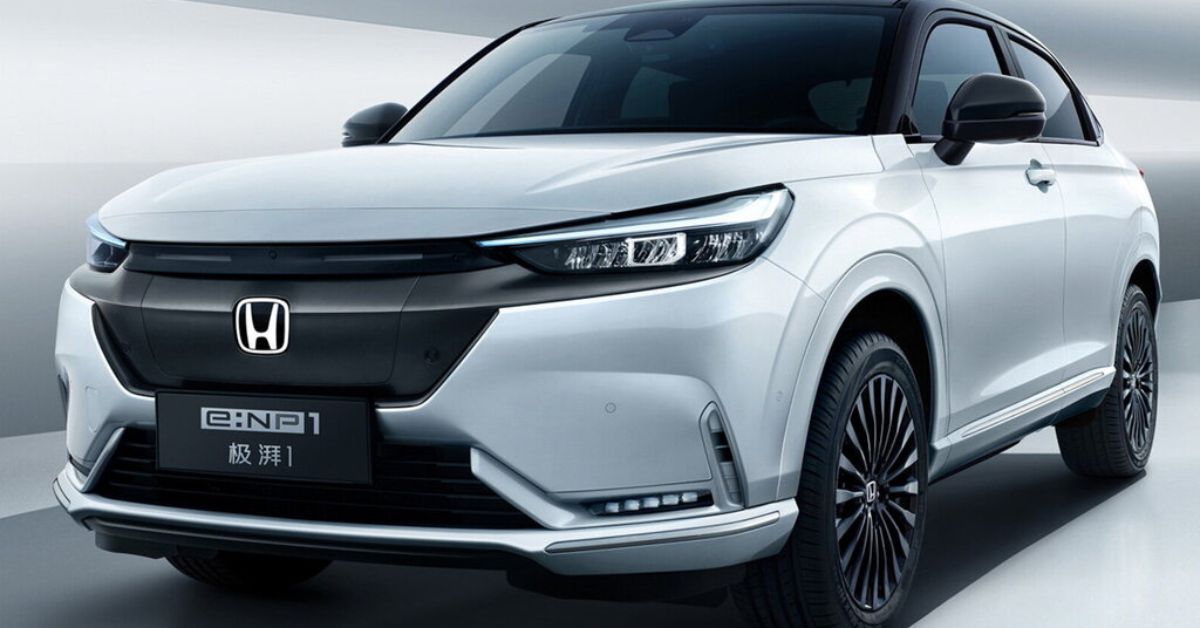
The Honda e is a compact electric hatchback built mainly for city driving. It uses a 35.5 kWh battery and a rear-wheel-drive layout. Honda offered it with 136 PS or 154 PS.
One of its most distinctive features is its digital cabin. The dashboard includes five screens, while cameras replace traditional side mirrors. Its retro-inspired exterior also gives it a look unlike most small EVs.
The Honda e offers up to 137 miles of range, depending on wheel size. Rapid charging can bring the battery to about 80% in around 30 minutes. This article covers its design, technology, battery, performance, charging, and key specifications.
Honda e Overview
The Honda e is a small five-door electric hatchback designed mainly for urban use. It was developed on a dedicated EV platform and uses rear-wheel drive. Its compact 3,895 mm length makes it well suited to narrow streets and tight parking spaces.
Honda fitted the car with a 35.5 kWh lithium-ion battery. Buyers could choose between 136 PS and 154 PS motor versions. Both deliver 315 Nm of torque, giving the Honda e quick response at low speeds.
The Honda e also combines retro exterior styling with a highly digital interior. Its cabin features five dashboard screens and camera-based side mirrors. These details helped make it one of Honda’s most distinctive electric cars.
Honda e Exterior Design
The Honda e has a clean, retro-inspired shape with a short hood and upright body. Its round LED headlights sit inside a glossy black front panel. The smooth surfaces and simple lines give the car a very distinctive look.
Honda also removed traditional door handles from the body. The front handles sit flush with the doors, while the rear handles are hidden near the window frame. Camera-based side mirrors further reduce visual clutter around the car.
At the rear, the Honda e uses round LED taillights that match the design of the front lamps. The wheels are pushed close to the body’s corners, which helps the car look compact yet stable. Its small size also makes the exterior well suited to busy city streets.
Interior and Cabin Comfort
The Honda e has a wide, flat dashboard with a lounge-style design. Wood-look trim runs across the front of the cabin. The simple layout makes the interior feel open and modern.
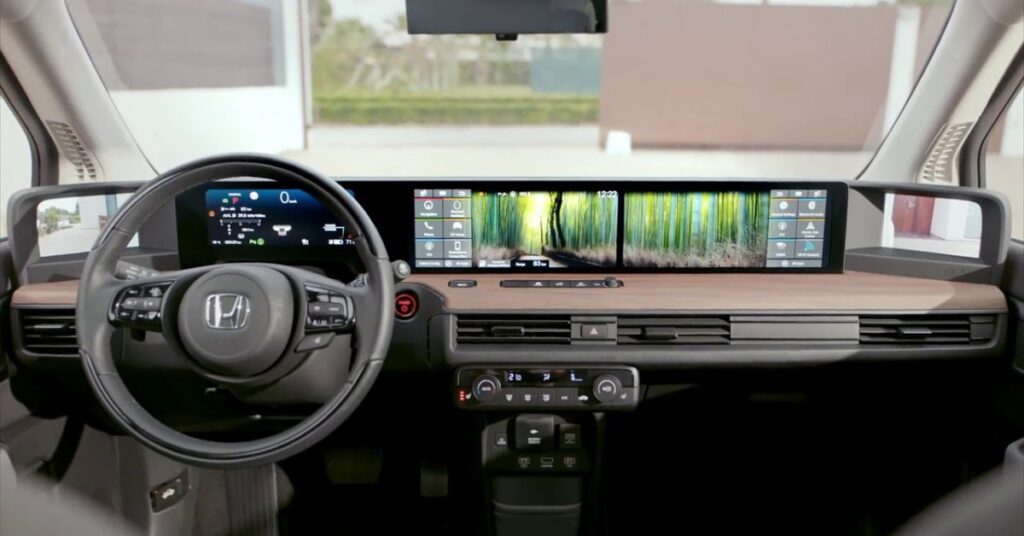
A five-screen display setup covers much of the dashboard. This includes two 12.3-inch touchscreens in the center. Separate screens also show images from the camera-based side mirrors.
The cabin has seating for four people rather than five. The rear bench is designed more like a small sofa, with soft fabric and a simple shape. Its flat floor also helps create more usable foot space inside the compact body.
Honda e Motor and Performance
The Honda e uses a rear-mounted electric motor that drives the rear wheels. Honda offered two power outputs. The standard version produces 136 PS, while the more powerful version produces 154 PS.
Both versions deliver 315 Nm of torque. This gives the Honda e quick acceleration from low speeds. The 154 PS model can reach 62 mph in about 8.3 seconds.
Its rear-wheel-drive layout also helps the car feel agile in city traffic. The battery is mounted low in the floor, which lowers the center of gravity. This setup improves balance and gives the Honda e a tight turning circle of about 4.3 meters.
Battery Capacity and Driving Range
The Honda e uses a 35.5 kWh lithium-ion battery. The battery pack is mounted under the floor. This placement helps keep the car’s weight low and improves overall balance.
With 16-inch wheels, the Honda e offers a WLTP range of up to about 137 miles. Models fitted with 17-inch wheels have a slightly lower range of around 131 miles. The larger wheels increase rolling resistance and energy use.
The battery size shows that the Honda e was designed mainly for short urban trips. Its range is better suited to daily commuting than long motorway journeys. For city drivers, the compact battery also helps keep the car small and easy to handle.
Technology and Infotainment Features
The Honda e has one of the widest digital dashboards in its class. It uses two 12.3-inch touchscreens across the center of the cabin. The driver can control navigation, media, vehicle settings, and connected services from these displays.
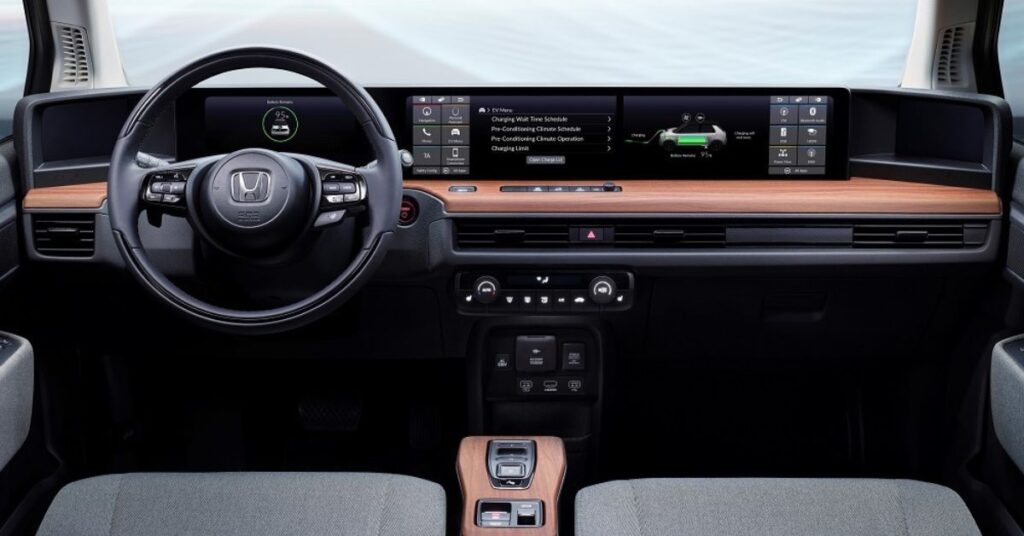
The car also supports Apple CarPlay and Android Auto. Honda added its Personal Assistant voice system, which can respond to spoken commands. Some versions also include an HDMI input and a 230V power outlet for added convenience.
Another unusual feature is the Side Camera Mirror System. Small exterior cameras replace normal side mirrors and send live images to screens at each end of the dashboard. A separate center camera can also replace the traditional rearview mirror display.
Safety and Driver Assistance Systems
The Honda e comes with Honda Sensing driver assistance technology. This package includes a Collision Mitigation Braking System and Forward Collision Warning. These features can warn the driver and apply braking when a possible crash is detected.
Adaptive Cruise Control helps maintain a set distance from the vehicle ahead. Lane Keeping Assist and Road Departure Mitigation also help the driver stay in the correct lane. Traffic Sign Recognition can display detected road signs on the driver screen.
The Honda e also uses multiple cameras and sensors around the car. These support parking and low-speed driving in tight spaces. Some versions include Honda Parking Pilot, which can help steer the car into suitable parking spaces.
Honda e Charging Time and Options
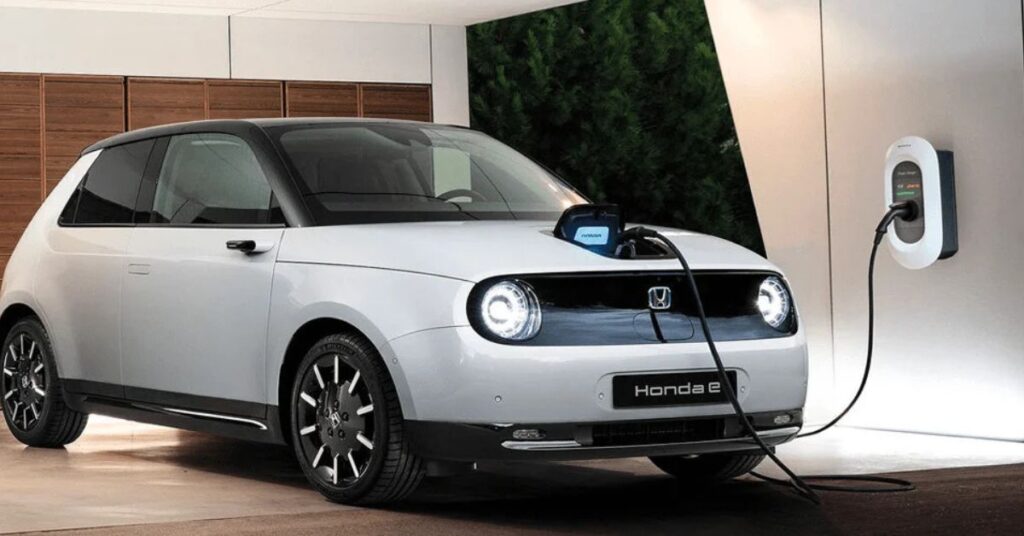
The Honda e uses a centrally mounted charging port on the hood. Its 35.5 kWh battery supports both AC and DC charging. On a 7.4 kW public AC charger, a full charge takes about 4.1 hours from the low-charge warning level. A 2.3 kW home supply takes about 18.8 hours.
For faster charging, the Honda e uses a CCS2 connection. Honda states that a 100 kW DC charger can bring the battery to 80% in about 30 minutes, while a 50 kW charger takes about 31 minutes. This makes rapid charging much more useful during longer trips.
| Charging option | Power source | Connector | Charge level | Approx. charging time |
| Home socket | 2.3 kW AC | Type 2 | To 100% | 18.8 hours |
| Public AC charger | 7.4 kW AC | Type 2 | To 100% | 4.1 hours |
| Rapid charger | 50 kW DC | CCS2 | To 80% | 31 minutes |
| Rapid charger | 100 kW DC | CCS2 | To 80% | 30 minutes |
| Honda e battery | 35.5 kWh | — | Full capacity | — |
Honda e Dimensions and Practicality
The Honda e is 3,895 mm long, 1,752 mm wide, and 1,512 mm tall. Its wheelbase measures 2,530 mm. These compact dimensions make it easy to drive through narrow streets and crowded city areas.
The Honda e has four seats and five doors. Its luggage compartment offers about 171 liters of space with the rear seats in place. The rear seats can be folded when extra room is needed for larger items.
A turning radius of about 4.3 meters is another useful city feature. The short body and wheels positioned near the corners help with tight turns and parking. However, limited rear-seat and cargo space make the Honda e more practical for daily urban use than family road trips.
Driving Experience and Ride Quality
The Honda e feels quick and responsive in city traffic. Its electric motor delivers torque immediately, so acceleration from low speeds feels smooth. The rear-wheel-drive layout also gives the car a more balanced driving feel.
The battery is mounted low under the floor. This helps lower the center of gravity and keeps the car stable through corners. Its small size and tight turning circle also make it easy to maneuver on narrow roads.
Ride quality is generally comfortable at city speeds. The suspension handles small bumps well, although larger 17-inch wheels can make rough roads feel firmer. The quiet electric motor also keeps the cabin calm during everyday driving.
Honda e Price and Available Trims
The Honda e launched in the UK with two main versions. The standard 100 kW model started at £26,660, while the more powerful Honda e Advance started at £29,160. These launch prices included the UK Plug-in Car Grant available at the time.
The standard model produced 136 PS, while the Advance increased output to 154 PS. The Advance also added equipment such as a more powerful audio system, heated windscreen, and a choice of 16- or 17-inch alloy wheels.
Honda later introduced a Limited Edition based on the Advance trim. Only 50 units were offered across Europe, with UK pricing starting at £38,120. Honda has since discontinued the Honda e in Europe, so it is no longer available to order as a new model.
Honda e Pros and Cons
The Honda e has several strengths for city driving. Its compact size, 4.3-meter turning radius, rear-wheel-drive layout, and quick electric response make it easy to handle in tight areas. The five-screen dashboard, camera-based mirrors, and retro exterior also give it a distinctive character.
Its biggest weakness is limited driving range. The 35.5 kWh battery provides up to about 137 miles with 16-inch wheels, which is much lower than many newer EVs. The 171-liter cargo area and four-seat layout also reduce its practicality for families or long-distance travel.
Pros
- Compact 3,895 mm body
- Up to 154 PS
- 315 Nm of torque
- Rear-wheel drive
- Five-screen dashboard
- Camera-based side mirrors
- Rapid charging to 80% in about 30 minutes
- Tight 4.3-meter turning radius
Cons
- Maximum range of about 137 miles
- Small 35.5 kWh battery
- Only four seats
- Limited 171-liter cargo space
- 17-inch wheels reduce driving range
- Discontinued as a new model in Europe
Reliability and Ownership Costs
The Honda e has a simpler drivetrain than a petrol car. It has no engine oil, clutch, or traditional multi-speed gearbox to maintain. Honda also notes that EVs generally need less mechanical maintenance because they contain fewer moving parts.
Battery condition is important for long-term ownership. Honda’s UK high-voltage battery guarantee covers up to 8 years or 100,000 miles and guarantees at least 70% of original capacity under its stated terms. Regular battery checks can help owners track its condition.
Running costs mainly include electricity, tires, brakes, insurance, and scheduled servicing. Home charging can keep energy costs lower than relying heavily on public rapid chargers. Used buyers should also check the service history, battery health, electronic systems, and camera-based mirrors before purchase.
Conclusion
The Honda e is a small electric car with a clear focus on city driving. Its retro design, rear-wheel-drive setup, camera mirrors, and wide digital dashboard make it stand out. The cabin also feels more advanced than many other compact EVs of its time.
Its main limits are the short driving range, small cargo area, and four-seat layout. Still, the Honda e remains an interesting choice for buyers who value design, technology, and easy urban driving more than long-distance ability.
FAQs
1. What is the range of the Honda e?
The Honda e offers up to about 137 miles of WLTP range with 16-inch wheels. Models with 17-inch wheels offer slightly less.
2. How long does the Honda e take to charge?
A DC rapid charger can charge the battery to about 80% in around 30 minutes. A 7.4 kW AC charger takes about 4 hours.
3. What battery does the Honda e use?
The Honda e uses a 35.5 kWh lithium-ion battery. It is mounted under the floor to improve balance and stability.
4. How powerful is the Honda e?
The Honda e was offered with 136 PS or 154 PS. Both versions produce 315 Nm of torque and use rear-wheel drive.
5. How many seats does the Honda e have?
The Honda e has four seats and five doors. Its compact cabin is designed mainly for city driving rather than large families.
No Responses