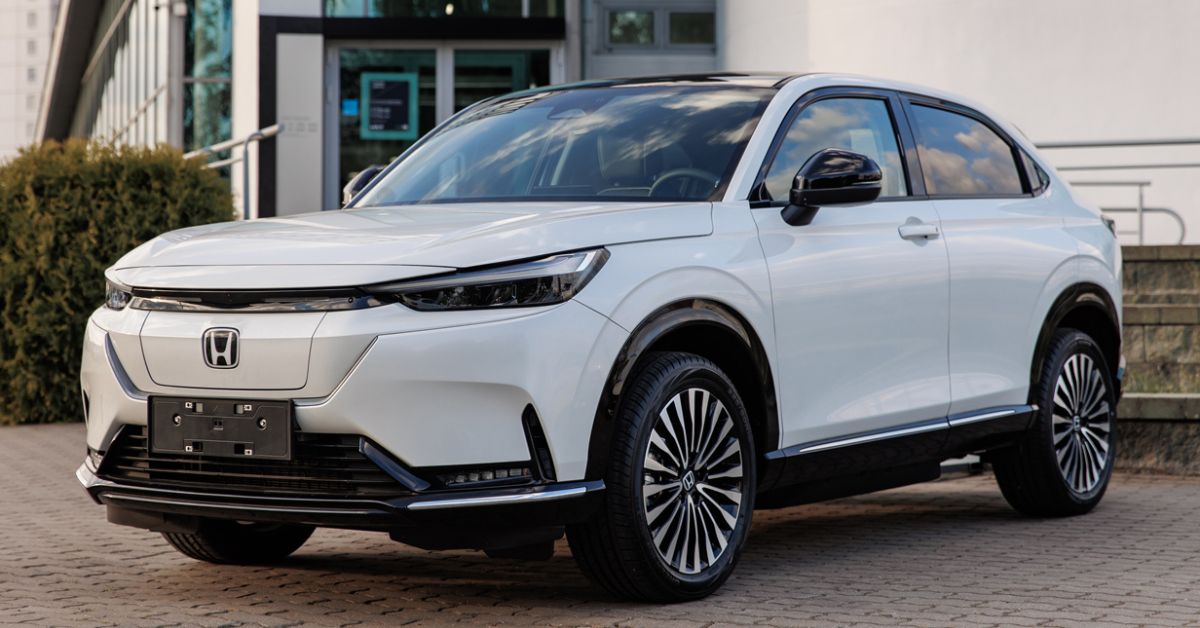
The Honda e NS1 is a fully electric SUV developed for the Chinese market. It uses Honda’s dedicated e: N electric vehicle platform. The model combines a modern SUV shape with electric power and smart technology.
The e: N S1 stands out with its clean design and strong electric range. Its battery and motor setup makes it interesting for drivers who want a practical electric SUV. The large central screen also gives the cabin a modern feel.
In this guide, we will look at the Honda e NS1’s features, specifications, performance, range, charging, interior, safety, and price. We will also cover its variants and overall value. The goal is to give you clear and useful information before considering this electric SUV.
Honda e NS1 Exterior Design
The Honda e NS1 has a clean and modern SUV design. Its front end uses a smooth, closed-off look instead of a traditional grille. The slim LED headlights give it a sharp appearance. The charging port sits at the front, keeping the electric design practical.
From the side, the e NS1 has a simple body shape with strong character lines. Its roof slopes slightly toward the rear. The door handles sit flush with the body on higher-spec versions. The design helps the SUV look sporty without becoming too aggressive.
At the rear, the Honda e: NS1 uses full-width LED-style lighting and a neat tailgate design. The rear bumper keeps the styling simple. Overall, the exterior combines SUV proportions with details designed for an electric vehicle.
Honda e: NS1 Key Specifications
The Honda e: NS1 is built on Honda’s e: N Architecture F, a front-wheel-drive EV platform. Honda states that its large battery can provide up to 510 km of CLTC range in China. The model also comes with a 15.1-inch display, audio, and Honda CONNECT 3.0 as standard equipment.
Key specifications include:
- Powertrain: Fully electric
- Drive system: Front-wheel drive
- Platform: e:N Architecture F
- Maximum claimed range: 510 km (CLTC)
- Infotainment: 15.1-inch Display Audio
- Connectivity: Honda CONNECT 3.0
- Safety technology: Driver Monitoring Camera (DMC)
These figures describe the China-market e: NS1 and use the CLTC testing standard. The 510 km figure should not be treated as a direct real-world driving range. Honda introduced the e: NS1 in China through Dongfeng Honda in April 2022 as one of its first e: N Series EVs.
Honda e: NS1 Interior Features
The Honda e: NS1 has a modern digital cabin. A 15.1-inch central display occupies a prominent position on the dashboard. It works with Honda CONNECT 3.0 and brings together several vehicle and connectivity functions. Honda also fitted a 10.25-inch digital instrument display for key driving information.
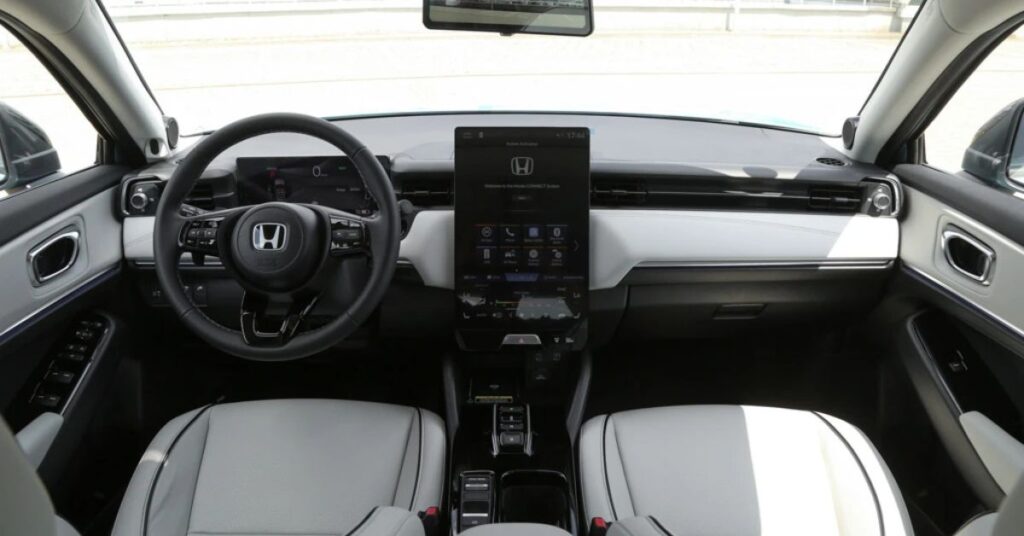
The cabin focuses on technology and easy controls. Honda developed an e: N OS smart control system for the e: NS1. It supports AI voice assistance, energy management, OTA updates, and smartphone-based vehicle controls. The cabin also uses soft-touch and suede-like materials for a more premium feel.
The e: NS1 also offers useful space for daily use. Honda says the model has 18 storage areas throughout the cabin. The interior uses a clean layout that reduces visual clutter. A Driver Monitoring Camera is also available to detect inattentive or drowsy driving behavior.
Battery and Electric Motor
The Honda e NS1 uses a single front-mounted electric motor. It is a permanent-magnet synchronous motor. Depending on the variant, it produces either 134 kW (182 PS) or 150 kW (204 PS). Both versions deliver 310 Nm of torque.
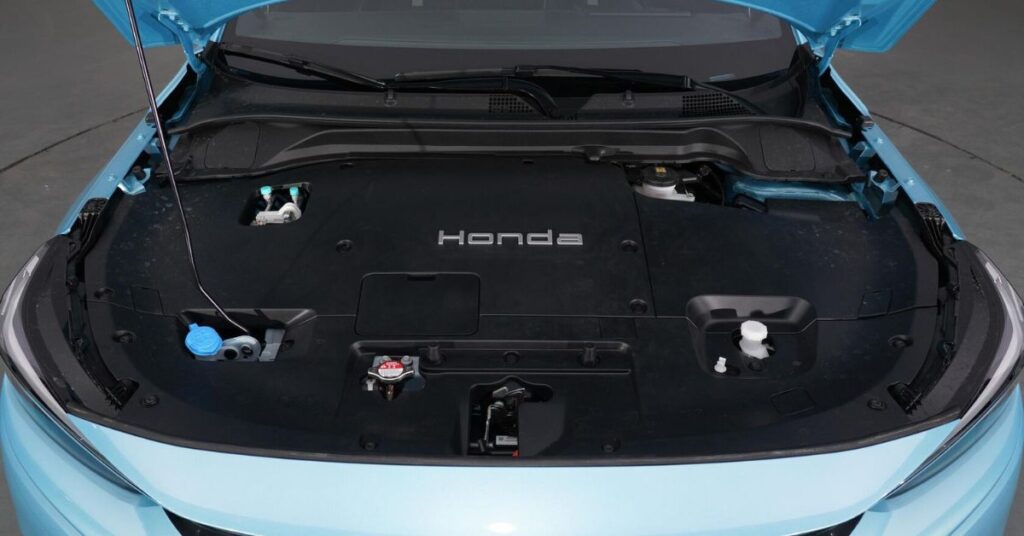
The battery also varies by version. The lower-range models use a 53.6 kWh battery. The higher-range versions use a 68.8 kWh battery. The larger battery gives the e NS1 a claimed range of up to 510 km under China’s CLTC test cycle.
Charging is another useful part of the setup. The e NS1 can fast-charge to 80% in about 40 minutes. Slow charging takes around 9 to 9.5 hours, depending on the version. The battery also uses liquid cooling, which helps manage battery temperature during operation and charging.
Performance and Acceleration
The Honda e NS1 uses a front-mounted electric motor. The higher-output version produces 150 kW (204 PS) and 310 Nm of torque. Power goes to the front wheels through a single-speed setup. This gives the SUV quick and smooth power delivery.
Acceleration is strong for a compact electric SUV. Honda’s related e: Ny1 specification lists 0–100 km/h in 7.6 seconds and a 160 km/h top speed. Some e: NS1 road tests recorded even quicker results, with one test achieving 7.20 seconds from 0–100 km/h.
The instant torque also helps during overtaking. The e: NS1 can build speed without waiting for gear changes. Its front-wheel-drive layout can cause some wheel slip under hard launches. Overall, it offers responsive performance for daily city driving and highway use.
Range and Charging
The Honda e NS1 offers a claimed range of up to 510 km under the China CLTC test cycle. This figure comes from its large-capacity battery and efficient electric powertrain. Actual range can be lower because weather, traffic, driving style, and air-conditioning use can affect battery consumption.
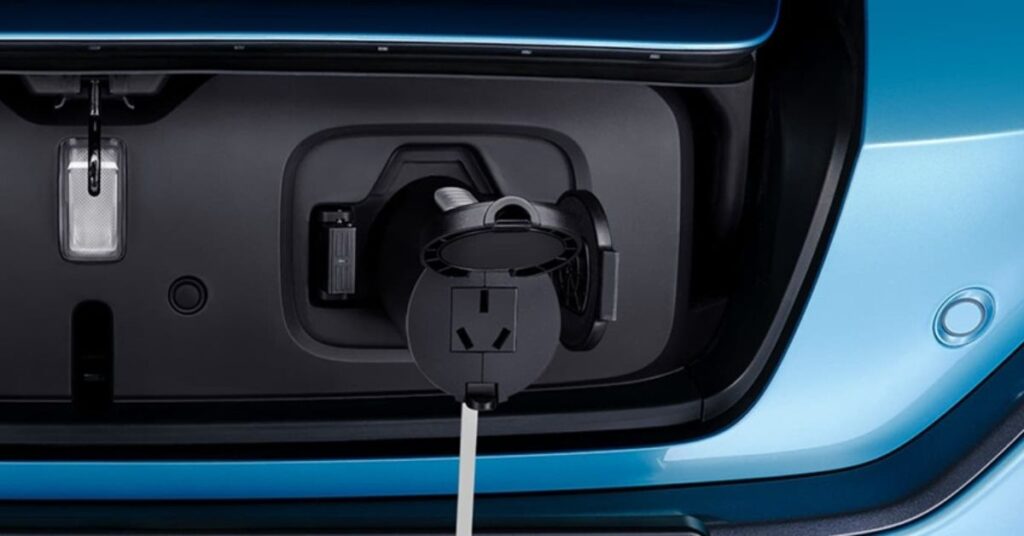
Charging is designed to support both daily use and longer trips. The e NS1 supports fast charging, which helps reduce waiting time during journeys. Its battery system is also designed to manage power efficiently while driving and charging.
The 510 km figure is a CLTC rating, so it should not be compared directly with WLTP figures. The testing method can produce different results from real-world driving. For buyers, the e: NS1 offers a useful combination of long claimed range and convenient EV charging.
Infotainment and Connectivity
The Honda e NS1 features a 15.1-inch Display Audio screen. It sits vertically in the center of the dashboard. The system uses Honda CONNECT 3.0, which was developed specifically for Honda EVs in China. It brings entertainment, navigation, vehicle settings, and other functions together on one large display.
The e NS1 also uses the e: N OS intelligent control system. It supports an AI voice assistant, energy management, OTA software updates, and vehicle connectivity features. The system can also connect the car with smart-home functions. A 10.25-inch digital instrument display provides important driving information in front of the driver.
Honda also added smartphone-based functions to the e: NS1. The digital key can control features such as the doors, windows, and air conditioning through a phone. Voice commands can also be used for functions such as navigation and vehicle controls. These features give the e NS1 a more connected and digital driving experience.
Safety Features
The Honda e NS1 comes with a range of active and passive safety features. Its safety equipment includes dual front airbags, side airbags, and side curtain airbags. It also has ABS, Vehicle Stability Assist (VSA), Hill Start Assist, and Auto Brake Hold. These systems help improve control and occupant protection.
The e: NS1 also uses driver-assistance technology. Its equipment includes front and rear parking sensors and a multi-angle reverse camera. A Driver Monitoring Camera can monitor the driver’s attention. These features are useful during parking and everyday driving.
Honda also provides systems that help reduce collision risks. Depending on the version and market, these can include Collision Mitigation Braking, Adaptive Cruise Control, Lane Keeping Assist, Road Departure Mitigation, and Traffic Sign Recognition. Equipment can vary by market and trim, so buyers should check the exact local specification.
Comfort and Handling
The Honda e NS1 is tuned for a smooth and comfortable drive. It uses MacPherson struts at the front and a torsion-beam setup at the rear. The suspension helps absorb bumps while keeping the body controlled. Honda also focused on reducing road noise inside the cabin.
The steering uses electric power assistance and has a 5.7-meter turning radius. This makes the e NS1 easy to handle in city streets and tight parking areas. Its front-wheel-drive layout also gives the car a predictable feel during normal driving.
The e: NS1 balances comfort with responsive handling. Its electric motor delivers power smoothly, while the suspension limits unnecessary body movement. The result is a relaxed ride for passengers with enough control for everyday city and highway driving.
Honda e NS1 Competitors
The Honda e NS1 competes with electric SUVs such as the Volkswagen ID.4, Toyota bZ4X, BYD Song Plus EV, and XPeng G3i. In China, these models offered buyers similar electric SUV choices around the same period. The e NS1 stands out with its 150 kW motor, 310 Nm of torque, and up to 510 km CLTC range.
| Model | Motor Power | Battery | Claimed Range | Drive |
| Honda e NS1 | 150 kW | 68.8 kWh | 510 km CLTC | Front-wheel drive |
| Toyota bZ4X | 150 kW | 72.82 kWh | 615 km CLTC | Front-wheel drive |
| Volkswagen ID.4 | Varies by version | Varies | Varies | Rear/All-wheel drive |
| BYD Song Plus EV | Around 135 kW | Around 71.7 kWh | 505 km NEDC | Front-wheel drive |
| XPeng G3i | Around 145 kW | Around 66.2 kWh | Up to 520 km NEDC | Front-wheel drive |
The Toyota bZ4X offers a longer claimed range in its 615 km version, while the e NS1 focuses on a compact size and a strong 510 km CLTC figure. The BYD Song Plus EV and XPeng G3i also provide similar power and range figures, making them relevant alternatives in the Chinese EV market.
Models and Variants
The Honda e NS1 was offered in four variants in China. They were the e-Xing, e-Chi, e-Dong, and e-Jing. The e-Xing and e-Chi use a 53.6 kWh battery with a 420 km CLTC range. The e-Dong and e-Jing use a 68.8 kWh battery and offer a 510 km CLTC range.
The power output also changes between the versions. The 420 km models produce 134 kW (182 PS) and 310 Nm of torque. The 510 km models produce 150 kW (204 PS) while keeping the same 310 Nm of torque. All four variants use a single front-mounted electric motor and a single-speed transmission.
The variants also differ in equipment and comfort features. The higher trims add features such as larger wheels, heated front seats, wireless phone charging, and more advanced driver-assistance systems. The e-Jing sits at the top of the range and offers the most equipment. This gives buyers a choice between a lower-cost 420 km version and a more powerful 510 km version.
Honda e NS1 Price
The Honda e NS1 was officially launched in China in April 2022. It came with four variants. The launch prices ranged from RMB 175,000 to RMB 218,000 after subsidies. The e-Type started at RMB 175,000, while the top e-Jing version cost RMB 218,000.
The two middle versions were priced at RMB 189,000 for the e-Chi and RMB 207,000 for the e-Dong. The 420 km versions were cheaper, while the 510 km versions cost more. This price difference mainly reflected their battery capacity, motor output, and equipment levels.
The e NS1 was sold as a China-market electric SUV, so its original prices should not be treated as current prices in other countries. Used-market prices can also vary based on year, condition, mileage, and location. For an accurate comparison, buyers should check the local market and the exact variant.
Maintenance and Reliability
The Honda e: NS1 has fewer mechanical parts than a petrol SUV. It uses an electric motor instead of an engine. It also does not need engine oil, spark plugs, or regular engine-related servicing. This can make routine maintenance simpler.
The main areas to monitor are the battery, electric motor, brakes, tires, cooling system, and charging equipment. Battery software and electronic systems are also important. Regular inspections can help identify problems early. Brake wear may be lower because the e NS1 can use regenerative braking to slow down.
Reliability also depends on battery care and proper charging habits. Extreme temperatures can affect battery performance and range. Keeping the software updated and following the recommended service schedule can support long-term ownership. Because the e: NS1 was mainly sold in China, parts and specialist support may be more difficult to find in markets where it was not officially offered.
Conclusion
The Honda e: NS1 is a practical electric SUV with a modern design and useful technology. It offers up to 510 km of CLTC range and up to 150 kW of power. The spacious cabin, large screens, and smooth electric performance make it suitable for daily driving.
The e NS1 is also an interesting choice for buyers looking for a China-market Honda EV. Its range, features, and simple electric powertrain give it strong appeal. However, buyers should check local parts, service support, and the exact variant before purchasing.
FAQs
1. What is the Honda e NS1?
The Honda e NS1 is a fully electric compact SUV developed for the Chinese market.
2. What is the range of the Honda e NS1?
It offers up to 510 km of claimed CLTC range, depending on the variant.
3. How powerful is the Honda e NS1?
The higher-output version produces 150 kW (204 PS) and 310 Nm of torque.
4. How long does the Honda e: NS1 take to charge?
Its battery can charge from about 30% to 80% in around 40 minutes using DC fast charging.
5. How much did the Honda e: NS1 cost?
Its original China-market launch price ranged from about RMB 175,000 to RMB 218,000, depending on the variant.
No Responses