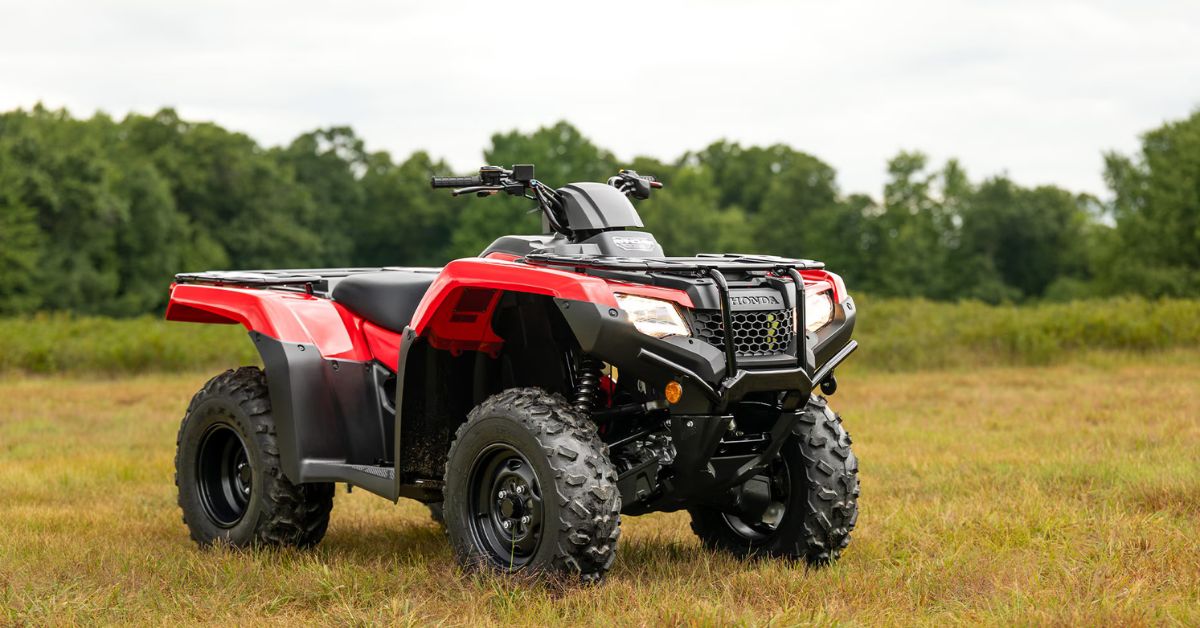
The Honda Rancher is a utility ATV built for work and recreational riding. Current Rancher models use a 420cc liquid-cooled, single-cylinder four-stroke engine with programmed fuel injection. Honda offers the Rancher with different drivetrain and transmission setups.
What makes the Rancher interesting is its balance of usable power and simple operation. It can handle farm tasks, rough trails, hauling, and towing without feeling overly complicated. The available 4×4 system also gives riders extra traction on difficult terrain.
This review looks at the Rancher’s engine, drivetrain, handling, suspension, utility features, and performance. It also covers the different Rancher versions and their key differences. The goal is to show what this ATV offers and where each model fits best.
Honda Rancher Generations
Honda introduced the Rancher in 2000 as a mid-size utility ATV. Early Rancher models used a 329cc air-cooled, four-stroke single-cylinder engine. They offered practical power for farm work, trails, and everyday utility riding.
Honda updated the Rancher over the years with larger engines and better technology. The major change came in 2007, when Honda moved to a 420cc engine family. Fuel injection later replaced the older carburetor setup, improving starting and throttle response.
Modern Rancher models use a 420cc liquid-cooled engine with programmed fuel injection. Buyers can choose different drivetrains and transmissions, including manual and automatic options. Honda has kept the Rancher focused on simple controls, useful carrying capacity, and dependable utility performance.
Engine and Power
The Honda Rancher uses a 420cc liquid-cooled, single-cylinder four-stroke engine. It uses programmed fuel injection instead of a carburetor. This setup helps the engine start easily and deliver steady throttle response.
The engine focuses on usable low- and mid-range power rather than high-speed performance. That suits the Rancher’s utility role. Riders can use its torque for trail riding, hauling, and other demanding ATV tasks.
Honda pairs the 420cc engine with different transmission choices across Rancher models. Some versions use a conventional manual transmission, while others use Honda’s automatic Dual-Clutch Transmission. The drivetrain choice changes how the ATV delivers its power and how much rider input it needs.
4×4 System
The Honda Rancher is available with a selectable 4×4 system on four-wheel-drive versions. The system lets the rider switch between two-wheel drive and four-wheel drive. This helps match traction to the riding surface.
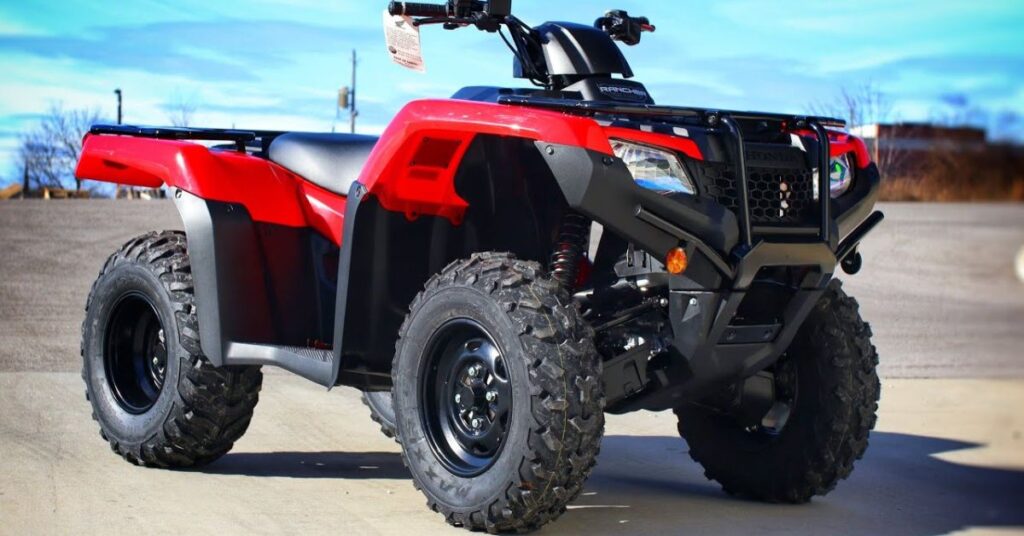
The 4×4 setup becomes useful on mud, loose ground, steep trails, and uneven terrain. Engaging the front wheels gives the ATV more traction when the rear wheels start to lose grip. It also helps the Rancher move through challenging surfaces at controlled speeds.
Some Rancher versions use Honda’s Traxlok system. It lets the rider lock the front differential when extra traction is needed. This feature is especially useful during slow-speed work and difficult off-road sections where one front wheel may have less grip.
Honda Rancher Key Specifications
The current Honda Rancher uses a 420cc liquid-cooled, single-cylinder four-stroke engine. It has programmed fuel injection and a shaft final drive. Honda offers different Rancher configurations, so equipment and drivetrain details can vary by version.
Key specifications include:
- Engine: 420cc liquid-cooled single-cylinder
- Fuel system: Programmed Fuel Injection (PGM-FI)
- Transmission: Manual or automatic Dual-Clutch Transmission, depending on model
- Drivetrain: 2WD or selectable 4WD, depending on version
- Final drive: Shaft
- Starting system: Electric starter
- Fuel tank: About 2.8 gallons
- Seating: One rider
- Use: Trail riding, hauling, towing, and utility work
These figures give a clearer picture of what the Rancher is built to do. Its specifications focus on practical off-road use rather than outright speed. The exact dimensions, weight, and equipment depend on the specific Rancher trim.
Transmission Options
The Honda Rancher offers different transmission options. Some versions use a five-speed manual transmission with reverse. This setup gives riders direct control over gear selection and engine response.
Other Rancher versions use Honda’s automatic Dual-Clutch Transmission (DCT). The DCT can shift gears automatically, which reduces the need for constant clutch or gear changes. Riders can also select gears manually on applicable DCT versions.
Transmission choice changes the way the Rancher feels on the trail. The manual setup suits riders who prefer more control. The DCT works well for utility riding, slow-speed work, and changing terrain where easy operation is useful.
Suspension and Ground Clearance
The Honda Rancher uses independent front suspension with MacPherson struts. At the rear, it uses a swingarm with a single shock. This layout helps the ATV stay controlled over uneven ground and improves wheel movement on rough trails.
Ground clearance varies by Rancher version. The current 4×4 models provide about 9.4 inches of ground clearance. This gives the ATV enough space to pass over rocks, ruts, roots, and other obstacles without placing the underside too close to the ground.
The suspension also supports the Rancher’s utility-focused design. It helps absorb bumps while carrying gear or working on uneven terrain. The exact suspension setup and specifications can differ between Rancher trims, so buyers should check the specific model before comparing figures.
Exterior and Utility Features
The Honda Rancher has a compact body built for utility work and trail riding. Its steel frame supports the body and working components. The ATV also uses front and rear racks for carrying tools, supplies, and other gear.
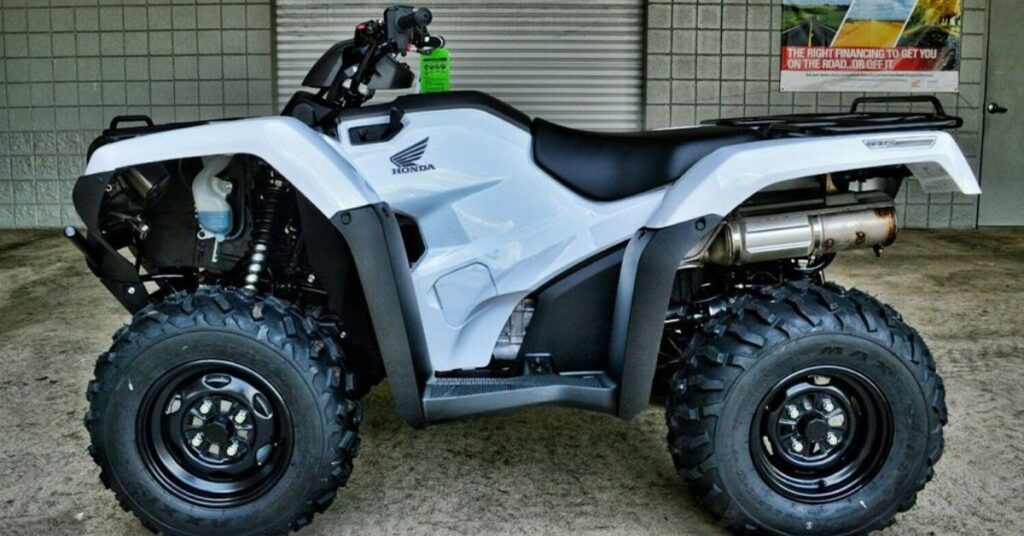
The Rancher’s utility design includes practical features such as a trailer hitch and protective equipment, depending on the model. Four-wheel-drive versions can add traction when carrying loads across loose or uneven ground. The shaft final drive also suits regular work in dirt, mud, and wet conditions.
Storage and carrying ability make the Rancher useful beyond recreational riding. The front and rear racks can handle everyday equipment without adding a separate trailer for small loads. Exact rack capacities and available features vary by Rancher trim, so the model specification matters when comparing versions.
Models and Trim Differences
Honda offers the Rancher in several configurations. The main differences involve the drivetrain, transmission, steering, and available features. The Rancher 2×4 focuses on simpler utility riding, while 4×4 versions add selectable four-wheel drive. DCT models use Honda’s automatic Dual-Clutch Transmission.
| Rancher Version | Drive System | Transmission | Steering | Main Character |
| Rancher 2×4 | 2WD | Manual | Conventional | Simple utility use |
| Rancher 4×4 | Selectable 4WD | Manual | Conventional | Work and trail riding |
| Rancher 4×4 DCT | Selectable 4WD | Automatic DCT | Conventional | Easy gear changes |
| Rancher 4×4 EPS | Selectable 4WD | Manual | Electric Power Steering | Easier steering |
| Rancher 4×4 DCT EPS | Selectable 4WD | Automatic DCT | Electric Power Steering | Maximum convenience |
The right version depends on how the ATV will be used. A 2WD model can suit basic property work, while a 4×4 model gives better traction on difficult surfaces. EPS reduces steering effort, and DCT makes gear changes easier during long work sessions or trail rides.
Rider Comfort
The Honda Rancher uses a single-rider seat with a practical riding position. The handlebar and foot controls sit within easy reach. This layout helps the rider stay comfortable during work and trail rides.
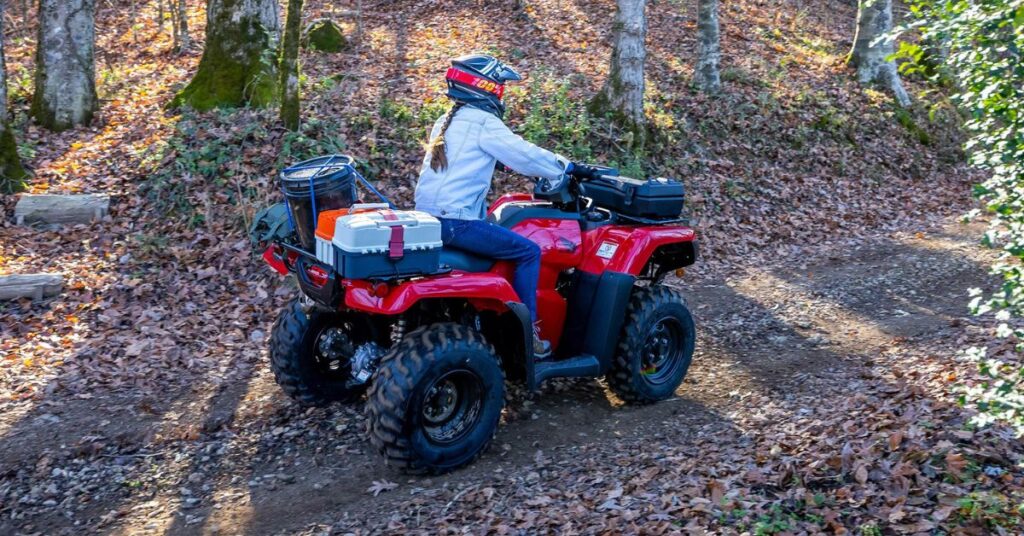
The Rancher keeps the controls simple. Depending on the version, electric power steering can reduce steering effort. This is useful when riding slowly through rough ground or making frequent turns during utility work.
The suspension also plays an important role in comfort. Independent front suspension helps the wheels respond to uneven terrain. A rear swingarm and single shock help control movement at the back. Together, these features make the Rancher more manageable on rough trails and working surfaces.
Towing and Cargo Capacity
The Honda Rancher is built to handle practical hauling jobs. Current Rancher models can tow up to 848 lb, depending on the configuration. A standard receiver hitch makes it easier to connect compatible trailers and utility equipment.
The ATV also has front and rear cargo racks. The front rack carries up to 66 lb, while the rear rack carries up to 133 lb on applicable models. These racks provide useful space for tools, feed, camping gear, or other equipment.
The Rancher’s carrying ability makes it useful for farms, properties, and outdoor work. The 4×4 system can improve traction when towing or carrying loads on loose ground. Riders should stay within Honda’s specified towing and rack limits for the particular Rancher model.
Fuel Economy and Range
Honda does not publish an official EPA fuel-economy rating for the Rancher. Real-world fuel use depends on terrain, load, speed, drivetrain, and riding conditions. The 420cc engine uses programmed fuel injection to manage fuel delivery.
Current Rancher models have a fuel tank of about 2.9 gallons. This gives the ATV a useful operating range for trail rides and utility work. However, the actual distance between refuels can change significantly during heavy towing or slow riding in mud.
Riders can improve fuel range by maintaining steady speeds and avoiding unnecessary engine load. Correct tire pressure and regular maintenance also help the engine operate efficiently. It is better to judge range from your own riding conditions rather than rely on a single estimated figure.
Honda Rancher Price and Value
The 2026 Honda Rancher starts at $6,249 in the U.S. The 4×4 version starts at $7,349. Honda lists the 4×4 Automatic DCT EPS at $8,599, while the 4×4 Automatic DCT IRS EPS reaches $9,099. These prices exclude the $620 destination charge, taxes, registration, and dealer fees.
The price difference comes from the equipment. The higher trims add features such as automatic DCT, electric power steering, and independent rear suspension. The IRS EPS version also provides 9.6 inches of ground clearance and 8.5 inches of rear suspension travel.
The Rancher offers good value for buyers who need a practical utility ATV. The base model suits simpler jobs, while the 4×4 and DCT versions add useful capability for rough terrain and demanding work. The best value depends on whether you need extra traction, easier steering, or improved suspension.
Safety and Trail Performance
The Honda Rancher uses a strong frame and controlled suspension for off-road riding. Four-wheel-drive versions can send power to all four wheels when extra traction is needed. Electric power steering is also available on selected trims and can reduce steering effort on rough trails.
The Rancher works well on dirt, gravel, mud, and uneven paths. Its ground clearance helps the ATV clear rocks, roots, and deep ruts. The selectable 4×4 system gives the rider more traction when the surface becomes loose or slippery.
Riders still need to match their speed and technique to the terrain. The Rancher is a utility ATV, not a high-speed sport machine. Wearing a helmet and proper protective gear is important, especially when riding on challenging trails.
Conclusion
The Honda Rancher remains a practical ATV for work and trail use. Its 420cc engine provides useful power for everyday tasks. Different drivetrain and transmission options let buyers choose the setup that fits their needs.
The Rancher also offers useful cargo capacity, selectable 4×4, and available electric power steering. Higher trims add more convenience and suspension capability. Overall, it is a strong choice for riders who want a simple and capable utility ATV.
FAQs
1. What engine does the Honda Rancher use?
The current Rancher uses a 420cc liquid-cooled, single-cylinder four-stroke engine with programmed fuel injection.
2. Does the Honda Rancher have 4×4?
Yes. Honda offers Rancher versions with selectable 4WD for better traction on difficult terrain.
3. How much can a Honda Rancher tow?
Current Rancher models can tow up to 848 lb, depending on the specific configuration.
4. What transmissions are available?
Rancher models can use a five-speed manual transmission or Honda’s automatic Dual-Clutch Transmission (DCT).
5. How much does a 2026 Honda Rancher cost?
The 2026 Rancher starts at $6,249 in the U.S., while higher 4×4 and DCT trims cost more.
One Response
[…] FR-V also keeps good control through normal corners. Its suspension balances comfort with predictable body movement. It is not designed for sporty driving, but it feels secure at […]