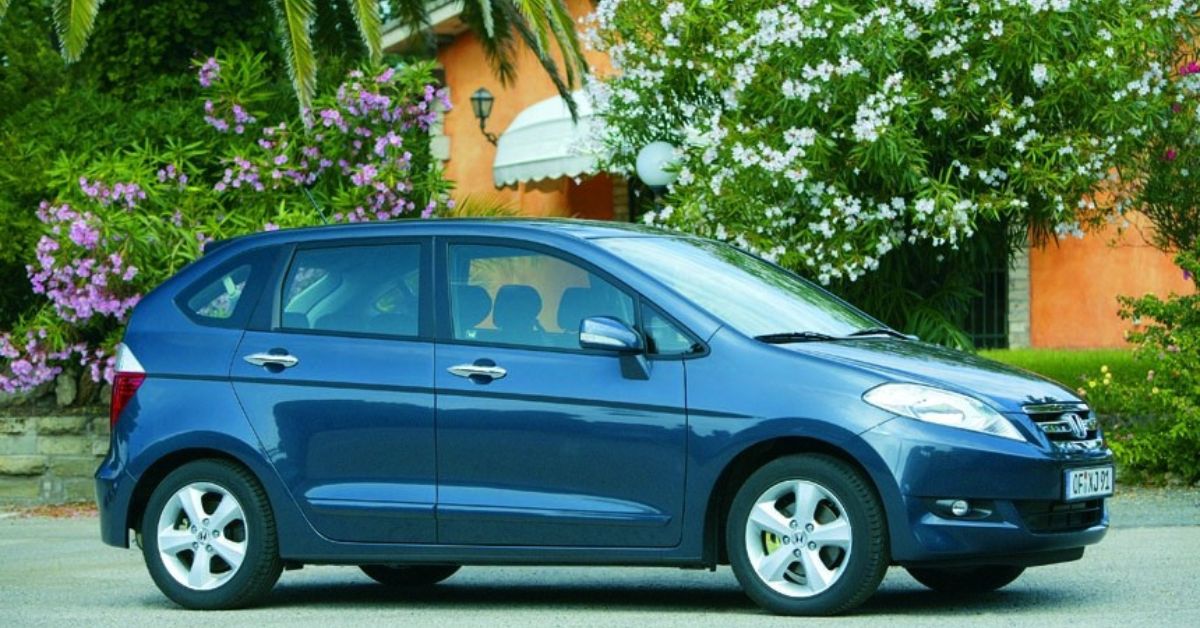
The Honda FR-V is a compact MPV designed for families who need useful space without driving a large van. Honda built the FR-V with a unique six-seat layout. It uses three seats in the front and three in the rear. This setup makes the FR-V different from most compact family cars.
The FR-V may look like a simple family vehicle, but it offers more than practical seating. Its flexible cabin, balanced handling, and useful road performance make it interesting for everyday driving. The unusual seating design also gives it a character that many modern MPVs do not have.
In this review, we will look at the Honda FR-V’s performance and comfort in detail. We will cover its engines, driving feel, interior space, seating, ride quality, and useful features. We will also see how well the FR-V works as a practical family car.
Honda FR-V Generations
The Honda FR-V was introduced in Europe in 2004 as a compact MPV. It was also known as the Honda Edix in Japan. Its most notable feature was the 3+3 seating layout. This allowed six people to sit in two rows.
The first-generation FR-V received several engine options during its production. Petrol engines included 1.7-liter and 2.0-liter units. Honda later added a 1.8-liter petrol engine in some markets. A 2.2-liter i-CTDi diesel was also offered and became a popular choice for buyers who wanted stronger low-speed torque and better fuel economy.
Honda updated the FR-V during its production run, but it remained a single-generation model. Production ended in 2009 without a direct successor. This makes the FR-V an unusual Honda in the used MPV market, especially because of its distinctive six-seat cabin and compact dimensions.
Exterior Design and Features
The Honda FR-V has a distinctive MPV shape with a short bonnet and a tall cabin. Its design focuses on interior space rather than a sporty profile. The body measures about 4.28 meters long, which keeps the FR-V fairly easy to handle in urban areas. The wide body also supports its unusual three-abreast seating arrangement.
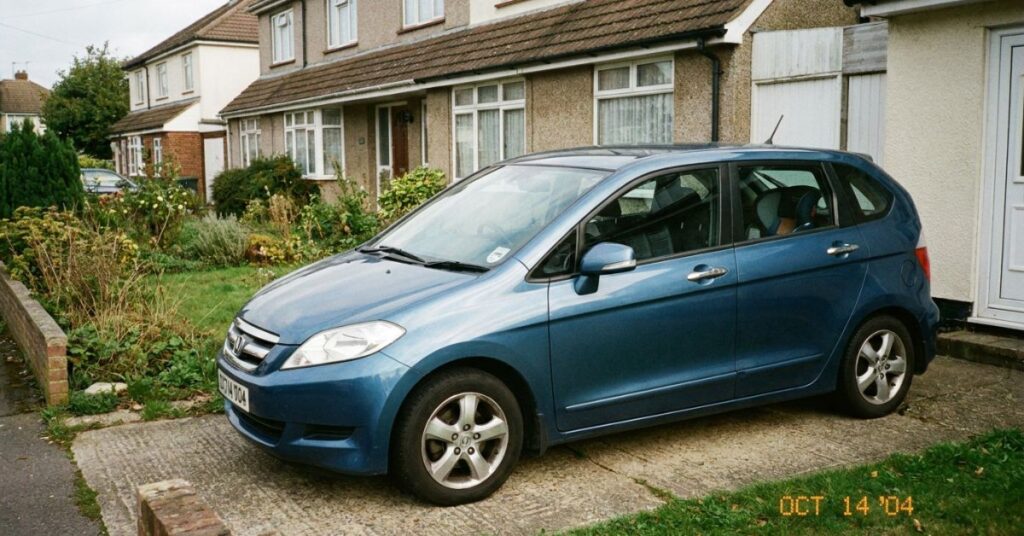
At the front, the FR-V uses Honda’s compact grille and swept-back headlamps. Its large windshield gives the driver a clear forward view. The side profile has tall doors and a relatively high roofline. Depending on the market and trim, buyers could get alloy wheels, body-colored mirrors, and roof rails.
The rear design is simple and practical. The tailgate opens to a useful cargo area, while the upright rear shape helps maximize cabin space. Honda also used folding rear seats to improve carrying flexibility. These details give the FR-V a practical character while keeping its exterior dimensions compact.
Engines and Specifications
The Honda FR-V was offered with several engines during its production run. Petrol choices included a 1.7-liter four-cylinder, a 1.8-liter i-VTEC, and a 2.0-liter i-VTEC. Honda also offered a 2.2-liter i-CTDi diesel in European markets. Engine availability varied by country and model year.
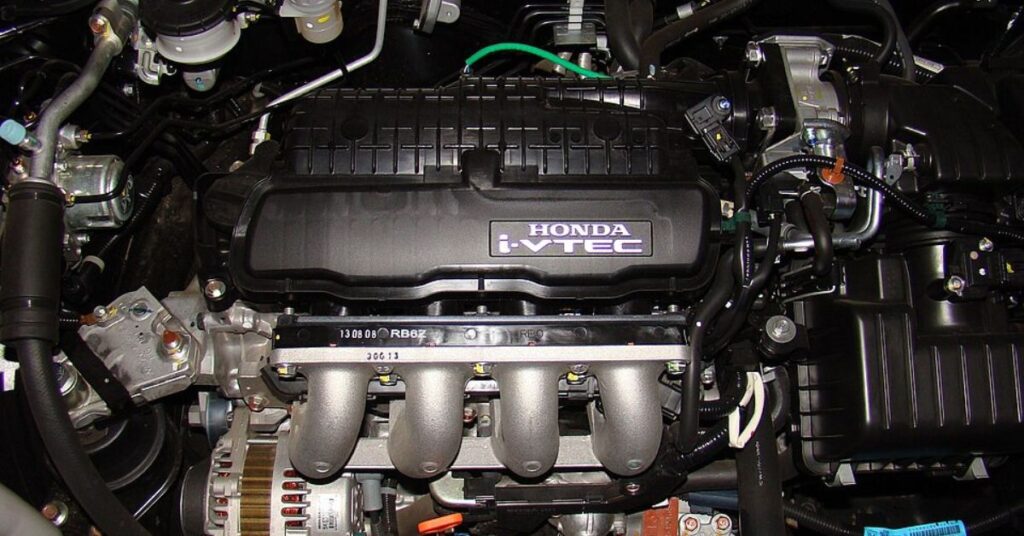
The 1.7-liter petrol produced around 125 PS, while the 1.8-liter i-VTEC developed about 140 PS. The 2.0-liter i-VTEC made roughly 150 PS. The 2.2 i-CTDi diesel produced about 140 PS and 340 Nm of torque, giving it strong pulling power for a family MPV.
The FR-V used front-wheel drive across its main range. Transmission choices included a 5-speed manual, while some petrol versions were available with automatic transmission. The 2.2-liter diesel was paired with a 6-speed manual in European markets. These engine and gearbox combinations gave the FR-V a useful balance between everyday performance and family practicality.
Performance and Handling
The Honda FR-V has a balanced front-wheel-drive setup. Its petrol engines deliver smooth power for normal city and highway driving. The 2.0-liter i-VTEC offers stronger acceleration than the smaller petrol engines. The 2.2 i-CTDi diesel stands out for its 340 Nm of torque, which helps when carrying passengers or climbing hills.
The FR-V uses a relatively compact body for a six-seat MPV. Its steering feels predictable and easy to control. The suspension is tuned more for comfort than aggressive driving. It remains stable at highway speeds, while its practical dimensions make parking and tight urban roads less difficult.
The FR-V is not a performance-focused vehicle. Its strength is its combination of usable power and controlled handling. The 2.2-liter diesel gives the most confident response at low and mid-range speeds. Overall, the FR-V feels more like a well-balanced family car than a large, heavy MPV.
Fuel Economy
Fuel economy varies across the Honda FR-V range because Honda offered several petrol and diesel engines. The 2.2 i-CTDi diesel is generally the most efficient option. Its official combined consumption was around 5.8 L/100 km, depending on the model year and specification. The diesel also benefits from strong torque, so it does not need frequent high-rev acceleration.
The petrol engines use more fuel in normal driving. The 1.8 i-VTEC was rated at roughly 7.5 L/100 km on the combined cycle in European specifications. The 2.0 i-VTEC typically returned around 8.0 L/100 km. Actual results can change with traffic, driving style, passenger load, and vehicle condition.
For a used FR-V, engine condition matters as much as the original rating. A well-maintained diesel can deliver good long-distance economy. Petrol versions can make more sense for drivers who mainly use the vehicle for shorter trips. Tyre pressure, servicing, and driving habits also have a noticeable effect on fuel use.
Interior and Comfort
The Honda FR-V has a practical cabin built around its unusual 3+3 seating layout. The front row can seat three people, with the center seat designed for occasional use. The rear row also provides three seats. This layout gives the FR-V a different approach to family transportation than most compact MPVs.
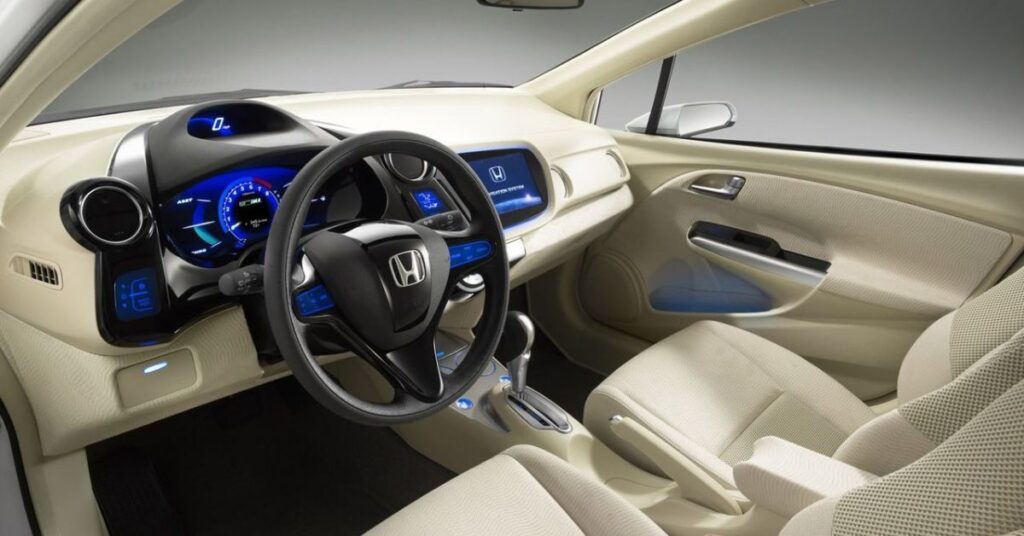
The cabin uses a high roof and upright seating position to create useful headroom. The rear seats can be folded individually, giving owners more flexibility when carrying passengers or luggage. Honda also positioned several storage areas around the cabin for everyday items. The wide cabin makes the FR-V feel more spacious than its compact exterior suggests.
Comfort depends on the trim and vehicle condition, especially in used examples. Higher-spec versions offered features such as automatic climate control, leather upholstery, heated front seats, and a navigation system in certain markets. The driving position provides good forward visibility, while the supportive seats make the FR-V suitable for longer family trips.
Six-Seat Cabin Layout
The Honda FR-V is best known for its 3+3 seating arrangement. It places three seats across both rows. This allows the compact MPV to carry six people without using a third row. The layout was unusual for its time and remains the FR-V’s defining feature.
The center front seat can slide and fold to improve flexibility. Honda also designed the rear seats to fold individually. This lets owners create different combinations of passenger and cargo space. The arrangement works well for families who regularly need extra seating but do not want a large MPV.
The six-seat layout does have some limits. Three adults sitting across the front or rear row may feel tight on longer journeys. The center positions are better suited to smaller passengers or shorter trips. Still, the FR-V makes clever use of its 4,285 mm body length and offers impressive seating capacity for its size.
Ride Quality
The Honda FR-V is tuned mainly for comfortable family driving. Its suspension handles normal road surfaces without feeling overly stiff. The relatively tall body gives the cabin a relaxed ride. This makes the FR-V well suited to daily commuting and longer trips.
On smoother roads, the FR-V feels stable and composed. It can absorb smaller bumps without sending too much movement into the cabin. Larger potholes and broken surfaces can feel more noticeable, especially on older vehicles. The condition of the suspension is important because many FR-V examples are now used cars.
The FR-V also keeps good control through normal corners. Its suspension balances comfort with predictable body movement. It is not designed for sporty driving, but it feels secure at everyday speeds. For a compact six-seat MPV, its ride quality remains one of its useful strengths.
Safety and Technology
The Honda FR-V came with safety equipment that reflected its early-2000s design. Depending on the market and trim, it could include ABS with Electronic Brakeforce Distribution (EBD), traction control, and Vehicle Stability Assist (VSA). Higher specifications also offered multiple airbags, including front and side airbags.
Honda gave the FR-V useful driver-assistance features for its time. Some versions offered front and rear parking sensors, which helped with the car’s wide body in tight spaces. Xenon headlights, cruise control, and automatic climate control were also available on selected higher-grade models. Equipment varied by country and model year.
The technology inside the FR-V is now dated compared with modern Honda vehicles. Some higher trims featured a factory navigation system and multifunction displays. However, Apple CarPlay and Android Auto were not factory features because the FR-V ended production in 2009. Used buyers should check the exact trim and model year before assuming that a particular feature is present.
Dimensions and Cargo Space
The Honda FR-V measures about 4,285 mm long, 1,810 mm wide, and 1,610 mm high. Its wheelbase is approximately 2,680 mm. These dimensions give the FR-V a relatively compact footprint for a six-seat MPV. The wide body helps create useful room across both seating rows.
Cargo space depends on how the seats are arranged. With all six seats in use, the available luggage area is limited compared with a larger MPV. However, the individually folding rear seats make the cabin much more flexible. Owners can fold selected seats when they need to carry larger items.
The FR-V’s flat and practical cabin design makes better use of its exterior size. The rear seats can be folded to create a much larger loading area. This flexibility is one of the strongest practical features of the FR-V. It lets the vehicle switch between passenger duty and cargo carrying without requiring a third-row layout.
Models and Trims
The Honda FR-V was available with different engine and trim combinations across European markets. Common versions included the 1.7 VTEC, 1.8 i-VTEC, 2.0 i-VTEC, and 2.2 i-CTDi. Equipment varied by model year and country, so the exact specification can differ between used examples.
| Model / Engine | Power | Transmission | Drive | Main Character |
| 1.7 VTEC | 125 PS | 5-speed manual | FWD | Entry-level petrol option |
| 1.8 i-VTEC | 140 PS | 6-speed manual/automatic | FWD | Balanced everyday performance |
| 2.0 i-VTEC | 150 PS | 6-speed manual/automatic | FWD | Stronger petrol performance |
| 2.2 i-CTDi | 140 PS | 6-speed manual | FWD | 340 Nm of diesel torque |
| SE | Engine dependent | Engine dependent | FWD | Practical mid-level specification |
| Sport | Engine dependent | Engine dependent | FWD | Sportier equipment and appearance |
| Executive | Engine dependent | Engine dependent | FWD | Higher-level comfort and technology |
The 2.2 i-CTDi is one of the most distinctive FR-V options. It produces 140 PS and 340 Nm, making it useful for highway driving and carrying passengers. Higher trims could add features such as leather upholstery, heated seats, navigation, and parking sensors. Availability depended heavily on the market and production year.
Honda FR-V Price
The Honda FR-V is no longer sold as a new vehicle. Production ended in 2009, so buyers today mainly find it in the used-car market. Prices vary widely by country, model year, engine, mileage, and overall condition.
Older 1.7 and 1.8 petrol versions are usually more affordable. The 2.0 i-VTEC can command a higher price when it has good equipment and low mileage. The 2.2 i-CTDi is also desirable because of its 140 PS output and 340 Nm of torque, especially for buyers who want better long-distance efficiency.
Condition is more important than the original trim name when buying a used FR-V. Check the engine, clutch, suspension, bodywork, and electrical equipment carefully. A well-maintained example with service records can be worth more than a cheaper FR-V that needs major repairs.
Common Problems and Reliability
The Honda FR-V can be a durable family MPV when it receives regular maintenance. However, its age means condition varies greatly between used examples. Suspension components can wear over time, including bushes, drop links, and shock absorbers. Clutch wear can also become an issue on higher-mileage manual versions.
The 2.2 i-CTDi diesel needs particular attention during inspection. The diesel system uses a turbocharger and common-rail injection, so neglected servicing can become expensive. The dual-mass flywheel and clutch can also wear with high mileage. Some diesel examples may experience issues related to the EGR system and intake deposits.
Petrol engines can also remain reliable with proper servicing. Buyers should check for oil leaks, cooling-system problems, worn engine mounts, and irregular idle behavior. Electrical items and interior equipment can show age-related faults as well. A complete service history and a thorough inspection are important when choosing a used FR-V.
Conclusion
The Honda FR-V remains an unusual and practical family MPV. Its six-seat 3+3 layout gives it a clear advantage for families who need flexible seating. The available petrol and 2.2 i-CTDi diesel engines also give buyers different choices for performance and economy.
Today, the FR-V is mainly a used-car option. Its age means condition and maintenance history matter a lot. A well-kept example can still offer useful space, comfortable driving, and distinctive Honda practicality.
FAQs
1. What is the Honda FR-V?
The Honda FR-V is a compact MPV with a unique six-seat 3+3 cabin layout.
2. How many seats does the Honda FR-V have?
It has six seats, with three seats in the front row and three in the rear.
3. Which engine is best in the Honda FR-V?
The 2.2 i-CTDi diesel is a strong choice for torque and long-distance driving.
4. Is the Honda FR-V reliable?
A well-maintained FR-V can be reliable, but age-related suspension, clutch, and electrical issues should be checked.
5. Is the Honda FR-V still available new?
No. Honda ended FR-V production in 2009, so it is now available mainly as a used vehicle.
One Response
[…] transmission. In Brazil, the WR-V used a 1.5-liter flex-fuel engine with Honda’s i-VTEC technology. Exact outputs varied by fuel and […]