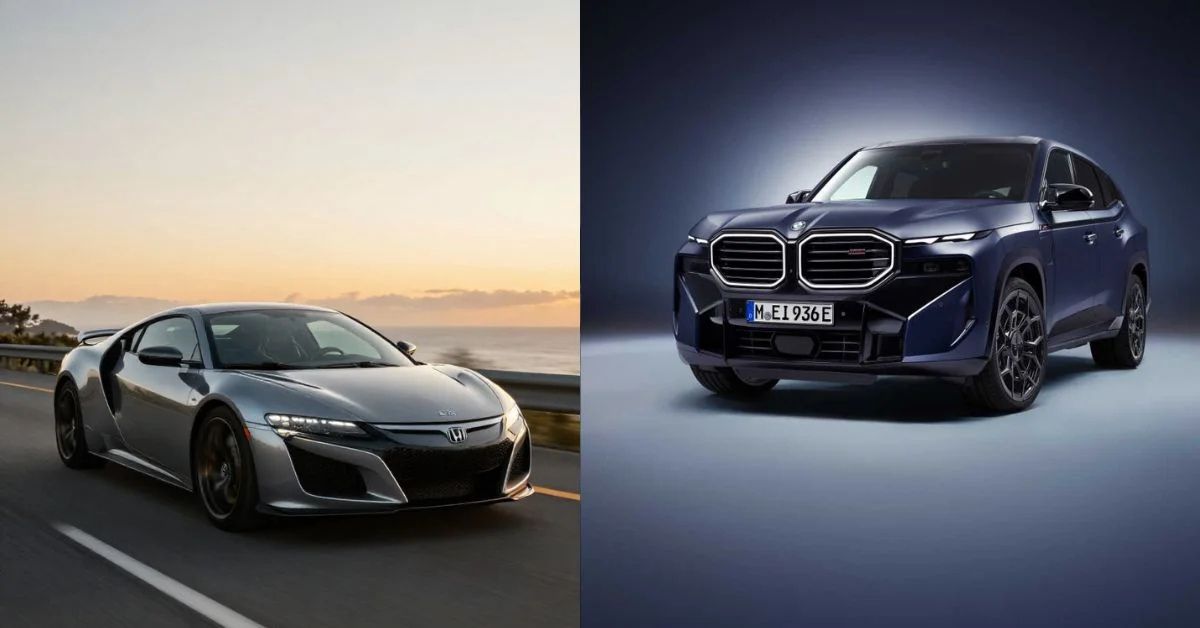
Honda and BMW are two well-known car brands with different strengths. Honda focuses on practicality, efficiency, and everyday value. BMW is known for sporty driving, premium interiors, and advanced engineering. Comparing them helps buyers understand which brand suits their needs.
Choosing between Honda and BMW is not always easy. A Honda can offer lower running costs and strong practicality. A BMW can deliver a more exciting drive and a more luxurious feel. Your budget and driving needs can make a big difference.
In this comparison, we will look at Honda and BMW across key areas. We will cover performance, fuel economy, comfort, technology, safety, reliability, maintenance, and pricing. We will also compare their model ranges to see which brand offers better overall value.
Model Range
Honda offers a wide range of cars for different needs. Its lineup includes small cars, sedans, SUVs, hybrids, and electric models. Popular choices include the Civic, Accord, CR-V, HR-V, Pilot, and Prologue.
BMW focuses more on premium cars and performance. Its range includes sedans, coupes, SUVs, and electric models. The 3 Series, 5 Series, X3, X5, and i4 are some well-known options.
The main difference is choice and purpose. Honda gives buyers practical options at different price levels. BMW puts more focus on luxury, driving feel, and premium features. This makes Honda a strong choice for everyday value, while BMW suits buyers seeking a more upscale experience.
Honda vs BMW: Design
Honda and BMW take different approaches to exterior design. The 2026 Honda Civic Sedan has a clean shape, a low roofline, and a simple front design. Its styling focuses on everyday usability rather than an aggressive luxury look. The 2026 BMW 3 Series uses BMW’s wider kidney grille, sharp body lines, and a more performance-focused profile.
SUVs show the difference clearly too. The 2026 Honda CR-V uses a practical body with a long roof and upright rear section. This helps create useful passenger and cargo space. The 2026 BMW X3 has a more sculpted body, a distinctive grille, and stronger visual details around the wheels and bumpers.
Inside, Honda keeps the design functional and easy to use. The Civic uses a full-width honeycomb-style air vent treatment across the dashboard. BMW gives the 3 Series a more premium cabin with a curved display that combines the digital instrument cluster and central touchscreen. Overall, Honda emphasizes practical design, while BMW places more emphasis on luxury and visual character.
Engine and Performance
Honda and BMW use different approaches to performance. For example, the 2026 Honda Civic Sedan offers a 2.0-liter four-cylinder engine with 150 hp, while Civic Hybrid models use a 2.0-liter four-cylinder with a two-motor hybrid system and 200 hp. The setup gives Honda a strong balance between power and daily efficiency.
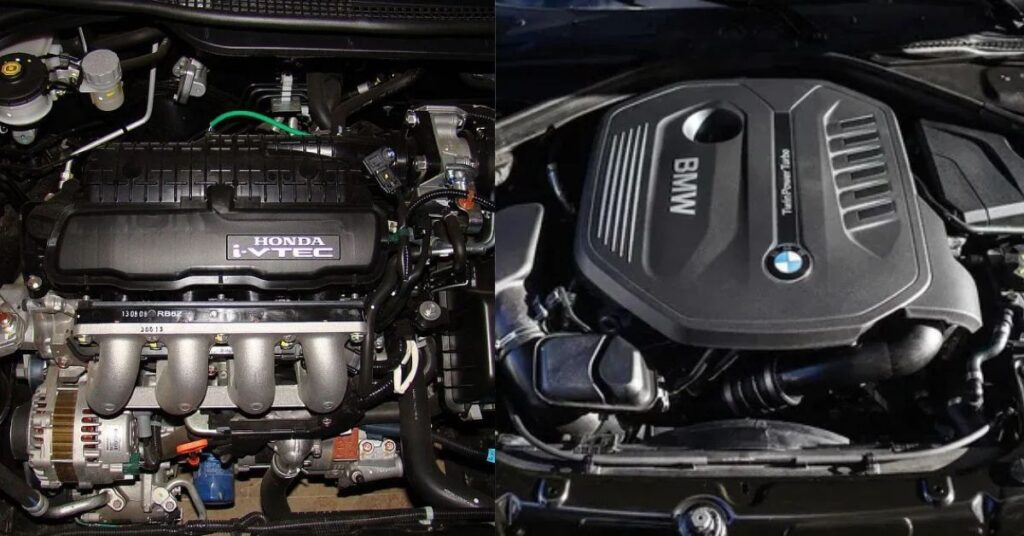
BMW puts more emphasis on acceleration and sporty driving. The 2026 BMW 330i uses a 2.0-liter turbocharged four-cylinder engine that produces 255 hp and 295 lb-ft of torque. Its quick-shifting automatic transmission and available xDrive all-wheel drive give it a stronger performance focus than a standard Civic.
The difference becomes clearer on the road. Honda feels smooth and predictable for commuting and regular driving. BMW responds faster when you press the accelerator and offers sharper handling. Honda suits drivers who want balanced performance, while BMW is better for buyers who place greater importance on power and driving excitement.
Handling and Ride
Honda generally tunes its cars for a comfortable and controlled ride. The 2026 Honda Civic uses a MacPherson strut front suspension and a multi-link rear suspension. This setup helps the car stay stable through corners while keeping the ride comfortable on normal roads.
BMW gives more attention to steering response and cornering control. The 2026 BMW 330i also uses a double-joint spring strut front suspension and a five-link rear setup. Its chassis feels more focused when changing direction, especially when driven on winding roads.
The difference is easy to notice behind the wheel. Honda feels relaxed and predictable during daily driving. BMW feels more responsive when you push the car through corners. Honda is better suited to comfort-focused driving, while BMW appeals more to drivers who enjoy a sharper driving experience.
Fuel Economy
Honda has a strong advantage when fuel costs matter. The 2026 Honda Civic Hybrid uses a 2.0-liter four-cylinder engine with a two-motor hybrid system. It achieves an EPA-rated 50 mpg combined in the Sport Hybrid sedan, making it a strong choice for drivers who spend a lot of time commuting.
BMW also offers efficient engines, but its focus is different. The 2026 BMW 330i uses a 2.0-liter turbocharged four-cylinder with mild-hybrid technology. It is rated at 28 mpg city and 36 mpg highway, or 31 mpg combined with rear-wheel drive.
These figures show a clear difference. The Civic Hybrid uses its electric motor system to reduce fuel consumption during everyday driving. The 330i delivers more power while still offering reasonable efficiency for a performance-oriented luxury sedan. Your priority between lower fuel use and stronger performance can guide the choice.
Interior Comfort
The 2026 Honda Civic keeps its cabin simple and practical. It features a honeycomb-style dashboard vent design and supportive front seats. Higher trims add features such as leather-trimmed seating and a 9-inch touchscreen. The layout feels easy to understand during daily driving.
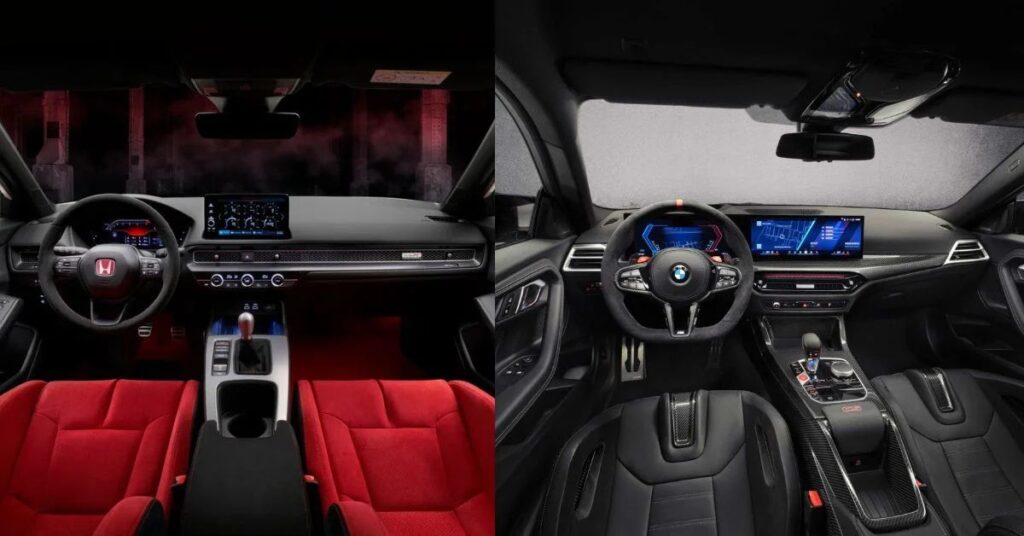
The 2026 BMW 3 Series takes a more premium approach. Its cabin uses a curved display that combines the instrument cluster and infotainment screen. Available features include heated front seats, a heated steering wheel, and Vernasca leather upholstery. The materials and controls give the BMW a more upscale feel.
Both cars can provide a comfortable cabin, but they target different buyers. Honda focuses on usability and everyday comfort. BMW adds more premium materials and available luxury features. If simple practicality matters most, Honda makes sense. If cabin quality and luxury matter more, BMW has the stronger appeal.
Technology Features
Honda gives its cars useful technology without making the cabin hard to use. The 2026 Honda Civic offers a 7-inch digital driver display on lower trims and a 10.2-inch display on higher trims. Sport Touring Hybrid models also get a 9-inch touchscreen with wireless Apple CarPlay and Android Auto.
BMW takes a more screen-focused approach. The 2026 BMW 3 Series uses BMW Curved Display technology with a 12.3-inch information display and a 14.9-inch control display. BMW also includes its iDrive system, which lets drivers control many functions through the touchscreen, controller, or voice commands.
Both brands offer modern connectivity, but their priorities differ. Honda keeps technology practical and familiar for daily use. BMW adds a more advanced digital interface with a more premium presentation. Honda can feel easier for simple tasks, while BMW offers more technology for drivers who enjoy a highly digital cabin.
Safety Features
Honda equips its current cars with the Honda Sensing safety suite. The 2026 Civic includes features such as Collision Mitigation Braking, Road Departure Mitigation, Adaptive Cruise Control, and Lane Keeping Assist. These systems can help reduce driver workload during daily trips.
BMW also offers a wide range of driver-assistance technology. The 2026 BMW 3 Series includes Active Blind Spot Detection, Frontal Collision Warning, Lane Departure Warning, and Active Driving Assistant. Available options can add more advanced assistance features.
Both brands take safety seriously, but their systems work in slightly different ways. Honda makes many driver-assistance features part of its standard safety package. BMW offers strong technology too, with additional systems available depending on the model and package. This makes the exact trim important when comparing safety equipment.
Honda vs BMW: Model Comparison
A direct model comparison shows how differently the two brands position their cars. The 2026 Honda Civic Sedan LX starts at $24,695 and produces 150 hp. The 2026 BMW 330i starts at $48,000 and produces 255 hp. For SUVs, the 2026 Honda CR-V LX starts at $30,920, while the BMW X3 30 xDrive starts at $51,300 and makes 255 hp.
The table shows the differences more clearly. Honda offers lower entry prices and hybrid choices. BMW places more emphasis on power, premium positioning, and performance. Prices below are U.S. starting MSRPs before taxes, registration, and other charges.
| Honda Model | Honda Starting MSRP | Honda Power | BMW Model | BMW Starting MSRP | BMW Power |
| Civic Sedan LX | $24,695 | 150 hp | 330i Sedan | $48,000 | 255 hp |
| Civic Sport Hybrid | $29,395 | 200 hp | — | — | — |
| CR-V LX | $30,920 | 190 hp | X3 30 xDrive | $51,300 | 255 hp |
| CR-V Sport Hybrid | $35,630 | 204 hp | X3 M50 xDrive | $66,500 | 393 hp |
| CR-V Sport Touring Hybrid | $42,550 | 204 hp | — | — | — |
Honda’s CR-V lineup also offers several hybrid trims, including Sport Hybrid, TrailSport Hybrid, Sport-L Hybrid, and Sport Touring Hybrid. BMW’s X3 range includes the 255-hp X3 30 xDrive and the 393-hp X3 M50 xDrive.
Reliability and Maintenance
Honda has built a strong reputation for dependable daily transportation. Models such as the Civic and CR-V use proven four-cylinder engines and straightforward powertrain designs. Honda also makes routine service easier through scheduled maintenance items such as engine oil, filters, brake inspections, and transmission fluid service.
BMW uses more complex technology in many of its cars. The BMW 330i, for example, combines a turbocharged engine with a 48-volt mild-hybrid system. This adds performance and efficiency, but it also means more components to maintain. BMW service can also cost more because of premium parts and specialized repair requirements.
For long-term ownership, Honda usually has the advantage in running costs. BMW can still be a dependable choice when owners follow the recommended service schedule. The biggest difference is ownership budget. Honda generally suits buyers who want simpler, more affordable maintenance, while BMW suits drivers comfortable paying more for premium engineering.
Price and Value
Honda usually starts at a lower price. For example, the 2026 Honda Civic Sedan LX starts at $24,695, while the 2026 BMW 330i starts at $48,000. This makes the Civic much easier to access for buyers who want a new car without entering the luxury-car price range.
BMW charges more, but the higher price brings a different ownership experience. The 330i offers 255 hp, a turbocharged engine, and a more premium cabin. Honda focuses more on practical equipment, efficiency, and everyday usability. The right value depends on what the buyer wants from the car.
Honda can be the better value for buyers who prioritize lower purchase and running costs. BMW makes more sense for someone who values stronger performance and luxury features. It is important to compare the exact trims because equipment and prices can change significantly between versions.
Ownership Costs
Ownership costs include more than the purchase price. Fuel, insurance, scheduled service, tires, brakes, and unexpected repairs all affect the total cost. Honda models generally keep these expenses more manageable because they use practical powertrains and widely available service parts.
BMW ownership can cost more over time. Premium parts and specialized service can increase repair bills. The BMW 330i, for example, uses a turbocharged engine and a 48-volt mild-hybrid system. These technologies add efficiency and performance but can make the mechanical system more complex.
Honda is usually the stronger choice for buyers who want predictable running costs. BMW can still offer good value for drivers who want premium performance and are comfortable with higher service expenses. Comparing insurance rates and local service prices is also important before buying either brand.
Best Models to Consider
Honda has several strong choices for different buyers. The 2026 Honda Civic suits people who want an efficient and practical sedan. The 2026 Honda CR-V is a better fit for buyers who need more passenger and cargo space. The Honda Prologue is worth considering if an electric SUV fits your needs.
BMW offers more performance-focused options. The 2026 BMW 330i is a strong choice for drivers who want a sporty luxury sedan. The BMW X3 30 xDrive works well for buyers who want an SUV with more power and premium features. The BMW i4 is another option for those interested in an electric luxury car.
The best model depends on your priorities. Choose Honda if affordability, efficiency, and practical ownership matter most. Choose BMW if stronger performance, luxury, and driving feel are higher priorities. Comparing similar models and trims is the best way to find the right match.
Conclusion
Honda and BMW appeal to different types of drivers. Honda stands out for practical pricing, fuel efficiency, and lower ownership costs. BMW offers stronger performance, premium materials, and a more engaging driving experience. Neither brand is better for everyone.
Your choice should match your budget and priorities. Honda makes sense for buyers who want dependable everyday transportation and good value. BMW is a better fit for drivers who want luxury and extra performance. Comparing specific models and trims will help you make the right decision.
FAQs
1. Is Honda cheaper than BMW?
Yes. Honda models generally have lower purchase prices, maintenance costs, and fuel expenses than comparable BMW models.
2. Which is more reliable, Honda or BMW?
Honda generally has the advantage for long-term reliability and simpler maintenance. BMW uses more complex technology and performance systems.
3. Which brand has better performance?
BMW usually offers stronger acceleration and sharper handling. Honda focuses more on balanced performance and everyday driving.
4. Is Honda more fuel-efficient than BMW?
Many Honda models, especially hybrids, deliver better fuel economy than comparable BMW models. The exact result depends on the model and powertrain.
5. Should I buy a Honda or BMW?
Choose Honda for value and practical ownership. Choose BMW if luxury, performance, and driving excitement are your main priorities.
One Response
[…] also offers electric performance with the Prologue. It uses an electric powertrain instead of a gasoline engine. Depending on the […]