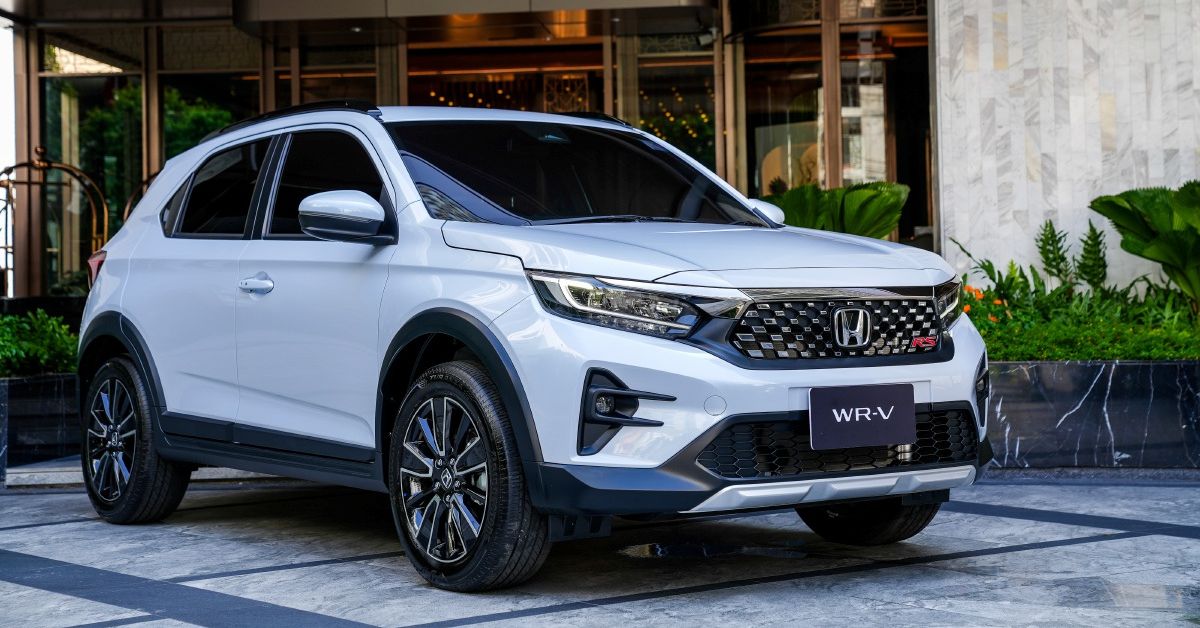
The Honda WR-V is a compact SUV designed for daily driving and practical use. Honda has sold the WR-V in different markets with different engines and specifications. Its size sits between a small hatchback and a larger family SUV.
The WR-V stands out with its raised ride height and practical cabin. It offers useful space without feeling too large on the road. Depending on the market and model year, buyers can choose from different engine and equipment options.
In this review, we look at the Honda WR-V in detail. We cover its generations, engines, performance, fuel economy, dimensions, interior, technology, safety features, trims, and price. We also look at common problems and overall ownership value.
Honda WR-V Design
The Honda WR-V has a compact SUV shape with a raised stance. Its design varies by generation and market. The first-generation WR-V, introduced in India in 2017, used a five-door body based on the Honda Jazz platform. It featured black body cladding, roof rails, and a higher ground clearance for rougher roads.
The second-generation WR-V has a more upright design. It was introduced in Indonesia in 2022 and shares its platform with the Honda BR-V. The front has a wider grille and slim headlamps. Stronger body lines and larger wheel arches give it a more SUV-like appearance.
Honda also offers different exterior details across markets and trims. Wheel designs, lighting, grille finishes, and body cladding can change by version. This gives the WR-V a simple but practical look while keeping its compact dimensions suitable for city driving.
Generations and Updates
Honda introduced the first-generation WR-V in Brazil in 2017. It was based on the Honda Fit platform and used a five-door crossover body. In India, production began the same year. The model was offered with 1.2-liter and 1.5-liter petrol engines, depending on the market.
Honda updated the first-generation WR-V during its production run. Changes included revised front styling, lighting, wheels, and equipment. In India, the WR-V received a facelift for the 2020 model year. It continued with petrol and diesel engine choices there until production ended in 2023.
The second-generation WR-V arrived in Indonesia in 2022. It moved to the platform used by the Honda BR-V and received a larger, more upright body. Honda offered a 1.5-liter petrol engine with this generation. The newer WR-V also gained updated safety and cabin technology, depending on the market and trim.
Engine and Specifications
The Honda WR-V has used different engines across its generations and markets. The first-generation model in India was available with a 1.2-liter i-VTEC petrol engine and a 1.5-liter i-DTEC diesel engine. The petrol engine produced about 90 PS, while the diesel produced about 100 PS.
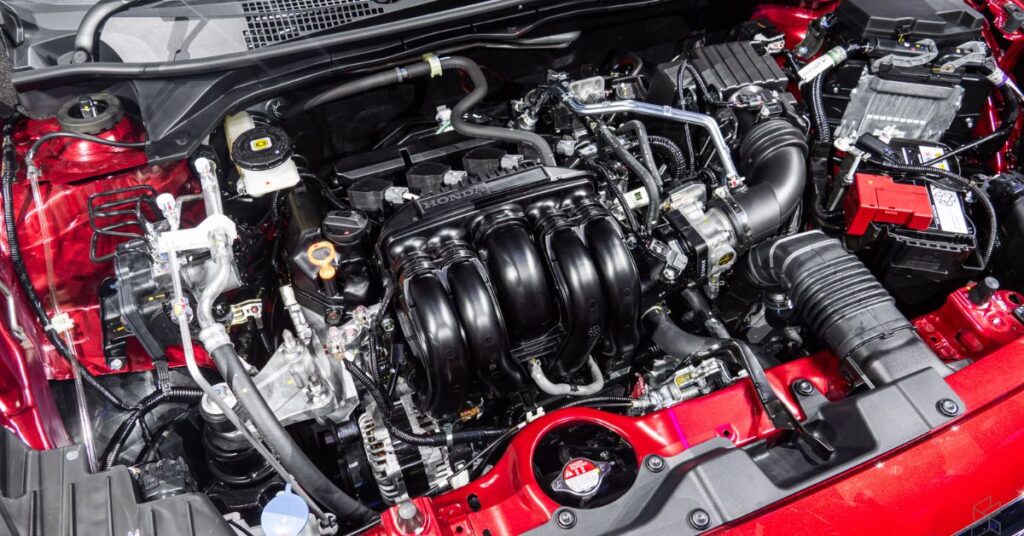
The 1.2-liter petrol version used a 5-speed manual gearbox. The 1.5-liter diesel was also paired with a 6-speed manual transmission. In Brazil, the WR-V used a 1.5-liter flex-fuel engine with Honda’s i-VTEC technology. Exact outputs varied by fuel and market.
The second-generation WR-V uses a 1.5-liter naturally aspirated petrol engine in markets such as Indonesia. It produces around 121 PS and 145 Nm of torque. A CVT automatic is available on higher versions, while the specifications and equipment can differ between markets.
Performance and Handling
The Honda WR-V is tuned more for everyday driving than outright speed. Its compact body makes it easy to drive through busy streets. The first-generation model used the Honda Fit platform, which helped give it a familiar and predictable driving feel. The raised ride height also made it more useful on uneven roads.
The second-generation WR-V uses a 1.5-liter petrol engine with about 121 PS and 145 Nm of torque. Power delivery is smooth and steady rather than aggressive. With the CVT, the engine stays relaxed during normal city driving. Overtaking and highway acceleration are adequate for a small SUV.
Handling is one of the WR-V’s practical strengths. The steering is light and easy to control at low speeds. Its suspension is designed to handle speed bumps and rough urban roads without feeling too harsh. However, the higher body and comfort-focused setup mean it is not intended to deliver the sharp cornering feel of a sporty hatchback.
Fuel Economy
The Honda WR-V can be economical for daily driving, but fuel consumption depends on the engine, transmission, and market. The first-generation WR-V in India offered petrol and diesel engines. The 1.5-liter i-DTEC diesel was generally the more fuel-efficient choice, especially on longer trips.
The second-generation WR-V uses a 1.5-liter petrol engine. Indonesian-market models use a CVT on higher trims, which helps keep engine speed low during steady driving. Honda’s claimed figures can vary by test method and version, so real-world economy is usually lower than the official rating.
Driving conditions also make a clear difference. Heavy traffic, frequent braking, and strong acceleration increase fuel use. Smooth driving and steady speeds can improve efficiency. For accurate figures, buyers should check the fuel-economy rating for the exact WR-V year and market they are considering.
Dimensions and Ground Clearance
The first-generation Honda WR-V measured about 3,999 mm long, 1,734 mm wide, and 1,601 mm tall. Its wheelbase was around 2,555 mm. These compact dimensions made it easy to use in crowded city streets and tight parking spaces.
The second-generation WR-V is larger. Indonesian-market versions measure about 4,060 mm long, 1,780 mm wide, and 1,608 mm tall. The wheelbase is 2,485 mm. This gives the newer model a wider and more substantial road presence.
Ground clearance is an important part of the WR-V’s design. The first-generation model offered roughly 188 mm of clearance, depending on the market. The second-generation version has about 220 mm. This extra height helps the newer WR-V handle speed bumps, broken roads, and light rough surfaces with greater confidence.
Interior and Comfort
The Honda WR-V has a practical cabin rather than a luxury-focused interior. The first-generation model shared several interior elements with the Honda Jazz. It offered a simple dashboard, supportive seats, and a familiar control layout. Higher trims added features such as automatic climate control, a touchscreen system, and steering-mounted controls.
The second-generation WR-V has a more modern cabin. Its dashboard uses a clean horizontal layout with a free-standing infotainment display on selected trims. The cabin provides seating for five people. Rear passengers get useful legroom for a vehicle of this size, while the higher seating position gives the driver a clear view of the road.
Comfort depends on the trim and market. Available features can include automatic air conditioning, push-button start, leather-wrapped steering wheels, and smartphone connectivity. The cabin uses practical storage areas around the doors and center console. Some hard plastics are noticeable, but they suit the WR-V’s focus on everyday usability and value.
Cargo Space
The Honda WR-V offers useful cargo space for a compact SUV. The first-generation model has a 363-liter boot with the rear seats in place. Its wide opening makes it easier to load shopping bags, small luggage, and everyday items.
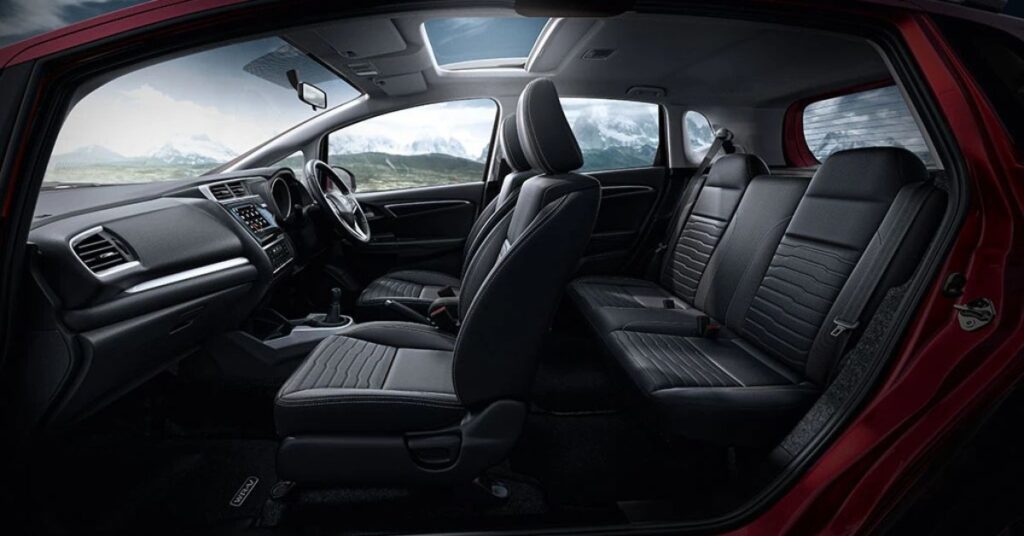
The rear seats can be folded when more space is needed. This makes the WR-V more useful for larger loads. The low loading height also helps when placing heavier items in the boot. The exact folding layout can vary between markets and model years.
The second-generation WR-V has a 380-liter luggage compartment. This is a small increase over the earlier model. The space is suitable for daily shopping and weekend luggage. Its practical cabin layout also gives the WR-V good versatility for city use.
Technology and Infotainment
The Honda WR-V offers different technology depending on the generation and market. Early first-generation models used a 7-inch touchscreen infotainment system on higher trims. Features could include Bluetooth, USB connectivity, navigation, and smartphone integration. Lower versions received simpler audio systems.
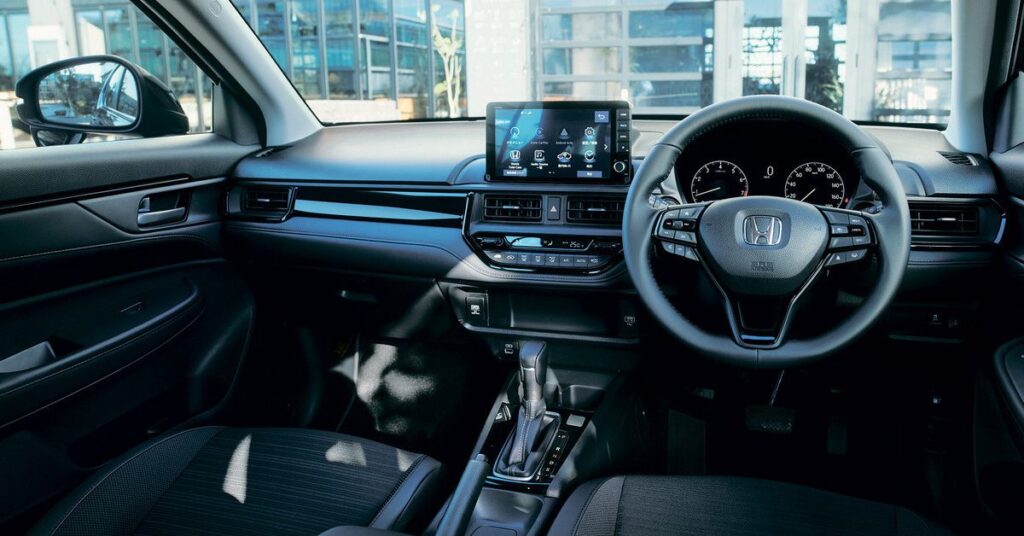
The second-generation WR-V has a more modern infotainment setup. Higher Indonesian-market trims use a 7-inch touchscreen display with Apple CarPlay and Android Auto. The system also supports Bluetooth and USB connectivity. A digital or semi-digital instrument display is available depending on the version.
Convenience technology also varies by trim. Push-button start, keyless entry, steering-wheel controls, and automatic climate control are available on selected versions. Honda kept the controls relatively simple. This makes the system easy to use during daily driving.
Safety Features
Safety equipment on the Honda WR-V depends on its generation and market. First-generation models offered dual front airbags, ABS with EBD, and stability control on selected versions. Higher trims could also include side and curtain airbags, a rear camera, and hill-start assist.
The second-generation WR-V received a stronger focus on active safety. Indonesian-market versions can include Honda Sensing features on higher trims. These include Collision Mitigation Braking System (CMBS), Lane Keeping Assist System (LKAS), Road Departure Mitigation (RDM), and Adaptive Cruise Control (ACC).
The newer WR-V also uses practical safety equipment such as Vehicle Stability Assist and Hill Start Assist. Parking sensors and a multi-angle rear-view camera are available on selected trims. Equipment can differ by country, so buyers should check the exact safety specifications of the WR-V they are considering.
Trims and Models
The Honda WR-V has been sold with different trims depending on the market and model year. The first-generation WR-V in India was offered in S, V, and VX grades, with petrol and diesel options. The second-generation Indonesian WR-V launched with E, RS, and RS with Honda Sensing variants. Equipment, engines, and transmissions differ between these versions.
| Generation | Market | Trim / Model | Engine | Transmission | Key Features |
| First Gen | India | S | 1.2L Petrol | 5-speed MT | Basic equipment, airbags, ABS |
| First Gen | India | V | 1.2L Petrol / 1.5L Diesel | 5-speed MT / 6-speed MT | Touchscreen, cruise control, added comfort features |
| First Gen | India | VX | 1.2L Petrol / 1.5L Diesel | 5-speed MT / 6-speed MT | Premium equipment, sunroof, advanced cabin features |
| First Gen | Brazil | EX | 1.5L Flex | CVT | Higher equipment level |
| First Gen | Brazil | EXL | 1.5L Flex | CVT | Added comfort and technology |
| Second Gen | Indonesia | E | 1.5L Petrol | CVT | Entry-level equipment |
| Second Gen | Indonesia | RS | 1.5L Petrol | CVT | Sportier styling, larger wheels, added features |
| Second Gen | Indonesia | RS with Honda Sensing | 1.5L Petrol | CVT | RS equipment plus Honda Sensing safety technology |
These trims show how Honda positioned the WR-V for different buyers. The E version of the newer model focuses on value, while the RS versions add a sportier appearance and more equipment. The Honda Sensing model is the strongest choice for buyers who want additional driver-assistance technology.
Price and Value
The Honda WR-V has had different prices in different markets. The first-generation WR-V was sold in India until 2023. Its final ex-showroom price was around ₹9.11 lakh to ₹12.31 lakh, depending on the variant and engine. Used prices today vary with year, mileage, condition, and location.
The second-generation Honda WR-V is positioned as a small SUV with a higher equipment level. In Indonesia, its launch pricing started at around Rp271.9 million for the E variant. The RS versions cost more because they add features, styling upgrades, and Honda Sensing on the top version.
The WR-V offers good value when its practical size and equipment are considered. The 1.5-liter engine in newer models gives adequate power for daily use. Buyers should compare the exact trim before purchasing because safety features, infotainment equipment, and transmission choices can vary by market. For a used WR-V, service history and vehicle condition are just as important as the asking price.
Common Problems and Reliability
The Honda WR-V generally has a reputation for dependable mechanical parts. However, problems can appear as the vehicle gets older. On first-generation models, owners may encounter clutch wear on manual versions, suspension noise, or worn rubber components. These issues are often linked to mileage and road conditions.
CVT-equipped WR-V models need proper maintenance. Old or degraded transmission fluid can affect smooth operation. Some owners may also notice hesitation or juddering if the CVT has not been serviced correctly. Regular fluid changes using the correct Honda-specified fluid can help protect the transmission.
Electrical and interior issues can also develop with age. Touchscreen glitches, faulty sensors, weak batteries, or worn switches are possible. A used WR-V should be checked carefully before purchase. Service records, accident history, engine condition, transmission behavior, and suspension noise are more useful indicators of reliability than mileage alone.
Conclusion
The Honda WR-V is a practical compact SUV with a simple and useful design. Its different generations offer different engines, features, and dimensions. The newer model adds a stronger SUV character, a 1.5-liter petrol engine, and more modern safety technology.
The WR-V makes sense for buyers who want easy city driving, useful ground clearance, and a practical cabin. Used models can also offer good value when they have proper service records. Before buying, check the exact model year, trim, engine, and condition because specifications vary between markets.
FAQs
1. What is the Honda WR-V?
The Honda WR-V is a compact SUV designed for practical city driving, with raised ground clearance and a five-seat cabin.
2. What engine does the Honda WR-V use?
Engine options vary by generation and market. Newer models use a 1.5-liter naturally aspirated petrol engine.
3. Is the Honda WR-V fuel efficient?
Yes. Its compact size and efficient engine can provide good fuel economy, especially during steady daily driving.
4. How much cargo space does the Honda WR-V have?
The second-generation WR-V offers about 380 liters of luggage space with the rear seats in place.
5. Is the Honda WR-V reliable?
The WR-V is generally dependable when maintained properly. Regular servicing is especially important for CVT-equipped versions.
One Response
[…] surfaces. Overall, the Vezel Hybrid offers a balanced mix of responsive power, easy handling, and efficient daily […]